El Salvador and the Sahrawi Arab Democratic Republic: A Diplomatic History
The diplomatic relationship between El Salvador and the Sahrawi Arab Democratic Republic (SADR)—the state declared by the Polisario Front in Western Sahara—has been characterized by dramatic shifts in recognition. Over several decades, El Salvador has moved from formal support of Sahrawi sovereignty to a firm recognition of Moroccan authority over the region.
Key Facts
- Initial Recognition: El Salvador first recognized the SADR on July 31, 1989.
- First Withdrawal: Recognition was first withdrawn in April 1997.
- Resumption: Diplomatic ties were formally restored on November 3, 2016.
- Final Withdrawal: President Nayib Bukele withdrew recognition on June 15, 2019.
- Current Status: El Salvador recognizes Moroccan sovereignty over Western Sahara.
The Early Years and Fluctuating Ties
El Salvador's engagement with the Sahrawi Arab Democratic Republic began in the late 1980s, with formal recognition granted in 1989. However, this initial period of support was short-lived, as the government withdrew its recognition in April 1997.
Despite the lack of formal ties, high-level interactions continued. On June 1, 2009, Sahrawi president Mohamed Abdelaziz attended the inauguration of Salvadoran president Mauricio Funes. During this state visit, Abdelaziz paid his respects at the tomb of Schafik Hándal, the former leader of the Farabundo Martí National Liberation Front (FMLN), a political party that had historically supported Sahrawi independence from Morocco.
The Restoration of Diplomatic Relations
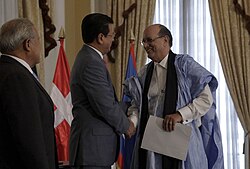
Diplomatic relations were formally resumed on November 3, 2016. This restoration led to a renewed exchange of diplomats, most notably in September 2017, when President Salvador Sánchez Cerén received the diplomatic credentials of Sueilima Tieb Ahmed Salem.
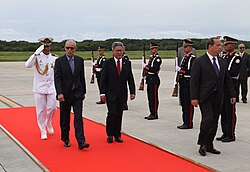
This period of cooperation continued into 2019, with Sahrawi president Brahim Ghali attending the inauguration of President Nayib Bukele on June 1.
The Shift Toward Morocco
The diplomatic landscape shifted abruptly shortly after the 2019 inauguration. On June 15, 2019, President Nayib Bukele withdrew El Salvador's recognition of the Sahrawi Republic and officially recognized Moroccan sovereignty over Western Sahara.
President Bukele justified this decision by stating that previous recognition had been based on "ideological reasons." He further characterized the Sahrawi Republic as a "virtual, non-existent republic" that lacked both a population and territory. This move drew sharp criticism from the FMLN, which described the decision as support for "neo-colonial and expansionist regimes."
While Mansour Omar, the Polisario Front's minister delegate for Latin America and the Caribbean, suggested that the Sahrawi Republic would maintain relations with El Salvador, the Salvadoran government remained firm. In December 2019, Foreign Minister Alexandra Hill Tinoco reaffirmed the "final withdraw" of recognition.
Future Outlook and Laayoune
The trend toward closer ties with Morocco has continued into recent years. In 2025, Salvadoran Vice President Félix Ulloa mentioned the possibility of opening a consulate in Laayoune, the city that serves as the de jure (by law) capital of the Sahrawi Republic but is under Moroccan administration.
Summary of Diplomatic Timeline
| Date | Event | Diplomatic Status |
|---|---|---|
| July 31, 1989 | Initial recognition of SADR | Recognized |
| April 1997 | First withdrawal of recognition | Not Recognized |
| November 3, 2016 | Formal resumption of relations | Recognized |
| June 15, 2019 | Withdrawal of recognition; recognition of Morocco | Not Recognized |
| December 2019 | Confirmation of "final withdraw" | Not Recognized |
Frequently Asked Questions
Why did El Salvador withdraw recognition of the Sahrawi Republic in 2019?
President Nayib Bukele stated that the recognition had been based on ideological reasons and argued that the Sahrawi Republic was a "virtual, non-existent republic" without territory or population.
What is the position of the FMLN regarding this diplomatic shift?
The FMLN criticized the withdrawal of recognition, viewing it as an endorsement of "neo-colonial and expansionist regimes."
Who is the Polisario Front?
The Polisario Front is the political and military organization that declared the Sahrawi Arab Democratic Republic and seeks independence for Western Sahara from Morocco.
What is the significance of Laayoune in this context?
Laayoune is the de jure capital of the Sahrawi Republic. The mention of opening a consulate there by Vice President Félix Ulloa signals El Salvador's alignment with Moroccan sovereignty over the city.
Did El Salvador ever have formal diplomatic credentials with the SADR?
Yes, in September 2017, President Salvador Sánchez Cerén received diplomatic credentials from Sahrawi diplomat Sueilima Tieb Ahmed Salem.