Egyptian Theatre: The Legacy of Hollywood's First Movie Palace
Standing as a testament to the golden age of cinema, the Egyptian Theatre is one of Los Angeles' most iconic landmarks. Located on Hollywood Boulevard, this architectural marvel served as the blueprint for the lavish movie palaces of the early 20th century. From hosting the world's first film premiere to undergoing a multi-million dollar modern restoration, the Egyptian has mirrored the evolution of the film industry itself.
Key Facts
- Opened: 1922
- Architects: Meyer & Holler
- Architectural Style: Egyptian Revival and Programmatic
- Historic Status: Los Angeles Historic-Cultural Monument (No. 584) and contributing property to the Hollywood Boulevard Commercial and Entertainment District
- Current Ownership: Netflix (with programming shared with American Cinematheque)
- Original Cost: $800,000
The Birth of the Movie Palace
The Egyptian Theatre was the vision of showman Sid Grauman and developer Charles E. Toberman. Built in 1922, the theater was designed to capitalize on Egyptomania—a period of intense public fascination with ancient Egyptian culture. The construction took 18 months and cost $800,000.
The venue immediately entered the history books by hosting the world's first film premiere for Douglas Fairbanks in Robin Hood. Throughout the 1920s, it became the premier destination for cinematic debuts, including The Ten Commandments, The Thief of Bagdad, and The Gold Rush.
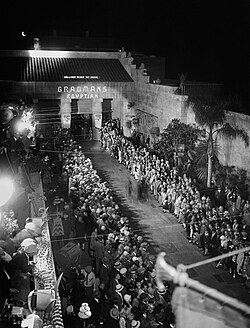
Architectural Grandeur and Design
The theater is a prime example of programmatic architecture (buildings designed to look like a specific object or theme) in the Egyptian Revival style. The exterior is adorned with hieroglyphs and Egyptian-style paintings, while the main entrance is marked by four massive columns, each 4.5 feet wide and 20 feet tall.
The design includes a 45 ft by 150 ft front courtyard specifically created for red-carpet ceremonies. Interestingly, while the theme is Egyptian, the roof panels are Spanish in style, likely because they had been delivered before the final design shift occurred. Inside, the original 1920s interior featured Sphinx sculptures and a massive stylized sunburst on the ceiling that functioned as an organ grille.
Decline and the Paramount Decree
The Egyptian's dominance was challenged in 1927 when Sid Grauman opened Grauman's Chinese Theatre nearby. The Chinese Theatre's celebrity footprints and handprints drew audiences away, relegating the Egyptian to a re-run house. While MGM returned it to first-run status in 1944, the Paramount Decree—a legal ruling that barred major studios from owning theaters—forced MGM to sell the property in 1949.
Under the operation of United Artists, the theater evolved. In 1955, a curved Todd-AO screen was installed, which required the demolition of much of the original proscenium arch. By 1992, the theater had fallen into disrepair and closed its doors.
The Path to Revitalization
The theater's survival is a story of two major restorations, often cited by city officials as a "case study in reversibility."
The American Cinematheque Era
In 1996, the American Cinematheque purchased the theater for a nominal $1. With $12.8 million in raised funds, the architecture firm Hodgetts + Fung restored the venue. It reopened in 1998 featuring two screens: the Lloyd Rigler theater (616 seats) and the Steven Spielberg theater (78 seats). This effort earned the National Preservation Award in 2000.
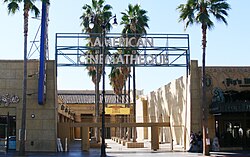
The Netflix Restoration
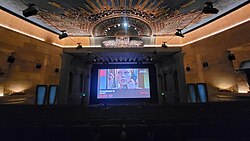
In 2020, Netflix acquired the theater for $14.4 million and invested over $70 million in a comprehensive restoration. This project focused on returning the theater to its original 1920s glory by removing 1990s additions, such as the second theater, acoustic panels, and the balcony section. Modern sound and lighting were integrated, and the capacity was adjusted to 516.
The theater reopened on November 9, 2023, with a screening of The Killer. Today, Netflix manages programming from Monday to Thursday, while the American Cinematheque handles Friday through Sunday.
Summary of Theater Evolution
| Era/Owner | Key Changes | Capacity/Status |
|---|---|---|
| Sid Grauman (1922) | Original Egyptian Revival construction | 1,771 seats |
| United Artists (1949-1992) | Added Todd-AO screen (1955) | Closed 1992 |
| American Cinematheque (1998-2020) | Restored; added second theater | 616 (Main) / 78 (Second) |
| Netflix (2023-Present) | Removed 90s additions; modern tech | 516 seats |
Frequently Asked Questions
What is the significance of the Egyptian Theatre in film history?
The Egyptian Theatre is historically significant as the site of the world's first film premiere, featuring Douglas Fairbanks in Robin Hood in 1922.
Why was the theater's design so unique?
It utilized a programmatic Egyptian Revival style to capitalize on the "Egyptomania" trend of the 1920s, featuring hieroglyphs, Sphinx sculptures, and a massive sunburst ceiling.
How did the Paramount Decree affect the theater?
The Paramount Decree barred major movie studios from owning theaters, which forced MGM to sell the Egyptian Theatre in 1949.
Who currently operates the Egyptian Theatre?
Netflix owns the theater and handles programming from Monday to Thursday, while the American Cinematheque programs events from Friday to Sunday.
What was removed during the Netflix restoration?
Netflix removed several elements from the 1990s restoration, including the second theater, the main theater's balcony section, acoustic panels, and the palm trees and planters in the forecourt.