Eggshell Biology and Applications: From Nature to Industry
The eggshell is far more than a simple container; it is a sophisticated biological barrier designed to protect developing embryos while allowing them to breathe. From the chitinous layers of microscopic worms to the calcified shields of birds, eggshells vary wildly in composition and function depending on the species and the environment in which they are laid.
Eggshell Diversity Across Species
Nature employs a vast array of materials to protect its offspring. The composition of an eggshell is typically dictated by the risk of desiccation (drying out) and the physical pressures of the environment.
Invertebrates: Worms and Insects
Nematode (worm) eggs utilize a two-layered defense: an external vitellin layer made of chitin for mechanical strength and an internal lipid-rich layer to ensure the chamber remains impermeable.
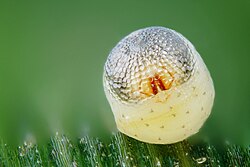
Insects and other arthropods exhibit even greater variety. Some possess gelatinous or protein-based skin-like coverings, while others have hard shells made of mineralized proteins. In some cases, the shell is actually the choroid, the outermost embryonic membrane. To survive dry conditions, these arthropods develop hard shells with specialized pore systems for respiration.
Aquatic and Semi-Aquatic Species
Fish and amphibians generally lack a hard shell, relying instead on extraembryonic membranes. However, some species develop thick, leathery coats to withstand physical force or prevent desiccation. Reptiles bridge the gap between soft and hard; while snakes typically lay leathery eggs that adhere to one another, turtles and tortoises may lay either soft or hard eggs, some of which closely resemble those of birds.
Mammals and Monotremes
While most mammals give birth to live young, monotremes (egg-laying mammals) produce soft-shelled eggs. These shells are deposited in layers within the uterus, allowing the egg to absorb fluids and grow in size before the final, most rigid layer is added.
The Complex Architecture of Bird Eggshells
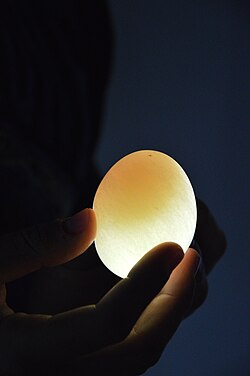
The avian egg is a marvel of biological engineering. A fertilized gamete sits on the yolk, surrounded by albumen (egg white), two shell membranes, and finally, the hard eggshell.
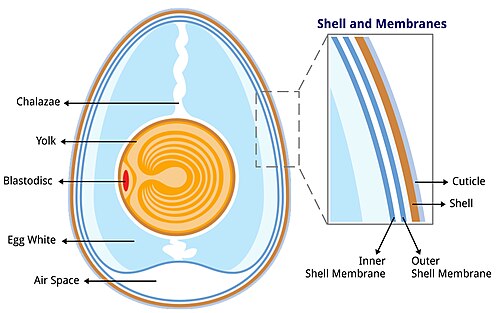
A chicken eggshell consists of 95-97% calcium carbonate crystals. These crystals are stabilized by a protein matrix; without this organic framework, the shell would be too brittle to maintain its shape. This structure serves several critical purposes: it prevents microbial contamination, regulates gas and water exchange, and provides essential calcium for the developing embryo.
The Process of Mineralization
Shell formation is a rapid process, taking approximately 20 hours in an average laying hen. It begins in the oviduct, where fibrous membranes are added. In the distal isthmus, mammillae (proteoglycan-rich knobs) are deposited to control calcification.
Mineralization occurs in the shell gland, where high levels of calcium and bicarbonate ions form the palisade layer—thick columns of calcite. Between these columns are narrow pores that allow the embryo to breathe. The process concludes with the addition of the cuticle, the outermost layer.
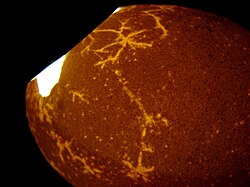
The strength of the shell is heavily dependent on matrix proteins like ovocleidin-116 and ovocalyxin-32. As a hen ages, the concentration of these proteins decreases, leading to weaker shells.
Physical Properties and Hatching
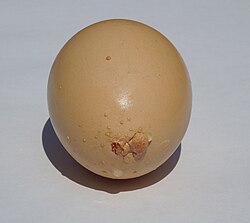
Because they are primarily calcium carbonate, bird eggshells react with acids. For example, soaking an egg in vinegar causes the shell to dissolve, releasing carbon dioxide gas and leaving the egg translucent and flexible.
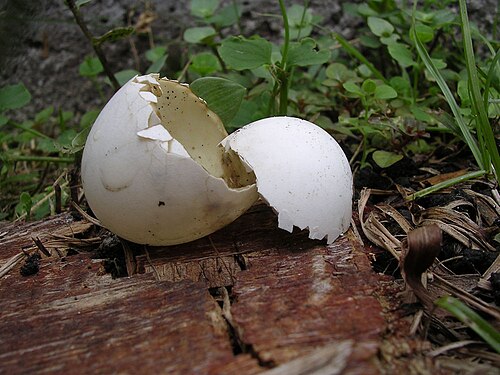
To exit this hard fortress, hatching birds, amphibians, and reptiles are equipped with an egg-tooth, a specialized structure used to pierce the shell from the inside.
Industrial and Pharmaceutical Applications
The US food industry generates roughly 150,000 tons of shell waste annually. While much of this ends up in landfills—where the protein-rich membranes can attract vermin—modern technology now allows for the separation of the calcium carbonate shell from the valuable protein membrane.
| Sector | Application | Function/Benefit |
|---|---|---|
| Pharmaceuticals | Calcium Therapy | Treats calcium deficiency in humans and animals |
| Food Industry | Calcium Lactate | Firming agent, stabilizer, and nutrient supplement |
| Agriculture | Soil Conditioner | Used as a fertilizer and animal feed supplement |
| Chemicals | Lime Production | Raw material for calcium oxide |
| Technology | Biofillers | Used in polyaniline matrices to detect ammonia gas |
| Manufacturing | Paper & Ink | Used in paper pulp and as ink-jet printing pigments |
Key Facts
- Composition: Chicken eggshells are 95-97% calcium carbonate crystals.
- Calcium Yield: A single six-gram eggshell provides approximately 2200 mg of calcium.
- Formation Time: It takes a laying hen about 20 hours to form a shell.
- Waste Volume: The US food industry produces 150,000 tons of shell waste per year.
- Biological Tool: Many species use a temporary "egg-tooth" to break through the shell during hatching.
Frequently Asked Questions
Why do some eggs have soft shells while others are hard?
Shell hardness depends on the environment. Eggs that must survive in dry conditions usually have hard, mineralized shells to prevent desiccation, whereas aquatic species often have gelatinous or leathery coverings since they are surrounded by water.
What happens when you put an egg in vinegar?
The acetic acid in vinegar reacts with the calcium carbonate of the shell, dissolving it and producing carbon dioxide gas. This leaves the egg held together only by its inner membranes, making it flexible and translucent.
How does the embryo breathe through a hard shell?
The shell is not solid; it contains a system of narrow pores located between the palisade columns of the calcified layer. These pores allow for the exchange of gases and water between the embryo and the outside environment.
Can eggshells be used for more than just fertilizer?
Yes. Eggshells are used in toothpaste as anti-tartar agents, as catalysts for biodiesel production, as biofillers for ammonia gas sensors, and even as raw materials for creating metal-organic frameworks (MOFs).
Why is the protein matrix important in a bird's eggshell?
The protein matrix prevents the calcium carbonate crystals from becoming too brittle. It regulates the growth and orientation of the crystals, which directly determines the overall strength and structural integrity of the shell.