Eggplant: A Comprehensive Look at Solanum melongena
The eggplant, scientifically known as Solanum melongena, is a versatile fruit that serves as a staple in cuisines across the globe. While often treated as a vegetable in culinary contexts, it is botanically a berry. Originally domesticated from the wild nightshade species S. incanum (also known as the thorn or bitter apple), the plant likely underwent two independent domestication events: one in South Asia and another in East Asia.
Today, the eggplant is a global commodity. In 2023, world production reached 61 million tonnes, with China and India together accounting for 85% of the total output.
Key Facts

- Scientific Name: Solanum melongena
- Family: Solanaceae (Nightshade family)
- Major Producers: China and India
- Global Production: Approximately 57.5 to 61 million tonnes annually
- Common Names: Aubergine, Brinjal, Garden Egg
- Botanical Nature: Tropical perennial often grown as an annual in temperate zones
Botanical Description and Genetics

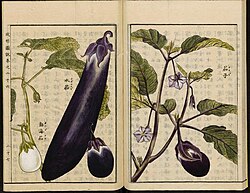
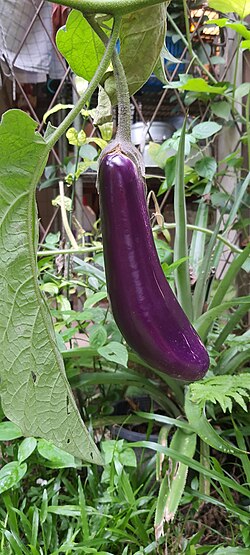
The eggplant is a delicate tropical perennial plant. In temperate climates, it is typically cultivated as a tender or half-hardy annual. The plant's stem is frequently spiny, and it generally grows between 40 and 150 cm tall. Its large, coarsely lobed leaves typically measure 10 to 20 cm in length and 5 to 10 cm in width.
Semiwild varieties can reach significantly larger proportions, growing up to 225 cm tall with leaves exceeding 30 cm in length.
Etymology and Regional Naming
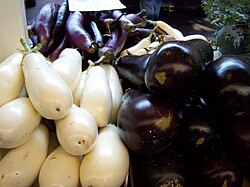
The naming of the eggplant varies significantly by region. In English, the term eggplant refers to the white, egg-shaped varieties, which were also called "garden eggs" or "vegetable eggs" in the 19th century.
The term aubergine derives from the Arabic bāḏinjān. This word traveled from Dravidian languages to Arabic, then into Iberia, Greece, Italy, and eventually France and England. In other regions, particularly South Asia, the term brinjal is commonly used.
Cultivars and Varieties

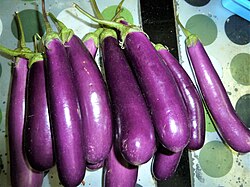
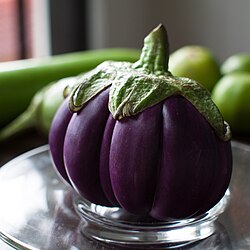
Eggplants exhibit a wide range of sizes, shapes, and colors. While deep purple is the most common skin color, white and green varieties also exist.
In Europe and North America, the most common cultivars are elongated ovoids, measuring 12–25 cm long and 6–9 cm broad with dark purple skin. Other notable cultivars include:
- Purple-Black: 'Little Fingers', 'Ichiban', 'Pingtung Long', and 'Tycoon'.
- Green: 'Louisiana Long Green' and 'Thai (Long) Green'.
- White: Also known as Casper, garden eggs, or Easter white eggplants.
Botanical Varieties
The species is divided into several recognized varieties:
- S. m. var. esculentum: The common aubergine, including white varieties.
- S. m. var. depressum: The dwarf aubergine.
- S. m. var. serpentium: The snake aubergine.
Genetically Engineered Eggplant
The development of Bt brinjal, a genetically modified variety, has been a subject of significant regulatory debate. In 2009, India's Environment Ministry imposed a moratorium on its cultivation following public protests, citing the need to establish public trust. Conversely, Bt brinjal was approved for commercial use in Bangladesh in 2013.
Culinary Uses and Global Cuisine
Eggplant is prized for its ability to absorb flavors, making it a cornerstone of various international dishes.
East and Southeast Asia
In China, it is used in yúxiāng-qiézi (fish-fragrance eggplants), while Korea prepares dureup-gaji-jeon (pan-fried eggplant and angelica tree shoots). Japan utilizes baby eggplants in asazuke pickles. In Southeast Asia, the fruit is used in Indonesian terong sauces and Philippine rellenong talong (stuffed eggplant omelette) and ensaladang talong (grilled eggplant salad).
South Asia, Middle East, and Mediterranean
South Asian cuisine features brinjal masala fry and mango sambar. In the Mediterranean and Middle East, eggplant is used in Romanian salată de vinete (eggplant salad) and various pasta dishes, such as penne with eggplant and basil in a yogurt-tomato sauce.
Nutrition and Chemistry
Eggplants are low in calories and provide a variety of essential vitamins and minerals. The following table outlines the nutritional profile per 100 grams of raw eggplant.
| Nutrient | Amount | % Daily Value (%DV) |
|---|---|---|
| Energy | 25 kcal (104 kJ) | - |
| Carbohydrates | 5.88 g | - |
| Dietary Fiber | 3 g | - |
| Protein | 0.98 g | - |
| Potassium | - | 8% |
| Manganese | - | 10% |
| Pantothenic acid (B5) | - | 6% |
| Folate (B9) | - | 6% |
Production and Allergies
Global production is heavily concentrated in Asia. According to FAOSTAT data for 2024, China produced 34.9 million tonnes (61% of the world total), followed by India with 13.0 million tonnes (23%). Other producers include Egypt, Guinea, and Turkey.
While generally safe, some individuals experience allergic reactions. A 2008 study in India found that nearly 10% of a sample group reported allergic symptoms after consumption. Additionally, cases of contact dermatitis from the leaves and allergies to the flower pollen have been documented.
Frequently Asked Questions
Is eggplant a fruit or a vegetable?
Botanically, the eggplant is a fruit—specifically a berry—because it develops from a flower and contains seeds. However, in culinary terms, it is prepared and eaten as a vegetable.
What is the difference between an eggplant and an aubergine?
There is no botanical difference; they are the same plant (Solanum melongena). "Eggplant" is the primary term used in North America, while "aubergine" is more common in the UK and Europe.
Are there different colors of eggplant?
Yes. While dark purple is the most common, there are also white varieties (often called garden eggs) and green varieties, such as the 'Louisiana Long Green'.
Can eggplant cause allergies?
Yes, some people are allergic to eggplant. Symptoms can range from digestive issues to contact dermatitis from the leaves or reactions to the plant's pollen.
Where does the eggplant originate from?
The eggplant was domesticated from the wild nightshade species S. incanum, with independent domestication events occurring in both South Asia and East Asia.