Edward VII: The Diplomatic Reign of the Uncle of Europe
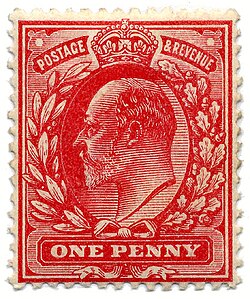
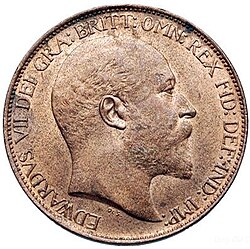
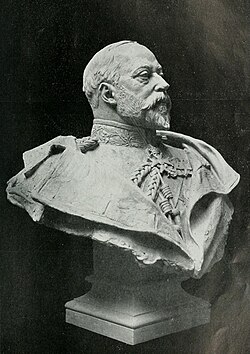
When King Edward VII ascended the throne on January 22, 1901, following the death of his mother, Queen Victoria, he inherited a global empire and a nation in transition. Unlike the reclusive nature of his predecessor, Edward VII was a man of immense personal charm and social energy, becoming one of the most popular monarchs England had known in centuries. His reign was defined by a shift toward active royal diplomacy, a modernization of the military, and a tumultuous struggle over the constitutional powers of the British Parliament.
Upon his accession, Edward chose the name Edward VII over Albert Edward to ensure his father's name remained distinct and honored. He also introduced a new title, King of the British Dominions, reflecting the evolving nature of the empire. While he maintained his residence at Sandringham and donated Osborne House to the state, he spent much of his energy refurbishing royal palaces and reviving traditional ceremonies, such as the State Opening of Parliament, which had been neglected during the latter years of Victoria's reign.
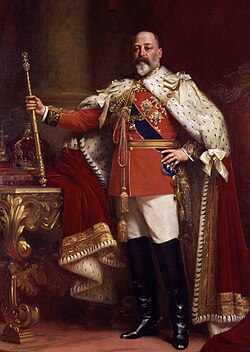
Key Facts
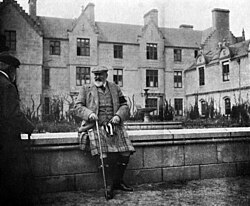
- Accession: Became King on January 22, 1901.
- Medical Milestone: His successful 1902 appendectomy by Sir Frederick Treves helped bring appendix surgery into the medical mainstream.
- Diplomatic Legacy: Played a pivotal role in the Entente Cordiale (1904), ending centuries of Anglo-French rivalry.
- Nickname: Known as the "Uncle of Europe" due to his extensive familial ties to nearly every European royal house.
- Social Views: Noted for his condemnation of racial prejudice and his openness to socializing with Jewish financiers.
The "Uncle of Europe" and Royal Diplomacy
Edward VII reinvented the role of the monarch in foreign affairs. Fluent in French and German, he used state visits and annual holidays in Biarritz and Marienbad to weave a web of diplomatic connections. His 1903 visit to France was particularly influential, setting the stage for the Entente Cordiale. This agreement, formally negotiated in 1904, delineated colonial spheres in North Africa and aimed to counterbalance the growing power of the German Empire and Austria-Hungary.
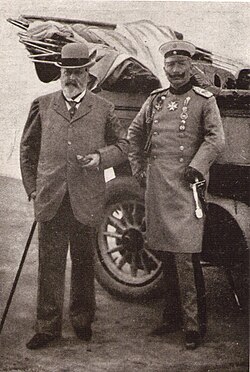
His familial connections were vast; he was the uncle or cousin to the monarchs of Germany, Russia, Spain, Sweden, Romania, Greece, Norway, Belgium, Bulgaria, and Portugal. However, this kinship did not always translate to harmony. Edward maintained a strained relationship with his nephew, Kaiser Wilhelm II of Germany, a tension that mirrored the broader geopolitical friction between their two nations.
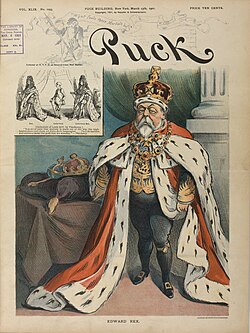
Military Reform and Political Stances
The King took a keen interest in the efficiency of the British armed forces, particularly following the failings of the Second Boer War. He advocated for the creation of the Territorial Force and the establishment of an Expeditionary Force to support France. In the Royal Navy, Edward supported Admiral Sir John Fisher's drive for efficiency—which included scrapping obsolete ships in favor of dreadnoughts (heavily armed, all-big-gun battleships)—over the more traditionalist views of Admiral Lord Charles Beresford.
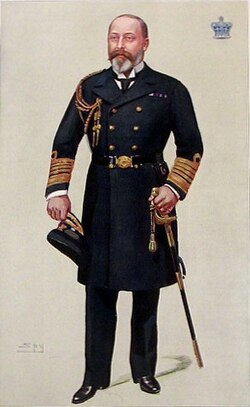
Politically, Edward was a complex figure. While generally conservative—opposing women's suffrage and Irish Home Rule—he held progressive views on race. During a 1904 summit in Kiel, he countered Kaiser Wilhelm II's rhetoric regarding the "Yellow Peril" by describing the Japanese as an intelligent, brave, and civilized nation, asserting that they differed from Europeans only in skin pigmentation.
The Constitutional Crisis of the People's Budget
The final year of Edward's life was dominated by a severe constitutional clash. The Liberal government, led by Prime Minister H. H. Asquith, proposed the "People's Budget," which was rejected by the Conservative-dominated House of Lords. This was a rare move, as the Lords typically did not veto money bills.
The King found himself caught between his loyalty to the peerage and his constitutional duty to his ministers. He urged Conservative leaders to pass the budget to avoid a crisis, but the deadlock persisted. The conflict escalated into a debate over whether the King should create new peers to flood the House of Lords with Liberal supporters to force the budget through—a prospect Edward found "simply disgusting."
This crisis eventually led to the Parliament Act 1911 (passed after his death), which stripped the House of Lords of its power to veto money bills and limited its ability to block other legislation to a power of delay.
Summary of Edward VII's Reign
| Category | Key Details |
|---|---|
| Major Diplomatic Achievement | Entente Cordiale (1904) with France |
| Medical Contribution | Popularized appendectomy surgery via his own recovery |
| Military Focus | Naval modernization (Dreadnoughts) and Army reform |
| Constitutional Conflict | The "People's Budget" and the House of Lords veto crisis |
| Key Relationships | Close ties to European royalty; strained relation with Wilhelm II |
Frequently Asked Questions
Why was Edward VII called the "Uncle of Europe"?
He earned this nickname because he was related to nearly every reigning monarch in Europe through marriage or blood, including the Emperors of Germany and Russia and the Kings of Norway, Belgium, and Spain.
How did Edward VII influence modern medicine?
Just before his 1902 coronation, he suffered from appendicitis. The successful surgery performed by Sir Frederick Treves proved that such operations were viable and life-saving, helping appendectomy enter the medical mainstream.
What was the Entente Cordiale?
It was a 1904 agreement between Britain and France that settled colonial disputes in North Africa and ended centuries of rivalry, effectively ending Britain's policy of "splendid isolation."
What caused the constitutional crisis at the end of his reign?
The crisis was triggered when the House of Lords rejected the Liberal government's "People's Budget." This led to a struggle over the Lords' right to veto legislation and the possibility of the King creating new peers to break the deadlock.
What were Edward VII's views on race?
Despite the prejudices of the era, Edward VII was notably progressive, condemning the use of racial slurs and defending the Japanese against the "Yellow Peril" claims made by Kaiser Wilhelm II.