Echinopsis pachanoi: The History, Botany, and Tradition of the San Pedro Cactus
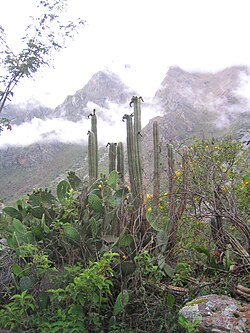
Echinopsis pachanoi, widely known as the San Pedro cactus, is a fast-growing columnar cactus native to the high altitudes of the Andes. Found primarily in Ecuador and Peru, this striking plant has been integrated into the spiritual and medicinal fabric of Andean cultures for over 3,000 years. Beyond its cultural significance, it is prized globally as an ornamental plant due to its impressive stature and relatively sparse spination.
Growing naturally at elevations between 2,000 and 3,000 meters (6,600–9,800 ft), the San Pedro cactus is a resilient species that has spread to Bolivia, Colombia, central Chile, the Canary Islands, and mainland Spain. Its journey from a sacred tool of divination to a popular garden specimen reflects its unique blend of botanical beauty and chemical complexity.
Key Facts
- Scientific Name: Echinopsis pachanoi (formerly Trichocereus pachanoi).
- Native Range: Andes Mountains, specifically Ecuador and Peru.
- Primary Alkaloid: Mescaline, a potent psychedelic entheogen.
- Conservation Status: Least Concern (IUCN 3.1).
- Cultural Heritage: Declared cultural heritage by the Peruvian Ministry of Culture in 2022.
- Growth Habit: Columnar, reaching typical heights of 3–6 meters, with a record of 12.2 meters.
Botanical Description
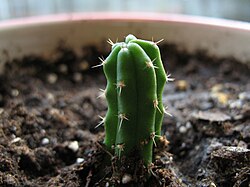
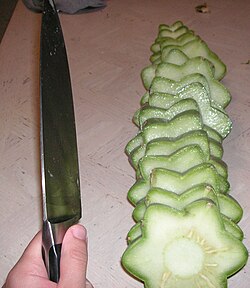
The San Pedro cactus is characterized by its light to dark green stems, which can sometimes appear glaucous (covered with a grayish-white waxy coating). These stems typically range from 6 to 15 cm in diameter and feature 6 to 8 ribs. Along these ribs, whitish areoles—specialized buds from which spines grow—are spaced approximately 2 cm apart.
While some varieties are nearly spineless, others produce up to seven yellow to brown spines per areole, reaching lengths of up to 2 cm. This lack of dense spination makes the plant an attractive choice for landscaping. The cactus often branches from the base or emerges from broken stems, creating a multi-columnar appearance.
Flowers and Fruit
The plant produces large, highly fragrant white flowers at the ends of its stems. These blooms open at night and typically last for two days, measuring 19–24 cm in length and up to 20 cm in diameter. A distinctive feature of the flower is the presence of black hairs along the thick base. Following fertilization, the cactus produces oblong dark green fruits (3 cm wide and 5–6 cm long) that burst open to reveal white flesh filled with small seeds.
Taxonomy and Classification
The taxonomic history of Echinopsis pachanoi has seen several shifts. First described as Trichocereus pachanoi by Britton and Rose in 1920, it was later reclassified as a variety of T. macrogonus (var. pachanoi) in 2012. This distinction was based on its more slender stems and fewer spines per areole compared to T. macrogonus var. macrogonus.
However, as of November 2025, Plants of the World Online reinstated the original name Echinopsis pachanoi, treating Trichocereus as a synonym of Echinopsis.
Traditional and Shamanic Uses
Known by various regional names including achuma, huachuma, and giganton, the San Pedro cactus is central to Andean traditional medicine. Archaeological evidence links its use to ancient civilizations such as the Moche, Nazca, and Chavín cultures over two millennia ago.
In Peruvian shamanism, specifically mesa norteña, healers known as curanderos prepare a bitter drink called cimora by boiling the cactus (with spines removed). This brew is often mixed with tobacco to enhance spiritual visions. The goal is to achieve vista (magical vision), which allows the shaman to diagnose illnesses, cleanse spirits, and communicate with ancestors or nature spirits.
The name "San Pedro" (Saint Peter) emerged during the Spanish colonial era. As the Spanish attempted to suppress indigenous rituals, the plant was associated with St. Peter, who holds the keys to heaven, symbolizing the belief that the cactus allows the user to reach a heavenly state while remaining on earth.
Chemical Composition: The Role of Alkaloids
The primary pharmacological interest in Echinopsis pachanoi lies in its alkaloids. The most prominent is mescaline, a psychedelic entheogen (a psychoactive substance used in a religious or spiritual context). Mescaline concentrations in dry cactus weight can range from 0.053% to 4.7%.
Other alkaloids present include:
- Hordenine
- Tyramine
- 3,4-dimethoxyphenethylamine
- 3-Methoxytyramine
- 4-hydroxy-3,5-dimethoxyphenethylamine
- Anhalonidine and Anhalinine

Research suggests that mescaline is not evenly distributed throughout the plant, with the highest concentrations often found in the green photosynthetic tissue just beneath the skin. Ceremonial use is often reported to produce strong spiritual experiences with a low incidence of challenging psychological reactions.
Cultivation and Propagation
Echinopsis pachanoi is a hardy species, suitable for USDA hardiness zones 8b to 10. It can withstand temperatures as low as -9.4 °C, provided the soil remains dry. It thrives in fertile, free-draining soil, often supplemented with inorganic substrates like pumice or perlite. While it can grow up to 30 cm per year, it is susceptible to sunburn and fungal diseases if over-watered.
Propagation Methods
- Cuttings: This is the most common method for creating genetic clones. Cuttings can be planted directly or grafted onto fast-growing cultivars like the Predominant Cultivar (PC). Some prized collector cultivars include Ogunbodede, Vilcabamba A, and Yowie.
- Log Method: A cactus column can be laid horizontally on the ground; roots will eventually sprout from the stem, and new columns will grow upward along its length.
- Seeds: Seeds are often grown using the "Takeaway Tek," where they are sown in plastic containers to create a high-humidity chamber for six to twelve months. Growth can be accelerated by grafting seedlings onto Pereskiopsis.
Summary Table
| Feature | Details |
|---|---|
| Common Names | San Pedro, Huachuma, Achuma |
| Native Habitat | Andes Mountains (Ecuador, Peru) |
| Max Recorded Height | 12.2 meters (40 ft) |
| Flower Color | White (Night-blooming) |
| Key Alkaloid | Mescaline |
| Hardiness | USDA Zones 8b–10 |
Legal Status
In most countries, cultivating Echinopsis pachanoi for ornamental or gardening purposes is legal. However, because it contains mescaline—a controlled substance in many jurisdictions—cultivating the plant for the purpose of consumption is illegal and highly penalized in countries such as the United States, Canada, Australia, Germany, New Zealand, and Sweden.
Frequently Asked Questions
What is the difference between San Pedro and Peyote?
While both contain the alkaloid mescaline, San Pedro (Echinopsis pachanoi) is a tall, columnar cactus from the Andes, whereas Peyote (Lophophora williamsii) is a small, button-shaped cactus native to the deserts of Mexico and Texas.
How fast does the San Pedro cactus grow?
It is considered a fast-growing cactus, typically increasing in height by up to 30 cm per year under optimal conditions.
Can San Pedro cactus be grown from seed?
Yes, it can be grown from seed, often using a semi-controlled humidity environment (such as the "Takeaway Tek") to encourage germination over several months.
Why is it called the "San Pedro" cactus?
The name refers to Saint Peter. This association developed during the Spanish colonial era to disguise the plant's traditional use, symbolizing St. Peter's keys to heaven and the plant's ability to provide spiritual visions.
Is the San Pedro cactus endangered?
No, according to the IUCN 3.1 Red List, Echinopsis pachanoi is classified as "Least Concern."