Eastern European Summer Time
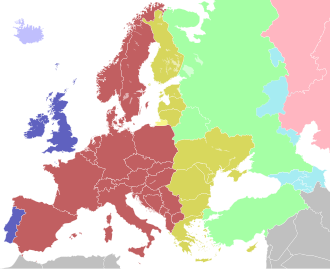
Eastern European Summer Time (EEST) is a time zone designation used primarily as a daylight saving time (DST) measure in various European and Middle Eastern countries. Defined as UTC+03:00, it is three hours ahead of Coordinated Universal Time (UTC), the primary time standard by which the world regulates clocks.
Because it shares the same offset as other regions, EEST is temporally identical to Arabia Standard Time, East Africa Time, and Moscow Time. For countries that observe this cycle, EEST is used only during the summer months; for the remainder of the year, these regions revert to Eastern European Time (EET), which is UTC+02:00.
Key Facts
- UTC Offset: UTC+03:00.
- Primary Purpose: Used exclusively for Daylight Saving Time (DST).
- Standard Counterpart: Reverts to Eastern European Time (UTC+02:00) in winter.
- EU Schedule: Since 1996, European Summer Time typically runs from the last Sunday in March to the last Sunday in October.
- Global Equivalents: Matches Moscow Time, East Africa Time, and Arabia Standard Time.
Regional Usage and History
The adoption of EEST varies by country, with some nations using it as a regular seasonal shift and others having transitioned to permanent DST or changed their rules over time.
European Nations
Many European countries have utilized EEST for decades. Bulgaria, Cyprus, and Romania have observed regular EEST since 1979. Greece adopted it in 1975, while Finland began in 1981. The Baltic states—Estonia, Latvia, and Lithuania—transitioned to regular EEST in 1989 after previously using Moscow Summer Time in the 1980s. Lithuania notably used Central European Summer Time between 1998 and 2003.
Ukraine used regular EEST from 1992 to 2024, and Belarus utilized it from 1991 to 2011. In Russia, the Kaliningrad region used regular EEST starting in 1991, though it served as standard time between 2011 and 2014.
Middle Eastern and North African Nations
In the Middle East, Israel has used Israel Daylight Time since 1948, which aligns with EEST when they overlap. Lebanon has used the time zone since 1984, and Syria since 1983; both Jordan and Syria moved to permanent DST in 2022. Egypt has a fluctuating history with EEST, using it from 1988–2010, 2014–2015, and again starting in 2023.
Summary of EEST Observance
| Country/Region | EEST Status/Period | Notes |
|---|---|---|
| Greece | Since 1975 | Regular seasonal use |
| Bulgaria, Cyprus, Romania | Since 1979 | Regular seasonal use |
| Finland | Since 1981 | Regular seasonal use |
| Jordan, Syria | Permanent since 2022 | No longer reverts to EET |
| Egypt | Since 2023 | Previously used 1988–2010, 2014–2015 |
| Turkey | Until 2016 | Used various EEST/Moscow Summer Time formats |
Frequently Asked Questions
What is the difference between EET and EEST?
EET (Eastern European Time) is the standard time used in winter (UTC+02:00), while EEST (Eastern European Summer Time) is the daylight saving time used in summer (UTC+03:00).
When does the time change occur in the European Union?
Since 1996, the transition to summer time occurs on the last Sunday in March, and the return to standard time occurs on the last Sunday in October.
Which other time zones are identical to EEST?
EEST shares the same UTC+03:00 offset as Moscow Time, East Africa Time, and Arabia Standard Time.
Do all countries that once used EEST still use it?
No. For example, Turkey stopped using EEST in 2016, and some countries like Jordan and Syria have transitioned to permanent DST rather than switching seasonally.
How does EEST relate to Coordinated Universal Time (UTC)?
EEST is exactly 3 hours ahead of UTC (UTC+03:00).