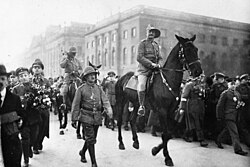
East African Campaign of World War I: The Guerilla War of Lettow-Vorbeck
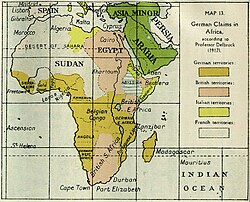
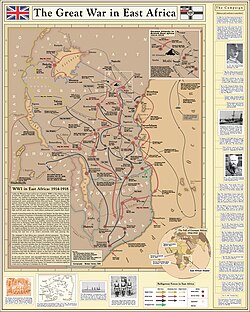
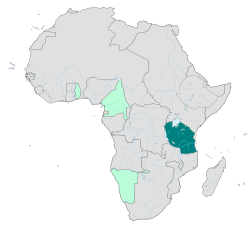
While the Great War is often remembered for the static carnage of the Western Front, a vastly different conflict unfolded in the tropics. The East African Campaign (August 3, 1914 – November 25, 1918) was a grueling war of movement, disease, and endurance. Spanning modern-day Tanzania, Zambia, Mozambique, Rwanda, Burundi, Kenya, Uganda, and the Democratic Republic of the Congo, this theatre saw a small but determined German force tie down hundreds of thousands of Allied troops for over four years.
The conflict was characterized by the strategic brilliance of Lieutenant-Colonel Paul von Lettow-Vorbeck, who transformed the German colonial forces into a mobile guerilla army. Rather than seeking a decisive victory, the German objective was to divert Allied manpower and resources away from the European battlefields, forcing the British Empire to commit massive reinforcements to the African interior.
Key Facts
- Duration: 4 years, 3 months, and 3 weeks.
- Primary German Goal: Divert Allied forces and supplies from Europe to Africa.
- German Leadership: Led by Paul von Lettow-Vorbeck, who remained largely undefeated in the field.
- Human Cost: Massive casualties among African porters, with estimates of 90,000 to 150,000 deaths.
- Outcome: Allied victory, resulting in the partition of German East Africa.
Strategic Foundations and Early Conflict
The German strategy was rooted in a 1912 defensive plan: withdraw to the hinterland and engage in a guerilla campaign. By threatening the critical Uganda Railway, Lettow-Vorbeck aimed to provoke a British invasion that would drain their resources. The campaign began with German ships on Lake Tanganyika bombarding Belgian posts at Mokolobu and Lukuga in August 1914, drawing the Belgian Congo into the conflict.
The British response involved a mix of regular army regiments, such as the Loyal North Lancashire Regiment and the Royal Fusiliers, alongside colonial forces from Rhodesia, Nyasaland, and South Africa. Despite early British and Indian efforts to capture the port of Tanga, the Germans maintained a flexible defense.
The War of Attrition (1916–1917)
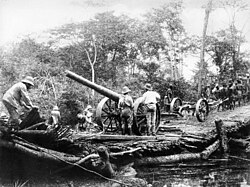
By 1916, the British Empire launched massive offensives under General Jan Smuts. Forces attacked from Kenya in the north, the Belgian Congo in the west, and Lake Nyasa in the southeast. However, the environment proved as deadly as the enemy. Disease decimated the ranks; for example, the 9th South African Infantry saw its strength plummet from 1,135 men to just 116 fit troops in eight months, despite minimal combat.
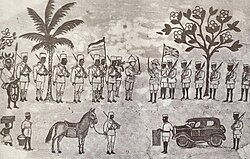
As the war progressed, the composition of the British forces shifted. By 1917, the King's African Rifles (KAR)—composed of Askari (professional African soldiers)—became the backbone of the effort. By the war's end, the British force in the theatre was nearly all-African.
The Belgian and British Push
The Belgian Force Publique successfully occupied Rwanda and Burundi by June 1916 and captured the administrative base of Tabora in September. To prevent Belgium from claiming too much territory post-war, General Smuts eventually ordered Belgian forces back to the Congo, leaving them only in Rwanda and Burundi.
In late 1917, Major-General Jacob van Deventer pushed the Germans 100 miles south. However, the Germans struck back at the Battle of Mahiwa in October 1917, inflicting 2,700 losses on a British Nigerian brigade while suffering only 519 casualties. This victory led to Lettow-Vorbeck's promotion to Generalmajor.
The Final Phase and Surrender
In the final stages of the war, Lettow-Vorbeck moved his forces into Portuguese Mozambique and Northern Rhodesia. He continued to evade capture, maintaining a small but effective force of Schutztruppe (colonial protection force) and Ruga-Ruga (irregular mercenaries).
The end came not through military defeat, but through the armistice in Europe. The Germans in East Africa received word of the ceasefire on November 14, 1918. After waiting for formal confirmation, Lettow-Vorbeck surrendered his forces at Abercorn on November 25, 1918.
The Human and Economic Cost
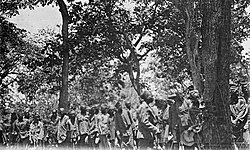
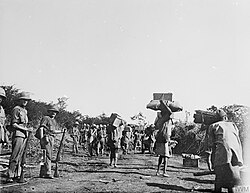
The campaign was a logistical nightmare that relied heavily on the Carrier Corps. Approximately 600,000 African porters were conscripted to transport supplies through roadless terrain. The cost in human life was staggering; an estimated 95,000 porters died, with some regions, like Kenya, losing 13% of their male population to the effort.
Financially, the campaign was a drain on the British Treasury, costing roughly £70 million at the time (estimated at £12 billion in 2007 prices). For the Germans, the campaign was a tactical success in terms of diversion, though it could not change the ultimate outcome of the war in Europe.
| Category | British Empire & Allies | German Empire |
|---|---|---|
| Total Personnel | c. 250,000 soldiers / 600,000 porters | Max 18,000 soldiers / 12,000+ Ruga-Ruga |
| Key Commanders | Jan Smuts, Jacob van Deventer | Paul von Lettow-Vorbeck |
| Major Casualties | c. 22,000 military / 90,000+ porters | 16,000+ military casualties |
| Territorial Result | Gained Mandates (Tanganyika, Ruanda-Urundi) | Lost all East African colonies |
Frequently Asked Questions
Did the Germans ever truly lose the battle in East Africa?
Tactically, Paul von Lettow-Vorbeck remained largely undefeated in the field. He only surrendered after the armistice was signed in Europe, having successfully avoided a decisive defeat throughout the war.
What were the Askari?
The Askari were professional African soldiers serving in the colonial armies of both the Germans (Schutztruppe) and the British (King's African Rifles).
Why were the porter casualties so high?
African porters suffered extreme rates of death due to disease, exhaustion, and malnutrition while transporting supplies through harsh terrain where motorized transport was impossible.
How was German East Africa divided after the war?
The territory was partitioned into League of Nations Class B Mandates: the United Kingdom took the Tanganyika Territory, Belgium took Ruanda-Urundi, and the Kionga Triangle was ceded to Portugal.
What was the primary goal of the German strategy?
The goal was not to conquer territory, but to act as a diversion, forcing the Allies to divert troops, ships, and supplies away from the European theatre to pursue a small, mobile force in Africa.