Duke: The History and Evolution of a Noble Title
The title of Duke represents one of the highest ranks of nobility and royalty. Whether serving as a sovereign ruler of a duchy or as a high-ranking member of a royal house, the duke occupies a prestigious position in the social and political hierarchy. Historically, the title has evolved from a functional military role in the Roman Republic to a hereditary mark of status across Europe and beyond.
Etymologically, the word derives from the French duc, which stems from the Latin dux, meaning "leader." In republican Rome, a dux was a military commander without a formal official rank. Over time, this evolved into the designation for the leading military commander of a province.
Key Facts
- Rank: Below emperors, kings, and grand dukes, but generally above sovereign princes.
- Origin: Derived from the Latin dux (leader), originally a Roman military term.
- Female Equivalent: The title of Duchess is used in most countries.
- Modern Status: While reigning dukes no longer exist in most of Europe, titular and royal dukedoms persist in the UK, Spain, and Sweden.
- Global Reach: Similar systems existed in China (Duke of Yansheng) and Indonesia (Adipati).
The Roman and Byzantine Foundations
The transition of the title from a general term for a leader to a specific administrative rank occurred under Emperor Diocletian. His reforms separated civilian and military administrations, establishing the dux as the military commander of a province.
This system survived in the Eastern Roman (Byzantine) Empire, where the term was Hellenised to doux. In this context, it signified a rank similar to a general or captain. By the 11th century, the empire introduced the title Megas Doux to designate the commander-in-chief of the entire navy.
The Middle Ages and European Peerage
During the Middle Ages, the title (known as Herzog in Germanic regions) identified the rulers of provinces who held authority over city counts. In feudal monarchies, dukes became the highest-ranking peers of the king.
The relationship between a duke and the national peerage varied by region. In the United Kingdom and Spain, all dukes were members of the peerage. In France, some were peers while others were not. In other nations, similar institutions existed, such as the Hungarian House of Magnates or the Spanish Grandeeship.
The Duchy of Normandy and the Channel Islands
The Duchy of Normandy provides a unique example of title retention. Although the title was renounced under the Treaty of Paris in 1259, the English Crown maintains that the sovereign remains the Duke of Normandy. This is reflected in the Channel Islands, which remain self-governing possessions of the Crown; islanders still refer to the monarch as "Le Roi, notre Duc" (The King, Our Duke).
Regional Developments in Europe
England and the British Peerage
The first English dukedom was created in 1337 by Edward III for his eldest son, the Black Prince, as the Duke of Cornwall. By 1483, sixteen ducal titles had been created, including York, Lancaster, and Norfolk. Following the Battle of Bosworth Field in 1485, only four remained, with the Duchy of Cornwall and the Duchy of Lancaster becoming permanently associated with the Crown.
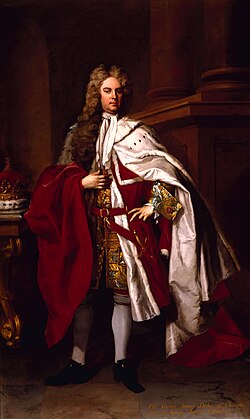
In the modern United Kingdom, a Royal Duke is a member of the royal family entitled to the style "His Royal Highness." However, non-royal dukedoms also exist.
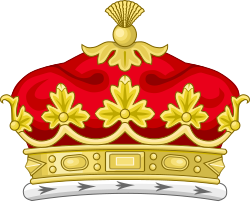
The Nordic Countries
In Sweden, the practice of making royal sons ruling princes of duchies ended in 1622, but titular, non-hereditary dukedoms were reinstated in 1772. Today, Swedish princes and princesses are created dukes or duchesses of a province at birth.
![In the 1260s Birger Jarl bore a ducal coronet and used the Latin title of Dux Sweorum (Latin for "Duke of the Swedes"); the design of his coronet combined those used by continental European and English dukes.[7]](/images/2b/0d/2b0d968e8572753c09eda5f1572e4f2b9c0b5ea774af3fad6d0b2b812ff6731a.jpg)
In Finland, during the period of Swedish rule, certain provinces were governed by a Duke of Finland.
![Bishop Bengt Birgersson (1254–1291) was the first Duke of Finland[8]](/images/6a/01/6a01935ccfae86d6db244ea646c8578c6407b4164949b5c1333eae9581637ddc.jpg)
Iberian Peninsula and Central Europe
Portugal first granted ducal titles in 1415 to the sons of King John I. In Spain, the last non-royal hereditary dukedom was created in 1981 for former Prime Minister Adolfo Suárez. In Austria, the Habsburgs used the title Archduke from 1358 for senior members of their dynasty.
Global Analogues
The concept of a ducal rank appeared in various forms outside of Europe:
- China: The Duke of Yansheng was granted to the descendants of Confucius. In 1935, this became the hereditary office of Sacrificial Official to Confucius.
- Indonesia: The Majapahit kingdom used the title Bhre for royal family members administering provinces. Later, Sultan Agung of Mataram used the hereditary title Adipati for officials ruling territories called Kadipaten.
- Georgia: Between the 6th and 9th centuries, the Erismtavari served as a rank similar to a grand duke.
Summary of Ducal Ranks and Terms
| Region/Culture | Title/Term | Context/Meaning |
|---|---|---|
| Ancient Rome | Dux | Military leader/commander |
| Byzantine Empire | Doux / Megas Doux | General / Navy Commander-in-Chief |
| Germany | Herzog | Provincial ruler / High peer |
| Austria | Archduke | Senior Habsburg dynasty member |
| Indonesia | Adipati | Hereditary ruler of a Kadipaten |
| China | Duke of Yansheng | Descendants of Confucius |
Frequently Asked Questions
What is the difference between a Duke and a Grand Duke?
A Grand Duke is a higher rank than a Duke, positioned just below a King. For example, Luxembourg is ruled by a Grand Duke.
Is a Duke always a member of the peerage?
Not necessarily. While all dukes in the UK and Spain were peers, in France, some dukes held the title without being members of the peerage of the realm.
Who is the Duke of Normandy today?
The British monarch holds the title of Duke of Normandy, a tradition maintained despite the loss of most French lands in the 13th century.
How did the title of Duke originate?
It originated from the Latin word dux, meaning leader, and was used in the Roman Republic to describe military commanders before becoming a formal title of nobility.
Are there still reigning dukes in Europe?
No. Since the unification of Italy in 1870 and the fall of the German and Austrian monarchies in 1918, there are no longer any reigning dukes in Europe, though titular dukedoms remain.