Dragging Canoe: The Defiant Leader of the Chickamauga Cherokee
Born around 1738, Tsiyu Gansini—better known to history as Dragging Canoe—emerged as one of the most formidable opponents of colonial encroachment in the American Southeast. A leader of unwavering resolve, he spent much of his life fighting to preserve Native American territories against the expanding tide of white settlement during the 18th century.
Early Life and Heritage
Dragging Canoe's lineage was a blend of diverse Native American influences. He was the son of Attakullakulla (known as "Little Carpenter"), a Nipissing head-man from the Lake Superior region, and Nionne Ollie ("Tame Doe"), who was born to the Natchez but adopted by the wife of Cherokee Chief Oconostota. These family ties integrated him deeply into Cherokee society, and he grew up among the Overhill Cherokee on the Little Tennessee River in present-day southeast Tennessee.
His childhood was marked by resilience; he survived a bout of smallpox that left his face scarred. According to Cherokee legend, his name was earned during a youth attempt to join a war party against the Shawnee. When his father challenged him to carry his canoe to prove his readiness for war, the young man was unable to lift it and could only drag the heavy vessel across the ground.
Rise as a War Chief
Dragging Canoe's military career began during the Anglo-Cherokee War. This conflict solidified his reputation as a fierce defender of Cherokee lands. He eventually rose to become the headman of Mialoquo (the "Great Island Town" or Amoyeli Egwa) on the Little Tennessee River.
At the start of the American Revolutionary War, the Cherokee allied with the British. Dragging Canoe led one of three major forces in a coordinated attack on the Overmountain settlements, specifically targeting Heaton's station during the Battle of Island Flats, a conflict from which he barely survived.
The Establishment of the Chickamauga Towns
By late 1776, colonial militias had launched devastating counterattacks, including Rutherford's Campaign, which destroyed the Lower, Middle, and Valley Cherokee towns. While his father and Chief Oconostota sought peace, Dragging Canoe refused to accept defeat.
In early 1777, he led approximately 500 Overhill Cherokee south along the Tennessee River. They settled near the junction of South Chickamauga Creek and the Tennessee River, near modern-day Chattanooga. Because of this location, frontiersmen dubbed them the Chickamauga.
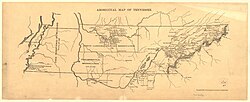
The group established 11 towns, including "Old Chickamauga Town." Their resistance was sustained by John McDonald, a Scotsman and British assistant superintendent, who provided the Chickamauga with essential supplies, including cannons, guns, and ammunition.
The Move to the Lower Towns
The Chickamauga faced repeated American assaults. In 1779, Evan Shelby led an expedition to destroy the towns, claiming the Cherokee had been reduced to a willingness to treat for peace. However, the conflict persisted. In 1782, Colonel John Sevier led a large U.S. force that devastated the settlements, forcing the band further down the Tennessee River.
Dragging Canoe then established the Five Lower Towns below the Tennessee River Gorge: Running Water Town (Whiteside), Nickajack Town, Long Island, Crow Town, and Lookout Mountain Town. From this new base at Running Water Town, he launched raids across the Southeast, targeting settlements on the Holston, Watauga, and Nolichucky rivers, as well as the Cumberland River area, the Republic of Franklin, and parts of Kentucky and Virginia.
Key Facts
- Birth: Approximately 1738.
- Parentage: Son of Attakullakulla (Nipissing) and Nionne Ollie (Natchez/Cherokee).
- Major Conflict: Led the Chickamauga Cherokee in resistance against American colonists.
- Strategic Base: Established the Five Lower Towns below the Tennessee River Gorge.
- Alliances: Maintained ties with the British (via John McDonald) and later the Muskogee and Choctaw.
- Death: February 29, 1792, at Running Water Town.
| Town Name | Modern Location / Note |
|---|---|
| Running Water Town | Now Whiteside |
| Nickajack Town | Near Nickajack Cave |
| Long Island | On the Tennessee River |
| Crow Town | At the mouth of Crow Creek |
| Lookout Mountain Town | Current site of Trenton, Georgia |
Death and Succession
Dragging Canoe passed away on February 29, 1792, at Running Water Town. His death followed a night of celebratory dancing to mark a victory over Cumberland settlements and the formation of a new alliance with the Choctaw and Muskogee. He is believed to have died from exhaustion or a heart attack. He was succeeded as chief by John Watts.
Frequently Asked Questions
How did Dragging Canoe get his name?
According to legend, as a youth, he wanted to join a war party against the Shawnee. His father told him he could go if he could carry his canoe; unable to lift it, he dragged it instead.
Who were the Chickamauga Cherokee?
The Chickamauga were a band of about 500 Overhill Cherokee who broke away from the main tribe in 1777 to continue fighting American colonists, settling near South Chickamauga Creek.
What was the role of John McDonald in the conflict?
John McDonald was a Scotsman and British assistant superintendent who supplied Dragging Canoe's forces with ammunition, guns, and cannons to fight the American colonists.
Where were the Five Lower Towns located?
They were located below the Tennessee River Gorge and included Running Water Town, Nickajack Town, Long Island, Crow Town, and Lookout Mountain Town.
Who succeeded Dragging Canoe as chief?
Following his death in 1792, Dragging Canoe was succeeded as chief by John Watts.