Donald Trump and Professional Football: A History of Ownership Bids and USFL Conflict
For decades, Donald Trump has maintained a complex and often contentious relationship with professional gridiron football. From high-stakes attempts to enter the National Football League (NFL) to the ownership of a franchise in the short-lived United States Football League (USFL), Trump's ventures in the sport have been marked by ambitious bids, public disputes, and strategic gambles.
The Early Pursuit of the NFL
Trump's first foray into NFL ownership began in 1981 with an attempt to purchase the Baltimore Colts. Leading a six-member group that included former Washington Redskins coach George Allen, Trump offered owner Robert Irsay $50 million (approximately $177 million in 2025). While news sources and NFL Commissioner Pete Rozelle later confirmed the attempt, Trump denied his involvement at the time.
![Trump and George Allen (right) were part of a group that sought to purchase the Baltimore Colts in 1981.[9]](/images/b5/ea/b5ea26ac365533cbb23d3677c051c8b77c09ffbaf84341b36828f09f636eee97.jpg)
Interest in the Colts persisted into 1983, but Robert Irsay ultimately rejected the efforts and relocated the team to become the Indianapolis Colts in March 1984.
The Dallas Cowboys Opportunity
In 1984, Trump expressed interest in buying the Dallas Cowboys for $50 million (approximately $155 million in 2025). However, he ultimately declined the purchase, citing a belief that the team was a "no-win situation" and that there was little room for profit at that price point. He instead pivoted toward the newly formed USFL, believing it offered a higher return on investment. This decision is often cited by analysts as a significant business blunder, given the Cowboys' 2024 valuation of $10.1 billion.
Ownership of the New Jersey Generals
In 1983, Trump purchased the New Jersey Generals from owner J. William Duncan for an estimated $5 million to $10 million. The USFL was designed as a spring league to avoid direct competition with the NFL.
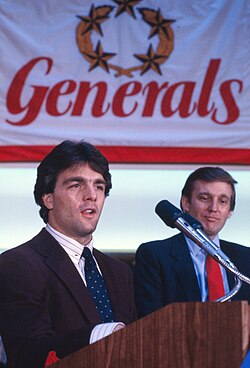
Under Trump's ownership, the Generals became a high-profile team. He signed former NFL MVP Brian Sipe and attempted to lure Miami Dolphins coach Don Shula with a $1 million annual salary, though Shula declined. In 1985, the Generals made a major splash by signing Heisman Trophy-winning quarterback Doug Flutie to a multi-million-dollar contract.
The Shift to Fall and the NFL Lawsuit
Trump eventually grew opposed to the USFL's spring schedule, famously stating, "If God wanted football in the spring, he wouldn't have created baseball." He pushed the league to move its games to the fall to compete directly with the NFL, hoping to force a merger or increase the league's value. Despite initial resistance from other owners, the league voted 12–2 in 1986 to move to the fall.
This strategic shift led to a massive antitrust lawsuit against the NFL. While the jury ruled against the NFL, they found that the NFL did not cause the USFL's financial failures. The USFL was awarded only $1 in damages, which was tripled to $3. The league folded shortly after the trial. Critics, including documentary filmmaker Tollin and author Jeff Pearlman, argue that Trump's insistence on moving to the fall was detrimental to the league's survival.
Later NFL Ownership Attempts
The New England Patriots
In 1988, Trump entered discussions to buy the New England Patriots from Billy Sullivan. However, he withdrew from the deal after discovering the purchase would include $104 million in debt. Reports suggest NFL Commissioner Pete Rozelle also opposed the sale due to Trump's previous legal battles with the league and his casino holdings.
The Buffalo Bills Campaign
In 2014, following the death of owner Ralph Wilson, Trump attempted to purchase the Buffalo Bills with a bid of approximately $1 billion. To influence the process, Trump employed political operative Michael Caputo to organize "12th Man Thunder," a fan group that campaigned against frontrunner Jon Bon Jovi by spreading rumors that the musician intended to move the team to Canada.
![Trump employed a public opinion campaign against Jon Bon Jovi during his attempted purchase of the Buffalo Bills in 2014.[1][44]](/images/32/7f/327f094dc80e5635252d562e85d6c19f77ea37a2ae8b548ea63262260a12cc0e.jpg)
Ultimately, businessman Terry Pegula acquired the team for $1.4 billion. Following the sale, Trump claimed his bid was "half-hearted" and primarily intended to ensure the team remained in Buffalo, as he was focusing on his presidential campaign.
Controversies and Public Conflict
Trump's relationship with the NFL remained strained into his presidency. In 2019, former attorney Michael Cohen testified before Congress that Trump had inflated his net worth to secure a loan from Deutsche Bank to assist in the Buffalo Bills bid, specifically adding $4 billion in undefined "brand value" to his assets.
Furthermore, in 2017, Trump became a vocal critic of NFL players, such as Colin Kaepernick, who knelt during the national anthem to protest racial inequality and police violence. Trump urged owners to fire protesting players and called for a fan boycott.
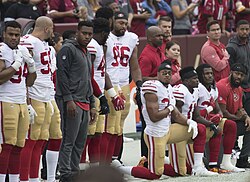
Commentators and some team owners suggested these attacks were partly motivated by a long-standing feud with the league and a belief that Commissioner Roger Goodell had blocked his previous attempts at ownership.
Key Facts
- First NFL Bid: Attempted to buy the Baltimore Colts in 1981 for $50 million.
- USFL Venture: Owned the New Jersey Generals (1983–1985), signing star QB Doug Flutie.
- Legal Battle: Led the USFL's antitrust lawsuit against the NFL, resulting in a nominal $3 award.
- Missed Opportunity: Declined to buy the Dallas Cowboys in 1984 for $50 million.
- Final Major Bid: Attempted to buy the Buffalo Bills in 2014 with a ~$1 billion bid.
| Team/League | Year | Outcome | Estimated Bid/Value |
|---|---|---|---|
| Baltimore Colts | 1981/1983 | Rejected | $50 Million |
| Dallas Cowboys | 1984 | Declined | $50 Million |
| New Jersey Generals (USFL) | 1983 | Purchased | $5M - $10M |
| New England Patriots | 1988 | Withdrew | ~$80 Million |
| Buffalo Bills | 2014 | Outbid | ~$1 Billion |
Frequently Asked Questions
Why did Donald Trump decide not to buy the Dallas Cowboys?
Trump stated that he believed the team was a "no-win situation" and that the $50 million asking price left little room for profit. He believed investing in the USFL would provide a better return on investment.
What was the result of the USFL lawsuit against the NFL?
The jury ruled that the NFL was a monopoly but found that the USFL's financial problems were not caused by the NFL. The USFL was awarded $1, which was tripled to $3 in an antitrust case. The league folded shortly after.
How did Trump attempt to influence the sale of the Buffalo Bills?
Trump used a political operative to organize a fan group called "12th Man Thunder," which campaigned against Jon Bon Jovi by claiming he would move the team to Canada and creating "Bon Jovi Free Zones" in local businesses.
What was the "brand value" controversy regarding the Buffalo Bills bid?
Former attorney Michael Cohen testified that Trump inflated his assets to secure a loan from Deutsche Bank for the Bills purchase, including $4 billion in "brand value" that was not clearly defined in financial documents.
Why did Trump criticize NFL players for kneeling during the anthem?
Trump viewed the protests against racial inequality and police violence as a sign of disrespect toward the flag and urged owners to fire the players involved, while some analysts suggest this was part of a larger personal feud with the NFL.