Don Segundo Sombra: Ricardo Güiraldes and the Legacy of the Gaucho
Published in 1926, Don Segundo Sombra stands as a cornerstone of Argentine literature. Written by the rancher Ricardo Güiraldes, the novel offers a profound meditation on the figure of the gaucho—the traditional nomadic horsemen of the Argentine pampas. While it shares a thematic lineage with earlier works, Güiraldes brought a modern sensibility to the narrative, transforming the gaucho from a romanticized relic into a timeless ethical guide.
Key Facts
- Author: Ricardo Güiraldes, a rancher and co-founder of the magazine Proa with Jorge Luis Borges.
- Publication Year: 1926.
- Origin: Argentina.
- Inspiration: Based loosely on the real-life Segundo Ramírez of San Antonio de Areco.
- Literary Movement: A primary example of criollismo, a literary trend focusing on local customs and regional identity.
A Departure from Romanticism
To understand Don Segundo Sombra, one must compare it to José Hernández's 1870s poem, Martín Fierro. While both works center on the gaucho, they differ fundamentally in their approach. Where Hernández often presented a romanticized or elegiac view of the gaucho, Güiraldes treats his protagonist as a "sombra" (shadow) cast across the history of Argentina.
Rather than mourning a disappearing way of life, Güiraldes used the character of Don Segundo to provide a series of ethical examples. He intended the novel to serve as a moral compass for the youth of his era, whom he perceived as restless and disoriented.
Real-Life Inspiration and Literary Style
Unlike the purely fictional nature of Martín Fierro, Don Segundo Sombra was inspired by a real person: Segundo Ramírez, a native of San Antonio de Areco in the Buenos Aires Province.
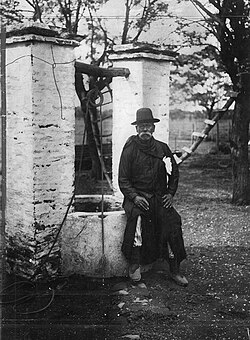
Güiraldes utilized his unique position as both a literary figure and a rancher to craft a distinct linguistic style. He blended formal literacy with colorful local expressions, creating a modern, accessible language that solidified his reputation as a master of criollismo.
Legacy and Adaptation
The impact of the novel extended beyond the printed page. In 1969, the story was adapted into an Argentine film directed by Manuel Antín, bringing the atmospheric world of the pampas to the cinema.
| Feature | Details |
|---|---|
| Author | Ricardo Güiraldes |
| First Published | 1926 |
| Language | Spanish |
| Real-life Basis | Segundo Ramírez |
| Film Adaptation | 1969 (Dir. Manuel Antín) |
Frequently Asked Questions
Who inspired the character of Don Segundo Sombra?
The character was loosely based on the real-life experiences and personality of Segundo Ramírez, who was from San Antonio de Areco in the Buenos Aires Province.
How does this novel differ from Martín Fierro?
While Martín Fierro is often seen as a romanticized elegy for the gaucho, Don Segundo Sombra examines the gaucho as a historical shadow and focuses on providing ethical examples for the youth.
What is "criollismo" in the context of this book?
Criollismo is a literary movement that emphasizes regional identity, local customs, and the specific language of the Americas. Güiraldes achieved this by mixing formal Spanish with local colloquialisms.
Who was Ricardo Güiraldes?
Ricardo Güiraldes was an Argentine rancher and writer. He was also a literary partner of Jorge Luis Borges, and together they founded the magazine Proa.
Was the novel ever made into a movie?
Yes, the novel was adapted into an Argentine film in 1969, directed by Manuel Antín.