Domestic Ducks: From Ancient Origins to Modern Farming
Domestic ducks are versatile birds that have played a vital role in human civilization for millennia. Primarily raised for their meat and eggs, these birds also serve ornamental purposes and hold significant places in global folklore and art. Most domestic ducks descend from the mallard (Anas platyrhynchos domesticus), with additional contributions from the Muscovy duck (Cairina moschata domestica).
![Ducks with free access to rice paddies in Bali, Indonesia provide additional income and manure the fields, reducing the need for fertilizer.[16]](/images/83/6c/836cf2d8171e6604f18272fb7fc55e02dff7e10f451d225f7404a2f45e38cdd0.jpg)
Key Facts
- Primary Ancestry: Most domestic breeds derive from the mallard, domesticated in China around 2000 BC.
- Global Production: China accounts for over 80% of global duck production.
- Productivity: While most breeds lay around 200 eggs annually, the Indian Runner can produce over 300.
- Polyculture: Rice-duck farming is a common practice in East and Southeast Asia to manage pests and fertilize crops.
- Lifespan: In captivity, domestic ducks can live between 8 to 12 years.
Origins and Domestication
Whole-genome sequencing suggests that domestic ducks originated from a single domestication event of mallards during the Neolithic period. This likely occurred in Southern China around 2000 BC, driven by the rice paddy-farming ancestors of modern Southeast Asians. While the exact date remains unconfirmed due to limited archaeological records, the earliest written mentions appear in Han Chinese texts from approximately 500 BC.
The Muscovy duck followed a different path, having been domesticated in Mexico and South America. While wild ducks were hunted extensively in ancient Egypt and Rome, they were not systematically bred in those regions; Roman agriculture typically relied on capturing wild ducks to establish farms.
Evolution of Breeds
Domestication has significantly altered the behavior and physical traits of these birds. Unlike the monogamous wild mallard, domestic ducks are largely promiscuous and have lost much of the territorial aggression seen in their wild counterparts. They also vary wildly in size: the large Aylesbury breed can weigh up to 4.6 kg (10 lb), whereas the small Appleyard may weigh only 0.7 kg (1.5 lb).
Farming and Husbandry
Duck farming is often simplified by the birds' natural flocking behavior and their ability to forage effectively in wetlands. In many parts of East and Southeast Asia, farmers utilize polycultures—integrated farming systems where ducks, rice, and sometimes fish coexist. In these systems, ducks provide natural manure, stir the water to limit weed growth, and consume small pests that would otherwise damage the rice crops.
Challenges in Rearing
While ducks are generally resistant to many poultry diseases, such as duck plague, they remain susceptible to the H5N1 strain of avian influenza. They are also prone to various parasites, including endoparasites like trematodes and cestodes, which can reduce growth rates. Additionally, while many breeds are prolific layers, they are often unreliable at sitting on eggs to hatch them, leading farmers to use incubators or broody hens.
One critical aspect of duckling care is preen oil. Ducklings rely on their mothers for this oil to remain waterproof; once they mature, they produce it themselves via a sebaceous gland near the base of their tail.
Global Production and Culinary Uses
In 2021, approximately 4.3 billion ducks were slaughtered for meat worldwide, yielding about 6.2 million tonnes. China dominated this sector, producing 4.9 million tonnes of meat from 3.6 billion birds. While duck production is significant, it remains lower than chicken production but higher than goose production.
Culinary Traditions
Duck meat is a staple in many cultures, often focusing on the breast and thigh. Famous preparations include:
- Peking Duck: A traditional Chinese roast duck from Beijing, served with spring pancakes, spring onions, and sweet bean sauce.
- Foie Gras: Produced in France from ducks.
- Balut: A fertilized duck egg, about 17 days into development, which is a popular street food delicacy in the Philippines.
- Blood Dishes: In various cultures, duck blood is used in soups, such as the Polish czarnina or the Vietnamese tiết canh.
Cultural Significance
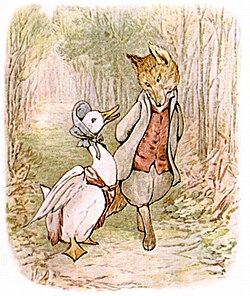
Ducks have long been symbols in art and literature. In ancient Egypt, they served as symbols of fertility. In modern culture, they are beloved characters in children's stories, such as Beatrix Potter's The Tale of Jemima Puddle-Duck and Marjorie Flack's The Story About Ping. They also feature prominently in music, most notably in Sergei Prokofiev's Peter and the Wolf, where the duck is represented by the oboe.
Summary of Duck Varieties and Traits
| Breed/Type | Primary Use | Key Characteristics |
|---|---|---|
| White Pekin | Meat | Derived from Chinese domestication |
| Indian Runner | Eggs | Upright stance; can lay over 300 eggs per year |
| Muscovy | Meat/Pets | Richly-flavoured meat; good at sitting on eggs |
| Aylesbury | Meat | Large breed, weighing up to 4.6 kg |
Frequently Asked Questions
What is the difference between a mallard and a domestic duck?
Most domestic ducks are descended from mallards. While wild mallards are typically monogamous and territorial, domestic ducks are generally more promiscuous, less aggressive, and have been selectively bred for specific traits like meat or egg production.
How do ducks help in rice farming?
In rice-duck polyculture systems, ducks act as natural pest control by eating small animals that damage crops. They also provide manure to fertilize the rice and stir the water, which helps limit the growth of weeds.
Can domestic ducks be kept as pets?
Yes, some breeds, such as the Muscovy duck, are kept as pets. Domestic ducks can live for 8 to 12 years in captivity.
Why are ducklings important for waterproofing?
Ducklings require preen oil to stay waterproof. This oil is provided by the mother duck; if raised by an incubator, ducklings must wait until they grow their own feathers to produce oil from their sebaceous gland.
What is the most productive duck breed for eggs?
The Indian Runner is highly prolific and can produce over 300 eggs per year.