Disruptive Coloration: The Science of Breaking Outlines for Camouflage
In the natural world, survival often depends on the ability to remain unseen. While many think of camouflage as simply blending into a background, one of the most effective strategies is actually based on high contrast. Disruptive coloration (also known as disruptive patterning) is a form of camouflage that works by breaking up the recognizable outlines of an animal, soldier, or piece of military hardware using strongly contrasting patterns.
This strategy seems paradoxical: how can conspicuous patches of color make something harder to see? The secret lies in the way the brain perceives shapes. By using bold markings, disruptive coloration destroys the continuous surfaces and boundaries of an object, preventing a predator or observer from recognizing the overall form.
![The principle of "maximum disruptive contrast" in Hugh Cott's 1940 Adaptive Coloration in Animals, "showing the distractive effect upon the eye of patterns which contrast as violently as possible with the tone of their background".[1] The examples are of a fish, an antelope, and a bird.](/images/33/7d/337d25f605455fb7b8ed3022ede9a243f8696a51b612f79269a4412ec6414534.jpg)
Key Facts
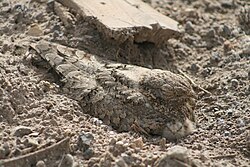
- Mechanism: It uses high-contrast patterns to break up the outline of an object rather than just matching the background color.
- Versatility: Unlike simple background matching, disruptive coloration is effective across a variety of different environments.
- Biological Use: Employed by both predators (e.g., leopards) and prey (e.g., Egyptian nightjars).
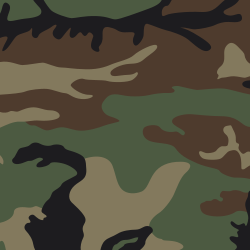
- Military Application: Used in uniforms and vehicle paint, evolving from simple blotches to complex digital (pixellated) patterns.
- Opposite Effect: Aposematism is the opposite of disruption, using high contrast to emphasize an animal's shape as a warning.
The Evolution of Camouflage Theory
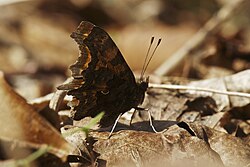
Early Foundations: Thayer and Cott
The conceptual groundwork for disruptive coloration was laid by the artist Abbott Handerson Thayer in 1909. Thayer argued that "ruptive" marks, combined with countershading (the use of darker tones on top and lighter tones below to cancel out self-shadowing), worked to obliterate the visibility of an animal's boundaries.
In 1940, zoologist Hugh B. Cott expanded these ideas by introducing the principle of "maximum disruptive contrast." Cott posited that because lighting and backgrounds are constantly changing, simple color matching is rarely sufficient. He argued that for effective concealment, the "tell-tale appearance of form" must be destroyed. He compared the effect to a pickpocket who uses distraction to divert attention away from their primary action.
Experimental Validation
Modern research has confirmed these early theories. A 2006 study by Martin Stevens and colleagues used moth-like targets to test predation. They discovered that while disruptive patterns are most effective when they match the background's luminance, they still provide better protection than plain or non-disruptive patterns, even when some color patches do not match the background.
Disruptive Coloration in Nature
Animal Adaptations
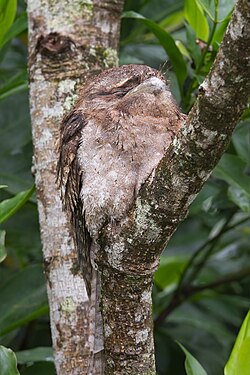
Many species utilize disruptive patterns to hide from predators or sneak up on prey. For example, the leopard uses spots to break up its silhouette, while the Egyptian nightjar relies on its plumage to blend into the sand.
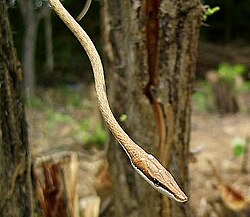
A specialized version of this is the disruptive eye mask. Because eyes are typically round and dark, they are easy for predators to spot. Many fish, frogs, and snakes have a dark stripe running through the eye, making the eye appear as just another part of the animal's pattern.
Distraction vs. Disruption
It is important to distinguish between disruptive coloration and distractive markings. While both use conspicuous marks, they function differently: disruptive markings must contact the outline of the body to break it up, whereas distractive markings are typically small and avoid the outline to draw attention away from the animal entirely.

The Case of the Giraffe
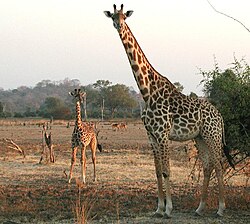
The giraffe presents a debated case. While adult giraffes are highly visible, research suggests their patterns are effective camouflage when they stand among trees and bushes. This is especially critical for calves, who are highly vulnerable to predation and spend much of their time hidden in cover.
Aposematism: The Opposite of Camouflage
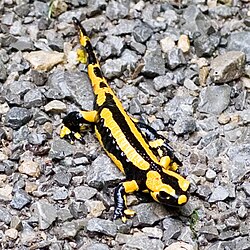
Not all high-contrast patterns are meant to hide. Aposematism is the use of warning coloration to advertise that an animal is poisonous or distasteful. Instead of breaking up the outline, aposematic animals—such as skunks, monarch butterflies, and fire salamanders—use patterns that emphasize their body shape to ensure they are as conspicuous as possible.
Applications in Plants and Military
Botanical Camouflage
Though less studied, some plants exhibit leaf variegation (pale markings on leaves). Researchers suggest that in forest understories with dappled light, these markings may serve as disruptive camouflage to protect the plant from herbivores.
![Many understory plants, such as the saw greenbriar, Smilax bona-nox, are variegated with pale markings which may serve as camouflage.[14]](/images/cf/1a/cf1a5c1f40ae8d139a44cfdc3ab36a470cbf7a6fcef53573d7e7392acc46f21b.jpg)
Military Strategy and Challenges
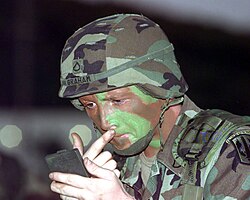
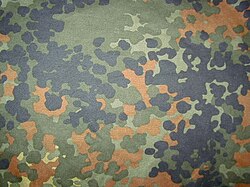
Military forces have used disruptive patterning for decades on uniforms, helmets, and vehicles to break up the human silhouette. However, designing an effective pattern is challenging due to three main factors:
- Terrain Variety: A pattern designed for woodlands is ineffective in deserts or urban environments.
- Lighting: The effectiveness of a pattern changes based on weather and the sun's position.
- Distance: Small patches blend into a single mass at a distance, while large patches are too obvious up close.
To solve the distance problem, modern militaries developed digital camouflage (such as CADPAT and MARPAT). These use pixellated shapes to create a fractal-like range of patch sizes, ensuring the pattern remains disruptive at both close and long ranges.
Summary of Camouflage Types
| Strategy | Primary Goal | Visual Mechanism | Example |
|---|---|---|---|
| Background Matching | Blending in | Matching color/tone of a single environment | Plain green insect on a leaf |
| Disruptive Coloration | Breaking the outline | High-contrast patches that intersect the boundary | Leopard spots |
| Distractive Markings | Diverting attention | Small, conspicuous marks away from the outline | Eye-spots on some butterflies |
| Aposematism | Warning predators | High-contrast patterns that emphasize the shape | Fire salamander |
Frequently Asked Questions
How does disruptive coloration differ from standard camouflage?
Standard camouflage (background matching) attempts to make an object the same color as its surroundings. Disruptive coloration uses high-contrast patterns to break up the object's outline, making it difficult for the observer to recognize the shape of the object.
Why is digital camouflage more effective than older patterns?
Digital or pixellated patterns use a variety of patch sizes. This prevents the pattern from blending into a single solid color at a distance while remaining disruptive at close range, solving the scaling problem of traditional blotchy patterns.
Can an animal be both aposematic and disruptively colored?
Yes. Some species, such as the wood tiger moth, exhibit both. Their bright colors act as a warning (aposematism) against green backgrounds, but their wing patterns provide disruptive camouflage when they are on the ground among dead leaves.
What is a disruptive eye mask?
A disruptive eye mask is a dark stripe or patch of color that runs through the eye of an animal. This hides the round, dark shape of the pupil, which is a key visual cue that predators use to identify prey.
Does disruptive coloration work in all environments?
While it is more versatile than simple background matching, it is not universal. Its effectiveness depends on the contrast between the pattern and the environment; for example, a woodland pattern will be too conspicuous in a desert.