Diocese of Wilmington: A Comprehensive History of Catholicism in the Delmarva Region
The history of the Catholic faith on the Delmarva Peninsula is a journey of resilience, evolving from clandestine gatherings and small missions to a structured diocese serving thousands. From the early Jesuit efforts in the 17th century to the modern administration of the Diocese of Wilmington, the Church has played a pivotal role in the social and spiritual fabric of Delaware and surrounding areas.
Early Foundations (1600–1800)
The roots of Catholicism in the region began with Wye Chapel, the first Catholic church on the Delmarva Peninsula, located near present-day Easton, Maryland. Under the leadership of Jesuit pastor Nicholas Gulick, the chapel served as a strategic base for priests visiting scattered communities. However, this early growth was halted in 1590 when King William III of England prohibited the practice of Catholicism, leading to the chapel's closure.
By the mid-18th century, Catholic activity resurfaced. In 1747, Jesuit missionaries established the first Catholic mission in Delaware near present-day Blackbird. Despite these efforts, the faith remained precarious; for instance, Jesuit priest James Beadnall was arrested in Easton for celebrating Mass in a private residence.
The tide shifted following the American Revolutionary War. In 1784, Pope Pius VI created the Prefecture Apostolic of the United States, which became the Diocese of Baltimore in 1789. This administrative shift paved the way for the construction of St. Mary of the Assumption in 1788 by White Clay Creek, marking the first Catholic church established in Delaware.
Growth and the Formation of the Diocese (1800–1900)
The 19th century saw a steady expansion of the faith. In 1804, Patrick Kenney founded a mission at the Coffee Run Cemetery in Mill Creek, a site later recognized on the National Register of Historic Places in 1973. In 1808, the Diocese of Philadelphia was created, placing all of Delaware under its jurisdiction for the next six decades. The first Catholic church in Wilmington itself opened its doors in 1816.
A defining moment occurred on March 3, 1868, when Pope Pius IX officially erected the Diocese of Wilmington. This new entity encompassed all of Delaware, several counties in Maryland (including Caroline, Cecil, Dorchester, Kent, Queen Anne's, Somerset, Talbot, Wicomico, and Worcester), and two counties in Virginia (Accomack and Northampton). Thomas Becker of Baltimore was appointed as the first bishop.
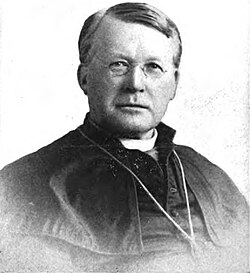
Bishop Becker's tenure was marked by rapid growth, including a doubling of churches and a three-fold increase in priests. He also prioritized education and social welfare by establishing an orphanage, an academy for boys, and two parochial schools. He served until 1886, when he was appointed bishop of the Diocese of Savannah.
The Tenure of Bishop Alfred Curtis
Following Becker, Bishop Alfred Curtis took office in 1886. He is remembered for his commitment to marginalized communities and administrative reform. Curtis introduced the Josephite Fathers to minister to African-American Catholics, leading to the 1890 dedication of St. Joseph Church in Wilmington—a necessity at a time when Delaware law prohibited African-Americans from attending White churches.
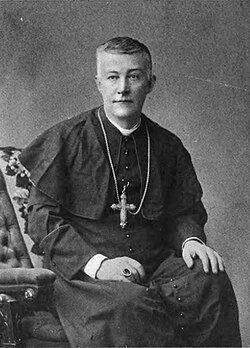
Bishop Curtis also addressed the diocese's financial and legal health, transferring church properties from the bishop's personal name to the diocese and clearing significant debts. During this era, the Josephite priest John de Ruyter opened St. Joseph's Orphanage in 1893, the first orphanage for African-American boys in the United States. That same year, the Ursuline Academy for girls was established by the Ursuline Sisters of Bedford Park.
Expansion and Modernization (1900–1985)
The early 20th century brought further institutional growth. Bishop John Monaghan (appointed 1897) expanded the diocese's infrastructure with seven new parishes, eight schools, and a home for the elderly. In 1903, the Oblate Fathers opened Salesianum, a secondary school for boys, and in 1924, the Sisters of Saint Francis of Philadelphia founded St. Francis Hospital (now Saint Francis Healthcare).
Bishop Edmond Fitzmaurice, who served for 35 years starting in 1925, oversaw a population surge from 34,000 to 85,000 Catholics. He founded 17 parishes and 28 schools, while establishing numerous civic organizations, including the Catholic Welfare Guild and the Catholic Interracial Council. However, his tenure also included controversy; in 1945, he prohibited Catholic students in public high schools from attending sex education courses, citing them as offensive to the Catholic conscience.
Bishop Michael Hyle, succeeding Fitzmaurice in 1960, focused on the reforms of the Second Vatican Council (an ecumenical council that modernized the Church). He promoted parish councils and ecumenical dialogue, and oversaw the opening of St. Mark's High School in 1970 and the University of Delaware's Newman Centre. After Hyle's death in 1967, Bishop Thomas Mardaga took over, continuing the Council's reforms and creating a ministry for migrant workers.
Contemporary Era and Challenges (1985–Present)
From 1985, the diocese was led by Bishop Robert Mulvee, who emphasized collegiality and ecumenical cooperation. He was succeeded in 1996 by Bishop Michael Saltarelli, whose tenure saw the ordination of 23 priests and 47 permanent deacons, alongside significant facility renovations.
In 2008, Bishop W. Francis Malooly was appointed. His tenure was marked by public debate regarding the administration of communion to political figures and a severe financial crisis. In 2009, the diocese filed for Chapter 11 bankruptcy due to liabilities stemming from lawsuits regarding sexual abuse by priests.
Following Bishop Malooly's retirement in 2021, Pope Francis appointed William Koenig of the Diocese of Rockville Centre. As of 2026, Bishop Koenig serves as the current bishop of Wilmington.
Key Facts
- First Church: Wye Chapel (Maryland) was the first Catholic church in the Delmarva region.
- Diocese Establishment: The Diocese of Wilmington was officially created on March 3, 1868.
- Pioneering Welfare: St. Joseph's Orphanage (1893) was the first orphanage for African-American boys in the U.S.
- Territorial Change: In 1974, the diocese transferred its two Virginia counties to the Diocese of Richmond.
- Financial Crisis: The diocese filed for bankruptcy in 2009 to settle sexual abuse claims.
| Bishop | Tenure Start | Key Contribution/Event |
|---|---|---|
| Thomas Becker | 1868 | First Bishop; expanded priests and churches. |
| Alfred Curtis | 1886 | Introduced Josephite Fathers; legal property reform. |
| John Monaghan | 1897 | Established Salesianum and St. Francis Hospital. |
| Edmond Fitzmaurice | 1925 | Massive population growth; founded 28 schools. |
| Michael Hyle | 1960 | Implemented Second Vatican Council reforms. |
| William Koenig | 2021 | Current Bishop of Wilmington. |
Sexual Abuse Cases and Legal Settlements
The Diocese of Wilmington has faced significant legal challenges regarding clergy abuse. A notable case involved Joseph Curry, who sued in 2008 alleging extensive abuse by Edward B. Carley starting in 1981. The lawsuit alleged the diocese had prior knowledge of Carley's history of abuse. This case was settled in 2011 for $1.7 million.
As part of the 2011 bankruptcy court approval, a settlement plan was implemented to compensate 150 victims. The total payout amounted to $77.425 million, with victims receiving an average of $310,000 each.
Frequently Asked Questions
When was the Diocese of Wilmington established?
The Diocese of Wilmington was officially established by Pope Pius IX on March 3, 1868.
Who was the first bishop of the Diocese of Wilmington?
Thomas Becker of Baltimore was appointed as the first bishop of the diocese in 1868.
What was the significance of St. Joseph's Orphanage?
Opened in 1893 by Josephite priest John de Ruyter, it was the first orphanage for African-American boys in the United States.
Why did the diocese file for bankruptcy in 2009?
The diocese filed for Chapter 11 bankruptcy to manage financial liabilities resulting from lawsuits related to sexual abuse by priests.
Which counties were originally part of the diocese but later removed?
Accomack and Northampton counties in Virginia were part of the diocese until 1974, when they were transferred to the Diocese of Richmond.