Diocese of Trenton
The Diocese of Trenton is a significant ecclesiastical territory of the Catholic Church located in south-central New Jersey. As a suffragan diocese—a diocese that falls under the jurisdiction of a metropolitan archbishop—it belongs to the ecclesiastical province of Newark. Serving a diverse population across four counties, the diocese provides spiritual leadership and administrative oversight for numerous parishes and educational institutions.
The spiritual heart of the diocese is the Cathedral of St. Mary of the Assumption in Trenton, complemented by the Co-Cathedral of St. Robert Bellarmine in Freehold. Under the current leadership of Bishop David M. O'Connell, the diocese continues to manage the pastoral needs of hundreds of thousands of Catholics in the region.
Key Facts
- Established: August 2, 1881, by Pope Leo XIII.
- Territory: Covers Burlington, Mercer, Monmouth, and Ocean counties in New Jersey.
- Catholic Population: Approximately 850,000 (42% of the total population of 2,130,044).
- Infrastructure: Comprises 109 parishes.
- Current Bishop: David M. O'Connell.
- Rite: Roman Rite of the Latin Church.
Territory and Administration
The Diocese of Trenton encompasses the south-central region of New Jersey, specifically the counties of Burlington, Mercer, Monmouth, and Ocean. Administratively, it is led by the Bishop, supported by the Vicar General, Rev. Msgr. Thomas N. Gervasio, and the Judicial Vicar, Rev. Oscar B. Sumanga, J.C.D.
| Category | Details |
|---|---|
| Country | United States |
| Ecclesiastical Province | Newark |
| Mother Church | Cathedral of St. Mary of the Assumption |
| Co-Cathedral | Co-Cathedral of St. Robert Bellarmine |
| Patron Saint | Blessed Virgin Mary |
Historical Evolution
Early Foundations (1700–1881)
Catholicism in New Jersey began quietly. In the 1700s, Jesuit Joseph Greaton became the first resident priest in West Jersey around 1732. By 1804, the first Catholic mass in Trenton was celebrated in the printing office of Isaac Collins. The growth of the faith led to the construction of St. John the Baptist in 1814, the first Catholic parish in the state.
The site of the current Cathedral of St. Mary of the Assumption has a storied past; it previously served as the headquarters for Hessian troops during the Battle of Trenton in 1776. Construction of the church began in 1866 and was dedicated in 1871.
Establishment and Early Growth (1881–1950)
Pope Leo XIII officially erected the Diocese of Trenton on August 2, 1881, separating it from the Diocese of Newark. Michael J. O'Farrell was appointed as the first bishop. During this era, the diocese expanded its social services, establishing orphanages and homes for the elderly.
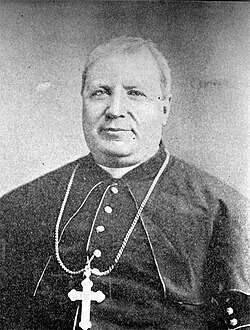
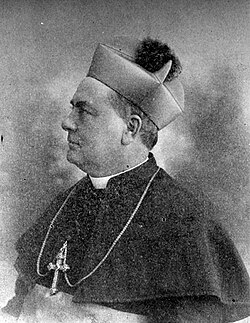
Under Bishop James McFaul, the diocese saw a surge in population due to immigration from Italy and Eastern Europe. Later, Bishop Moses E. Kiley managed significant financial restructuring, refinancing $10 million in church obligations during the 1930s. In 1937, the Diocese of Camden was created, which reduced Trenton's territory by removing South Jersey.
Modern Expansion and Reform (1950–Present)
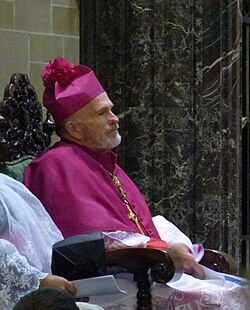
Bishop George W. Ahr's tenure (1950–1979) was marked by explosive growth, with the Catholic population rising from 300,000 to 850,000. He founded 50 parishes and nearly 100 schools. Following the Second Vatican Council, Bishop Ahr guided the diocese through essential liturgical reforms.
In 1980, the Diocese of Metuchen was created, further refining the boundaries of the Trenton diocese. Recent leadership under Bishop John M. Smith focused on modernization, including the launch of the diocesan website and the creation of the Institute for Lay Ecclesial Ministry. In 2017, the Church of St. Robert Bellarmine was elevated to a co-cathedral to provide a more central location for diocesan functions.
Education and Community Services
The diocese maintains a strong commitment to education, overseeing or concurring with several high schools. Notable institutions include Christian Brothers Academy, Donovan Catholic, and Villa Victoria Academy. These schools provide a blend of academic and spiritual formation for students across the four counties.
Challenges and Accountability
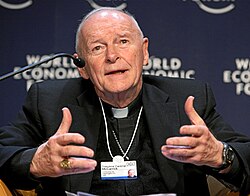
The Diocese of Trenton has faced significant challenges regarding clergy misconduct. In 2019, the diocese released the names of 30 clergy credibly accused of abusing minors since 1940. In April 2022, the diocese announced an $87.5 million settlement to 300 victims of sexual abuse. Additionally, the diocese has dealt with financial crimes, such as the 2025 indictment of a former finance director at St. Leo the Great Parish for embezzling $1.5 million.
Frequently Asked Questions
Which counties does the Diocese of Trenton cover?
The diocese encompasses Burlington, Mercer, Monmouth, and Ocean counties in south-central New Jersey.
Who is the current bishop of the Diocese of Trenton?
The current bishop is David M. O'Connell, who assumed leadership in 2010.
What is the difference between the Cathedral and the Co-Cathedral?
The Cathedral of St. Mary of the Assumption is the mother church of the diocese, while the Co-Cathedral of St. Robert Bellarmine serves as a second cathedral, providing a more central location for diocesan activities.
When was the Diocese of Trenton established?
The diocese was established on August 2, 1881, by Pope Leo XIII.
How many Catholics reside within the diocese?
There are approximately 850,000 Catholics in the diocese, representing about 42% of the total regional population.