Diocese of Ogdensburg: A Comprehensive History of Catholicism in New York's North Country
The history of the Catholic Church in the North Country of New York is a narrative of resilience, evolving from a period of strict prohibition to the establishment of a formal diocese. From early missionary efforts among the Haudenosaunee (Iroquois) Native Americans to the modern challenges of the 21st century, the region's spiritual landscape has been shaped by waves of immigration and ecclesiastical growth.
Early Missions and Colonial Prohibition (1600–1777)
During the 1600s, the North Country was primarily inhabited by the Haudenosaunee. The first Catholic presence arrived via missionary priests from the Diocese of Quebec in New France. However, as Dutch and British rule solidified in the Province of New York, Catholics faced severe persecution. At the end of the 17th century, colonial governor Richard Coote enacted laws mandating life sentences for Catholic priests and imposing a £250 fine and three days in the pillory for anyone harboring them.
Despite these bans, the disputed nature of the territory between France and Great Britain provided pockets of freedom. In 1749, Sulpician priest François Picquet established the Mission of The Holy Trinity at Fort de La Présentation near present-day Ogdensburg. This mission served a dual purpose: evangelizing the Haudenosaunee and launching raids against British settlements. The fort was later abandoned in favor of Fort Lévis during the French and Indian War.
Growth and Settlement (1777–1872)
The tide turned in 1777 when the New York Legislature passed a constitution guaranteeing freedom of worship. While the region initially fell under the jurisdiction of the Vicariate of London and later the Diocese of Baltimore (erected in 1789), the population remained predominantly Protestant from New England. By 1790, Acadian Catholic immigrants began settling near Lake Champlain in Corbeau (now Coopersville), receiving occasional visits from French missionaries.
The 19th century saw a surge in Catholic growth. In 1808, the Diocese of New York was established, covering the entire state. In 1818, Jacques Leray founded a colony of French and German Catholics in Jefferson County, building churches for immigrants and existing Irish settlers. By 1833, congregations were established in Ogdensburg, Carthage, and Plattsburgh. In 1837 and 1838, the first Catholic churches in Malone and Watertown were opened, respectively.
In 1847, Pope Pius IX created the Diocese of Albany, which took over Upstate New York. The industrialization of the North Country brought a massive influx of Irish Catholic immigrants, leading to new missions in Antwerp, Belleville, and Canton, and parishes in Cape Vincent, Hogansburg, and Keeseville.
The Establishment of the Diocese of Ogdensburg (1872–1939)
On February 16, 1872, Pope Pius IX officially erected the Diocese of Ogdensburg, separating the North Country from the Diocese of Albany. Edgar Wadhams was appointed as the first bishop.
Bishop Wadhams focused on infrastructure and social services. He expanded St. Mary's Church into a cathedral, recruited priests from Europe and Quebec, and established schools in several towns. He also invited women's religious orders to open hospitals and orphanages, including the Ogdensburg City Hospital and Orphans Asylum in 1885.
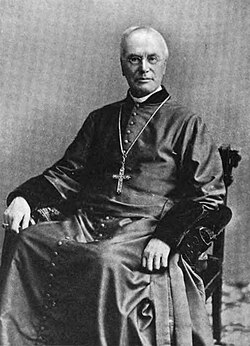
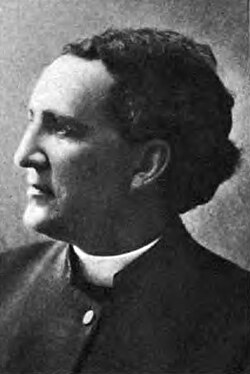
Following Wadhams, Bishop Henry Gabriels (appointed 1891) expanded the Catholic Summer School at Cliff Haven and opened the Gabriels Sanitarium for tuberculosis patients in 1894. He was succeeded by Auxiliary Bishop Joseph Conroy.
Mid-Century Transitions and Expansion (1939–1993)
The mid-20th century was marked by rapid leadership changes and reconstruction. After the death of Bishop Conroy in 1939 and the accidental death of his successor, Bishop Monaghan, Bryan McEntegart took leadership. McEntegart notably oversaw the reconstruction of the Cathedral of Ogdensburg after it was destroyed by fire.
Subsequent bishops continued to build the diocese's educational footprint. Bishop Walter P. Kellenberg expanded the Departments of Education and Catechetics before becoming the first bishop of the Diocese of Rockville Centre. Bishop James Navagh founded Mater Dei College in 1960. Later, Bishop Stanislaus Brzana (1968–1993) spent 25 years leading the diocese, focusing on civic activities and supporting striking miners and their families.
Modern Era and Current Leadership (1993–Present)
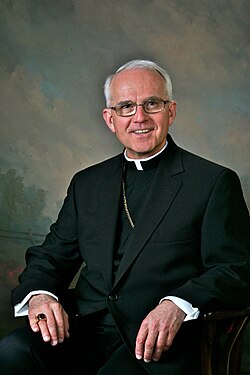
From 1993 onward, the diocese saw a succession of bishops, including Paul Loverde, Gerald Barbarito, and Robert J. Cunningham. Bishop Paul Loverde closed Mater Dei College in 1999. The current leader, the 14th bishop since 1872, is Terry R. LaValley, appointed by Pope Benedict XVI in 2010.
Key Facts
- Founded: February 16, 1872, by Pope Pius IX.
- First Bishop: Edgar Wadhams.
- Key Institutions: Mater Dei College (founded 1960, closed 1999) and Gabriels Sanitarium.
- Current Status: Led by Bishop Terry R. LaValley; filed for Chapter 11 bankruptcy in July 2023.
- Historical Conflict: Catholics were banned in the 17th century under Governor Richard Coote.
| Period/Year | Key Event | Significance |
|---|---|---|
| 1749 | Mission of The Holy Trinity | Early French evangelization of Haudenosaunee. |
| 1808 | Diocese of New York | First formal diocesan structure for the state. |
| 1872 | Diocese of Ogdensburg Erected | North Country becomes its own ecclesiastical jurisdiction. |
| 1960 | Mater Dei College Founded | Expansion of higher education within the diocese. |
| 2023 | Chapter 11 Filing | Bankruptcy due to sexual abuse settlements. |
Sexual Abuse Scandals and Legal Challenges
The diocese has faced significant legal and financial turmoil due to clergy sexual abuse. In 1985, John J. Fallon, pastor of Holy Angels Parish, was convicted of mailing child pornography. Despite this, the diocese appointed him as a chaplain at St. Joseph's Home in 1988. In 2020, four men filed lawsuits alleging abuse by Fallon during the 1970s and 1980s.
The legal landscape shifted with the Child Victims Act, signed by Governor Andrew Cuomo in 2019. This law created a one-year "lookback period," allowing adults to sue for previously time-barred abuse crimes. Bishop LaValley expressed opposition to the act but also established a compensation program, admitting that "The Church screwed up big time."
The financial impact was severe. Before the Child Victims Act, the diocese had paid nearly $5.5 million in settlements. Following the act and its subsequent extension to January 2021, dozens of additional lawsuits were filed. In July 2023, the diocese filed for Chapter 11 bankruptcy reorganization in Utica, stating it could no longer afford the settlements.
Frequently Asked Questions
Who was the first bishop of the Diocese of Ogdensburg?
The first bishop was Edgar Wadhams, who was appointed by Pope Pius IX in 1872. He is credited with expanding the cathedral and establishing various schools and hospitals.
Why did the Diocese of Ogdensburg file for bankruptcy?
The diocese filed for Chapter 11 bankruptcy in July 2023 because it could no longer afford the financial settlements resulting from numerous sexual abuse lawsuits filed under the New York Child Victims Act.
What was the Child Victims Act?
The Child Victims Act was a New York law signed in 2019 that opened a one-year window for adult survivors of child sexual abuse to file civil lawsuits, even if the statute of limitations had previously expired.
What was the role of the Mission of The Holy Trinity?
Established in 1749 by François Picquet, the mission was intended to evangelize the Haudenosaunee people and serve as a strategic point for raiding British settlements.
Which college was founded and later closed by the diocese?
Mater Dei College was founded in 1960 by Bishop James Navagh and was subsequently closed in 1999 by Bishop Paul Loverde.