Dime Novels and the Legend of Texas Jack
In the late 19th century, a new form of mass media captured the imagination of the public: the dime novel. These were inexpensive publications printed on wood pulp paper, typically costing between five and ten cents. Published on a weekly or monthly basis, they focused heavily on the romanticized grit of frontier life, turning real-life figures into larger-than-life heroes.
Among the most enduring subjects of these stories was Texas Jack. The phenomenon began in 1872 with the publication of Texas Jack; or The White King of the Pawnees, written by Ned Buntline. This work helped launch a trend of frontier storytelling that would span decades and cross international borders.
The Rise of Frontier Pulp Fiction
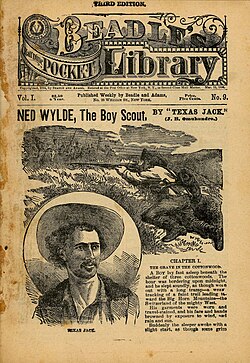
As the appetite for Western adventures grew, Texas Jack became a staple of various publishing houses. His exploits were featured on the covers of prominent libraries, including Beadle's New York Dime Library, the Nickle Library, Log Cabin Library, DeWitt's Ten Cent, and Street and Smith. While many of these tales were penned by the prolific author Prentiss Ingraham, the real-life inspiration, Omohundro, also contributed to the genre. Omohundro wrote newspaper articles detailing his own scouting and hunting experiences and is credited with authoring the 1876 dime novel Ned Wylde, the Boy Scout for Beadle and Adams.
Controversies and International Expansion
The legacy of Texas Jack was not without conflict. In 1900, Joel Chandler Harris published a series in the Saturday Evening Post titled On the Wing of Occasions. This fictional plot involved Texas Jack and the Confederate Secret Service attempting to kidnap President Abraham Lincoln. The stories sparked public outrage by associating Texas Jack with John Wilkes Booth, leading Harris to receive numerous letters from those seeking to clear the character's name.
Despite local controversies, the character found massive success in Europe. In 1906, the Berlin-based publisher Verlagshaus für Volkslitteratur und Kunst released Texas Jack, Der Grosse Kundschafter (Texas Jack, the Great Scout). These German stories featured a fictional orphan named Jack Hawkins who became a cowboy and scout. His adventures included battles with opium smugglers and Indians, with some plots set during the Mormon War and in Maximilian's Mexico.
The German series was so successful that it was republished in three subsequent series and translated into eight languages, including French, Swedish, Finnish, Danish, Polish, Dutch, Portuguese, and Italian.
Evolution into Comic Formats
The storytelling medium evolved as the 20th century progressed. In 1966, the weekly comic magazine Lion, published by Fleetway in the United Kingdom and Australia, introduced a series about Omohundro titled "Texas Jack." Following the success of other Western titles like Cowboy Comics, Buffalo Bill, and Kit Carson, this series shifted the format from prose to illustrated panels.
By 1972, these comics reached a Spanish audience when the Rollán publishing house in Madrid translated the Lion comics and reissued them with original cover art.
Key Facts
- Cost: Dime novels typically cost five to ten cents.
- Material: They were printed on inexpensive wood pulp paper.
- First Major Work: Texas Jack; or The White King of the Pawnees (1872) by Ned Buntline.
- Global Reach: The German "Great Scout" series was translated into eight different languages.
- Format Shift: The stories transitioned from pulp novels to comic panels by the 1960s.
Summary of Texas Jack Publications
| Era | Format | Key Publisher/Author | Region |
|---|---|---|---|
| Late 19th Century | Dime Novels | Beadle's / Ned Buntline | USA |
| 1900 | Magazine Series | Joel Chandler Harris | USA |
| 1906 | Translated Novels | Verlagshaus für Volkslitteratur | Germany/Europe |
| 1966-1972 | Comic Panels | Fleetway / Rollán | UK, Australia, Spain |
Frequently Asked Questions
What were dime novels?
Dime novels were inexpensive, mass-produced stories printed on wood pulp paper that typically cost five to ten cents. They were published weekly or monthly and often focused on frontier life and adventure.
Who was the author of the first Texas Jack novel?
The first novel, titled Texas Jack; or The White King of the Pawnees, was written by Ned Buntline and published in 1872.
Why did the stories by Joel Chandler Harris cause outrage?
Harris's series On the Wing of Occasions associated Texas Jack with John Wilkes Booth in a fictional plot to kidnap President Lincoln, which led to public objections.
How did the German version of Texas Jack differ?
The German series featured a fictional character named Jack Hawkins, an orphan who became a scout and cowboy, engaging in conflicts with opium smugglers and Indians.
When did Texas Jack appear in comic form?
Texas Jack appeared in the weekly comic magazine Lion in 1966, published by Fleetway for audiences in the United Kingdom and Australia.