Digital Multimedia Broadcasting (DMB): The Evolution of Mobile TV
Digital Multimedia Broadcasting (DMB) is a specialized digital radio transmission technology designed to deliver multimedia content—including television, radio, and datacasting—directly to mobile devices. Developed in South Korea as part of a national IT initiative, DMB enables a wide range of hardware, from mobile phones and laptops to GPS navigation systems, to receive high-quality broadcasts on the go.
While often referred to as "mobile TV," it is important to distinguish DMB from Digital Audio Broadcasting (DAB), which was developed as a research project for the European Union. Instead, DMB focuses on a comprehensive multimedia experience through two primary methods: satellite transmission (S-DMB) and terrestrial transmission (T-DMB).
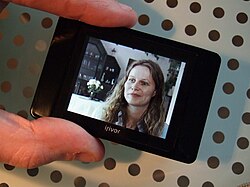
Key Facts
- Origin: Developed in South Korea; technological foundations laid by Bosch in Germany.
- First Service: The world's first official mobile TV service launched in South Korea in May 2005.
- Transmission Types: Operates via Satellite (S-DMB) or Terrestrial (T-DMB) signals.
- Global Standard: T-DMB was formally approved as a global standard by the ITU in 2007.
- Vehicle Performance: T-DMB is capable of functioning in vehicles traveling up to 300 km/h.
Technical Foundations of T-DMB
Terrestrial DMB (T-DMB) utilizes Band III (VHF) and L (UHF) frequencies for its transmissions. To ensure high-quality video and audio, the system employs MPEG-4 Part 10 (H.264) for video and MPEG-4 Part 3 BSAC or HE-AAC v2 for audio. These elements are encapsulated within an MPEG transport stream (MPEG-TS).
To combat signal interference, the technology uses several advanced methods:
- Reed Solomon encoding: Provides forward error correction.
- Convolutional interleaving: Applied to the stream to improve reliability.
- OFDM-DQPSK modulation: Used by the DMB modem to diminish channel effects like fading and shadowing.
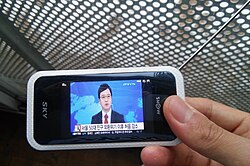
Regional Standards and Availability
DMB availability varies significantly by region due to frequency allocations. For instance, the United States does not use DMB because its VHF and UHF frequencies are reserved for traditional television and military use. Instead, the US has utilized systems like ATSC-M/H and Qualcomm's MediaFLO. In contrast, Japan utilizes the 1seg standard via ISDB.
The Evolution of DMB Services
The technology has undergone several iterations to improve user experience and visual fidelity, particularly within the South Korean market.
Smart DMB
Launched in South Korea in January 2013, Smart DMB introduced Video on Demand (VOD) services and improved resolution from 240p to 480p. This service was integrated into many smartphones, such as the Galaxy Grand.
HD DMB
In August 2016, HD DMB was introduced, significantly boosting resolution from 240p to 720p. This version utilizes the HEVC codec. Support for HD DMB was made available to smartphones equipped with Qualcomm Snapdragon 801 processors or higher via firmware upgrades.
DMB Implementation Around the World
While South Korea remains the primary user of DMB, various trials and implementations have occurred globally:
- Norway: Provided MiniTV DMB services between 2009 and 2018.
- Germany: Launched the "Watcha" service in 2006, though it later shifted focus to DVB-H.
- China: Utilized DAB and T-DMB services in several major cities including Beijing and Shenzhen.
- Mexico: Many cell phone carriers included DMB broadcasting in basic plans as of 2008.
- Malaysia: Conducted trials involving both DMB-T and DAB/DAB+ standards.
| Service Type | Launch Date (SK) | Max Resolution | Key Features |
|---|---|---|---|
| Standard DMB | 2005 | 240p | Initial mobile TV and radio services |
| Smart DMB | 2013 | 480p | VOD services included |
| HD DMB | 2016 | 720p | Uses HEVC codec |
Frequently Asked Questions
What is the difference between S-DMB and T-DMB?
S-DMB refers to Satellite Digital Multimedia Broadcasting, which uses satellite signals to deliver content. T-DMB refers to Terrestrial Digital Multimedia Broadcasting, which uses ground-based towers to transmit signals via VHF and UHF frequencies.
Can DMB work in a moving car?
Yes, T-DMB is designed to work effectively in vehicles traveling at speeds up to 300 km/h, making it highly suitable for automotive use.
Is DMB free to use?
In South Korea, T-DMB service is provided free of charge, though access may be limited to specific geographic regions. S-DMB, however, is typically provided on a subscription basis.
Why isn't DMB used in the United States?
The frequencies required for DMB are already allocated in the United States for military applications and traditional television broadcasting (VHF channels 7 to 13).
What devices can receive DMB signals?
DMB signals can be received by mobile phones, portable TVs, PDAs, laptop computers, digital cameras, and integrated car navigation systems.