Development Economics: The Evolution of Global Growth Theories
Development economics seeks to explain how nations transition from low-income, agrarian societies to high-income, industrialized economies. While early economic thought focused on theology or ethics, the rise of the nation-state in the 17th century shifted the focus toward the accumulation of wealth and the strategic growth of national power.
Mercantilism and the Rise of the Nation-State
Mercantilism emerged in the 17th century as the first Western theory of development. It posited that a nation's prosperity was directly tied to its supply of capital, specifically bullion (gold, silver, and trade value) held by the state. To accumulate this wealth, mercantilists advocated for a high positive trade balance—maximizing exports while minimizing imports.
To achieve these goals, states employed protectionist measures, such as tariffs and subsidies for domestic industries, and aggressively pursued colonialism. Key figures included Philipp von Hörnigk, who emphasized an export-led economy in his 1684 work Austria Over All, If She Only Will, and Jean-Baptiste Colbert, the French finance minister whose policies later influenced American development.
Economic Nationalism and the Industrial Shift
In the 19th century, economic nationalism evolved from mercantilist roots but shifted its focus from overseas colonies to domestic production. This theory was central to the industrialization of the United States and Germany, manifesting in the American System and the German Zollverein (customs union).
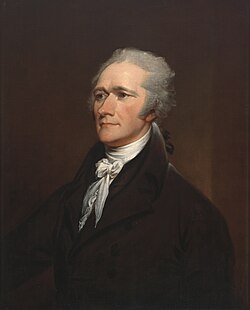
Alexander Hamilton, the first U.S. Secretary of the Treasury, argued in his 1791 Report on Manufactures that developing an industrialized economy required protectionism. He believed import duties were essential to shelter infant industries—new domestic businesses—until they could achieve economies of scale (cost advantages gained by increased production).
This approach was further championed by Friedrich List, who emphasized stages of growth in his 1841 work, and politicians like Henry Clay and Abraham Lincoln, who were influenced by economist Henry Charles Carey. In modern times, some observers link these nationalist tendencies to "Trumponomics," a form of self-seeking capitalism that may impact global capital allocation.
Post-WWII Development Frameworks
Modern development economics emerged after World War II, initially focusing on the industrialization of Eastern Europe before expanding to Asia, Africa, and Latin America. Scholars like Paul Rosenstein-Rodan, Ragnar Nurkse, and W. Arthur Lewis shifted the conversation toward structural transformation—the fundamental change in a country's economic makeup.
The Linear-Stages-of-Growth Model
Formulated in the 1950s by W. W. Rostow, this model suggests that all countries pass through five consecutive stages of development:
- The traditional society
- Pre-conditions for take-off
- The take-off
- The drive to maturity
- The age of high mass-consumption
Rostow emphasized the accelerated accumulation of capital through domestic and international savings to spur investment. However, critics argue this model oversimplifies development by ignoring political and social obstacles and incorrectly assuming that the conditions of post-WWII Europe (which benefited from the Marshall Plan) apply to all developing nations.
Structural Change Theory
Proposed by Sir Arthur Lewis in 1954, structural transformation describes the shift of labor from subsistence agriculture to more productive urban industrial work in manufacturing and services. Lewis's two-sector model suggests that economic growth occurs when surplus labor moves from the rural sector to the industrial sector, where capital is deployed to increase productivity.
Later, Hollis Chenery introduced the "Patterns of Development" approach, arguing that countries follow different trajectories based on their size, resources, and comparative advantages. Critics of structural change theories note that focusing on urban growth can increase regional inequality and that rural labor surpluses may be seasonal rather than permanent.
Alternative Modern Perspectives
International Dependence Theory
Rising in the 1970s, international dependence theories argued that obstacles to development are external rather than internal. These theories suggest that developing nations are kept in a state of dependency by powerful developed nations. This school of thought includes neocolonial dependence theory (rooted in Marxism), the false-paradigm model, and the dualistic-dependence model.
Neoclassical Theory
Gaining traction in the 1980s, neoclassical theory represents a shift toward free-market capitalism. It argues that government intervention should be minimal and that unobstructed competitive markets are the most efficient way to allocate resources and stabilize economic growth.
Key Facts
- Mercantilism: Focused on accumulating bullion through positive trade balances and colonialism.
- Economic Nationalism: Prioritized domestic industrialization and "infant industry" protectionism.
- Rostow's Model: Proposed five linear stages of growth, emphasizing capital accumulation.
- Lewis Model: Focused on the transition of labor from agriculture to industry (structural transformation).
- Dependence Theory: Views underdevelopment as a result of external exploitation by developed nations.
- Neoclassical Theory: Advocates for free markets and minimal government intervention.
| Theory | Primary Driver of Growth | Role of Government | Key Focus |
|---|---|---|---|
| Mercantilism | Bullion Accumulation | High (Protectionist) | Trade Balance & Colonies |
| Economic Nationalism | Domestic Industry | High (Tariffs) | Infant Industries |
| Linear-Stages | Capital Investment | Moderate (Savings) | Sequential Stages |
| Structural Change | Labor Shift | Moderate (Urbanization) | Agriculture to Industry |
| Dependence Theory | External Autonomy | Variable | Global Power Dynamics |
| Neoclassical | Free Market Efficiency | Low (Laissez-faire) | Resource Allocation |
Frequently Asked Questions
What is the difference between mercantilism and economic nationalism?
While both support protectionism, mercantilism emphasizes the accumulation of gold and silver through trade surpluses and colonialism. Economic nationalism focuses more on developing domestic industrial capacity and protecting internal "infant industries" without necessarily relying on colonies.
What are the five stages of Rostow's growth model?
The stages are the traditional society, the pre-conditions for take-off, the take-off, the drive to maturity, and the age of high mass-consumption.
How does structural transformation work?
Structural transformation is the process where a country shifts its workforce from low-productivity subsistence agriculture to higher-productivity urban sectors, such as manufacturing and services, leading to overall economic growth.
What is the core argument of international dependence theory?
It argues that developing nations remain poor not because of internal failures, but because they are economically and politically dependent on developed nations that benefit from maintaining this imbalance.
What does neoclassical theory suggest about government intervention?
Neoclassical theory suggests that governments should generally avoid intervening in the economy, as free and competitive markets are the most efficient means of allocating resources and inducing rapid development.