Detroit Neighborhoods and Historic Districts
Detroit is a city defined by its architectural diversity and a rich tapestry of historic neighborhoods. From the towering skyscrapers of the central business district to the stately mansions of the north side, the city's layout reflects its evolution from a commercial hub to the automotive capital of the world. Whether you are interested in the National Register of Historic Places (NRHP) listings or the city's unique urban planning, Detroit offers a profound look at American urban history.
Key Facts
- Boston-Edison is one of the largest residential historic districts in the United States, featuring over 900 homes.
- Downtown Detroit is bordered by the Lodge Freeway (M-10), Fisher Freeway (I-75), Chrysler Freeway (I-375), and the Detroit River.
- The Financial District showcases two major redevelopment waves: 1900–1930 and the 1950s/early 1960s.
- Palmer Woods was platted in the mid-1910s on land originally owned by U.S. Senator Thomas Witherell Palmer.
- Hamtramck is an incorporated city almost entirely surrounded by Detroit's boundaries.
Downtown: The Urban Core
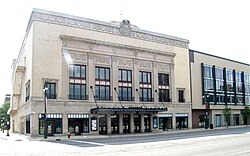
Downtown Detroit serves as the city's central business district and a growing residential hub. It is characterized by iconic skyscrapers such as the Renaissance Center, the Penobscot Building, and the Guardian Building. The area is designed for accessibility, featuring high-rise living and a scenic promenade along the International Riverfront. Due to its amenities and layout, CNN Money Magazine editors once named it among the best big city neighborhoods for retirement.
Within the downtown core, several specialized historic districts preserve the city's commercial legacy. The Broadway Avenue Historic District, for example, consists of eleven buildings from 1896 to 1926 that once catered to the women's trade, including florists and corset makers. Meanwhile, Capitol Park marks the city's political roots; the site hosted a courthouse built between 1823 and 1828, which served as the state capitol when Michigan achieved statehood in 1837.
The Detroit Financial District is another cornerstone of the core, dating back to the 1850s. It is home to ornate skyscrapers like One Woodward Avenue, reflecting the city's economic peaks in the early 20th century and the mid-century era.
Midtown and the Cultural Heart
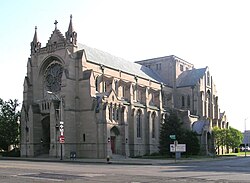
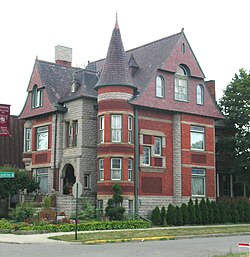
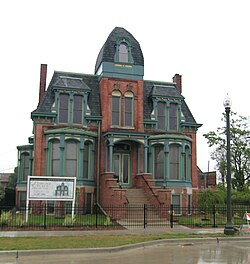
Midtown is a vibrant area blending education, arts, and residential history. It is home to Wayne State University and the University-Cultural Center, a district bounded by the Chrysler and Lodge freeways. This region is noted for its diverse housing, from the Queen Anne architecture of the West Canfield Historic District to the high-density apartments of the Cass-Davenport Historic District.
The Warren-Prentis Historic District offers a glimpse into the social shifts of the late 19th century, where single-family homes for the upper class were gradually joined by duplexes and commercial developments following World War I.
New Center and the North Side
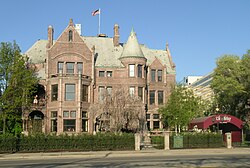
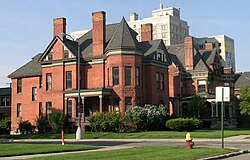
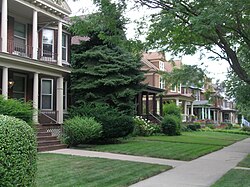
Moving north, the New Center area is dominated by the Boston-Edison Historic District. With over 900 homes built between 1905 and 1925, it is one of the nation's largest residential historic districts. It was once home to industrial titans including Henry Ford, Sebastian S. Kresge, and James Couzens.
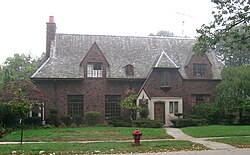
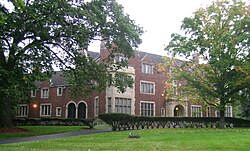
Further north, the landscape shifts toward the estate-style living of Palmer Woods and the Palmer Park Apartment Building Historic District. Both were developed on land owned by Thomas Witherell Palmer. Palmer Woods is particularly noted for its mansions built between 1917 and 1929, with a layout designed by landscape architect Ossian Cole Simonds.
East and West Detroit
The East side of the city features a mix of urban and suburban feels. Indian Village and the West Village preserve historic residential charm, while the Mies van der Rohe Residential District in Lafayette Park showcases mid-century modernism. To the far east, Belle Isle State Park provides a natural escape within the Detroit River.
The West side is anchored by Corktown, one of the city's oldest neighborhoods, and the West Vernor corridor. This area is divided into several historic districts—Junction, Lawndale, and Springwells—reflecting the industrial and immigrant history of the region. The area also contains the historic Michigan Central Station and the Ambassador Bridge.
Summary of Major Historic Districts
| District Name | Primary Era | Key Characteristic |
|---|---|---|
| Boston-Edison | 1905–1925 | Largest residential historic district in the US |
| Financial District | 1850s / 1900–1960s | Ornate skyscrapers and commercial hubs |
| Palmer Woods | 1917–1929 | Large mansions and planned landscapes |
| Broadway Avenue | 1896–1926 | Former women's trade commercial center |
| Capitol Park | 1823–1837 | Site of the original Michigan state capitol |
Frequently Asked Questions
What is the largest residential historic district in Detroit?
The Boston-Edison Historic District is the largest, consisting of over 900 homes primarily constructed between 1905 and 1925.
Which neighborhood is known for its association with Thomas Witherell Palmer?
Both the Palmer Woods Historic District and the Palmer Park Apartment Building Historic District were developed on land originally owned by Thomas Witherell Palmer.
What is unique about the Broadway Avenue Historic District?
It was developed in the late 19th century specifically as a commercial area for the women's trade, housing businesses like corset makers and fashionable clothiers.
Where was the first state capitol of Michigan located?
The state capitol served in a building located in Capitol Park, which was constructed between 1823 and 1828.
What are the boundaries of Downtown Detroit?
Downtown is bordered by the Lodge Freeway (M-10) to the west, the Fisher Freeway (I-75) to the north, the Chrysler Freeway (I-375) to the east, and the Detroit River to the south.