Dejan Jović: Political Engagement and Academic Controversies
Dejan Jović is a political analyst and academic whose career has been defined by a complex intersection of scholarly research and active political participation in the Western Balkans. From serving as a high-level advisor to the Croatian presidency to running for the European Parliament, Jović has consistently positioned himself at the center of debates regarding national identity, history, and regional integration.
Political and Public Engagement
Jović's entry into formal political advisory roles began between 2004 and 2006, when he served as a special advisor at the Ministry of Foreign and European Affairs. His influence grew significantly between 2010 and 2014, during which time he acted as the primary political analyst for the President of Croatia, Ivo Josipović.
Beyond advisory roles, Jović has engaged in efforts to promote regional linguistic unity. In 2017, he became a signatory of the Declaration on the Common Language of the Croats, Serbs, Bosniaks, and Montenegrins, advocating for the recognition of a shared linguistic heritage among these groups.

The 2019 European Parliament Election
In 2019, Jović transitioned from an advisor to a candidate, appearing on the election list of the Independent Democratic Serb Party (SDSS) for the European Parliament. Positioned second on the list behind party leader Milorad Pupovac, Jović described his candidacy as a non-party effort driven by a desire to influence European politics, specifically regarding the integration of the Western Balkans.
He framed his run as both an academic duty and an act of solidarity with the Serbian community, viewing the community as an essential trait of Croatia's national identity. The campaign was highly visible and contentious, featuring jumbo posters with the question "Do you know how it is to be a Serb in Croatia?", with the word "Serb" written in Serbian Cyrillic.
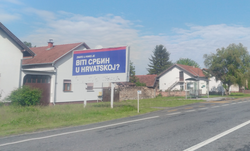
The campaign faced significant backlash, with posters becoming targets of nationalist vandalism, which highlighted ongoing issues of ethnic intolerance. Ultimately, the SDSS did not meet the 5% threshold required to enter the European Parliament, receiving 28,597 votes (2.66%). Despite the electoral loss, some observers viewed the campaign as a public relations success.
Key Facts
- Advisory Roles: Served as a special advisor to the Ministry of Foreign and European Affairs (2004–2006) and main analyst for President Ivo Josipović (2010–2014).
- 2019 Election: Ran as the second candidate on the SDSS list for the European Parliament, securing 2.66% of the vote.
- Linguistic Advocacy: Signed the 2017 Declaration on the Common Language of Croats, Serbs, Bosniaks, and Montenegrins.
- Major Works: Authored Jugoslavija – država koja je odumrla (2003) and Slobodan Milošević's Place in Serbian History.
Academic Criticism and Controversies
Historical Interpretations of Yugoslavia
Jović's scholarly work has frequently drawn fire from other historians. His 2003 book, Jugoslavija – država koja je odumrla (Yugoslavia: A State that Withered Away), was heavily criticized by Professor Olivera Milosavljević. Writing for the magazine Republika, Milosavljević accused Jović of using un-academic methodology, presenting contradictions, and providing an apologetic depiction of Slobodan Milošević while downplaying the SANU Memorandum.
The 2014 Book Review Dispute
In 2014, while still advising the President, Jović published a positive review of David N. Gibbs' book First Do No Harm: Humanitarian Intervention and the Destruction of Yugoslavia. This review sparked a backlash from the North American Congress of Bosniaks and historian Marko Hoare, who accused Gibbs of denying the Srebrenica genocide. Hoare further accused Jović of being an apologist for the Yugoslav People's Army and Milošević.
Jović defended his position, stating the accusations were politically motivated rather than academic. He maintained that Gibbs had never denied the Srebrenica genocide and noted that Gibbs' work had received positive academic reviews elsewhere.
The 1991 Independence Referendum Controversy
Jović's tenure as a presidential advisor ended abruptly in 2014. After publishing an article describing the 1991 Croatian independence referendum as "non-liberal" and arguing it could not be compared to the Scottish independence referendum, President Josipović sacked him. The President labeled Jović's remarks "harmful and wrong." While right-wing politicians from the HDZ suggested the sacking was a strategic move for Josipović's re-election, others, including OpenDemocracy, viewed it as a sign of returning dogmatism regarding the interpretation of the past.
Further Academic and Political Friction
Jović has faced various other criticisms throughout his career:
- Ivo Banac: The former Yale professor described Jović as an "ordinary falsifier of history."
- Krešimir Petković: In 2017, Petković requested Jović's removal from the editorial board of the Croatian Political Science Review, alleging a lack of fact-checking regarding an article on Croatia–Slovenia border disputes.
- Zoran Milanović: In 2021, after Jović characterized President Milanović's remarks toward Bosnia and Herzegovina as "cultural racism," Milanović responded on Facebook by attacking Jović's scholarly credibility and electoral legitimacy.
| Period/Year | Role or Event | Key Outcome/Controversy |
|---|---|---|
| 2004–2006 | Special Advisor, Ministry of Foreign Affairs | Early political advisory experience |
| 2010–2014 | Analyst for President Ivo Josipović | Sacked in 2014 over referendum comments |
| 2017 | Common Language Declaration | Advocated for shared regional language |
| 2019 | European Parliament Candidate (SDSS) | Received 2.66% of the vote |
Frequently Asked Questions
Why was Dejan Jović sacked by President Ivo Josipović?
He was dismissed in 2014 after writing that the 1991 Croatian independence referendum was "non-liberal" and arguing that it differed fundamentally from the Scottish independence referendum in terms of public debate and legitimacy.
What was the outcome of Jović's 2019 European Parliament run?
Running second on the SDSS list, Jović and the party failed to reach the 5% threshold, receiving 28,597 votes, or 2.66% of the total.
What are the primary academic criticisms against Jović?
Critics, including Olivera Milosavljević and Marko Hoare, have accused him of using un-academic methodology, being an apologist for Slobodan Milošević, and providing academic legitimacy to historical forgeries.
How did Jović respond to accusations of genocide denial?
Jović denied the accusations, claiming they were tendentious and politically motivated. He defended the authors he reviewed by citing their academic credentials and positive reviews in other scholarly journals.
What was the significance of the 2019 SDSS campaign posters?
The posters asked "Do you know how it is to be a Serb in Croatia?" using Cyrillic script. They became flashpoints for nationalist vandalism, highlighting ethnic intolerance and discrimination in the region.