Deities and Gods Across Human Culture
Throughout human history, the concept of a deity—a supernatural being with authority over the universe or specific aspects of life—has been central to how civilizations interpret existence. Whether viewed as sacred creators, controllers of nature, or guides to higher consciousness, deities bridge the gap between the ordinary human experience and the mysterious forces of the cosmos.
The belief in at least one such deity is known as theism. While definitions vary, scholars like C. Scott Littleton describe deities as beings with powers exceeding those of humans who interact with us to elevate our consciousness beyond the mundane preoccupations of daily life.
![Pantheists believe that the universe itself and everything in it forms a single, all-encompassing deity.[39][40]](/images/8d/79/8d791e1fd1c39a336a1986dea7d07c2cec2e486b7d4c7b376086c8ae8c9a504c.jpg)
Key Facts
- Definition: A deity is a supernatural being believed to create or control parts of the universe, often revered as divine and worthy of worship.
- Theism: The general belief in the existence of one or more deities.
- Diversity: Deities range from local spirits and regional gods to universal, all-encompassing supreme beings.
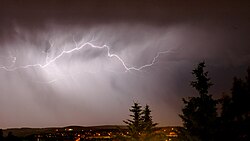
- Origins: Some philosophers, such as Democritus, theorized that deities were imagined by early humans to explain natural phenomena like lightning.
The Evolution of Divine Concepts
Prehistoric Beliefs
Evidence of early divine concepts is often found in prehistoric figurines. Archaeologists suggest that some of these early carvings represented goddess figures, reflecting an early human attempt to conceptualize fertility and nature.
![Statuette of a nude, corpulent, seated woman flanked by two felines from Çatalhöyük, dating to c. 6000 BCE, thought by most archaeologists to represent a goddess of some kind[76][77]](/images/a3/a6/a3a69e1776b2066905c1b597aa7d8ba95d1d267840f5730dace287efdf49f1fe.jpg)
Ancient Near Eastern and African Traditions
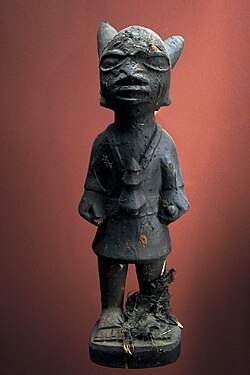
In Sub-Saharan Africa, deities often represent specific forces of nature or ancestral power. Similarly, the Ancient Near East produced complex pantheons. The Egyptians revered a vast array of gods, such as Osiris, Anubis, and Horus, who governed the afterlife and the natural world.
![Egyptian tomb painting showing the gods Osiris, Anubis, and Horus, who are among the major deities in ancient Egyptian religion[88]](/images/eb/0b/eb0bc25fb04b1e288dd81993ec688f307f3d7f9fe98af6a609fbc31dc79ffe0c.jpg)
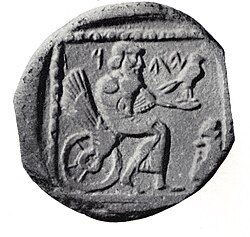
In Mesopotamia, deities like Aššur were central to national identity, often depicted in hybrid iconography. The Levant also saw the emergence of powerful deities, including the early conceptualizations of Yahweh, sometimes represented as a figure on a winged sun-throne.
Indo-European and Classical Deities
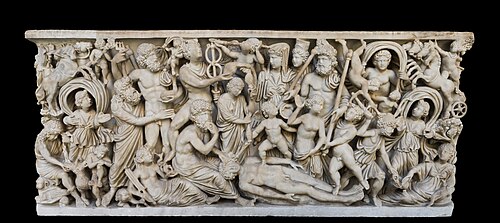
The Greek and Roman worlds developed highly structured pantheons. The Greeks viewed deities like Athena, the goddess of wisdom, as embodiments of specific human and natural virtues. The Romans adopted many of these concepts, integrating them into a system where gods like Jupiter and Neptune oversaw the cosmos.
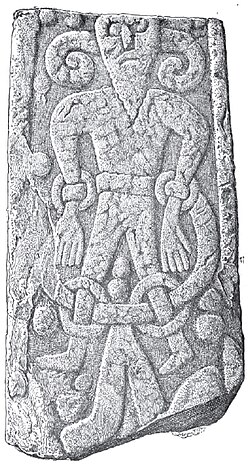
Germanic traditions also featured a diverse set of gods and figures, including the trickster Loki, whose presence is noted in archaeological finds like the Kirkby Stephen Stone.
Americas and Polynesia
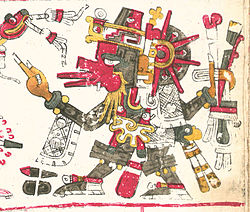
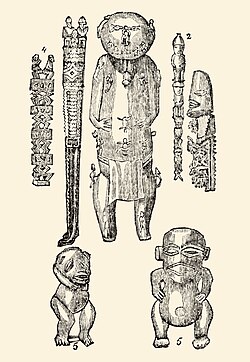
In the Americas, the Inca worshipped the Sun deity, while the Maya and Aztecs revered complex figures such as the feathered serpent Quetzalcoatl. In Polynesia, deities were often carved from wood, representing a hierarchy of gods and demons.
Major World Religious Traditions
Abrahamic Faiths
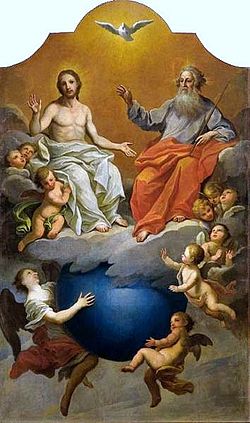
Judaism, Christianity, and Islam are characterized by monotheism—the belief in a single, supreme deity. In Judaism, this is represented by the tetragrammaton. Christianity introduces the concept of the Holy Trinity, where God the Father, Son, and Holy Spirit are revered as one deity. Islam emphasizes the absolute oneness of Allah.

Asian Traditions
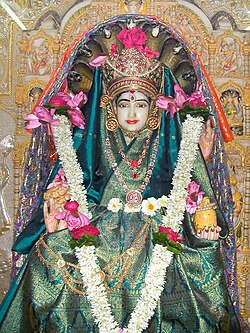
Asian spiritualities offer a wide spectrum of divine interpretations. Hinduism features a vast array of deities, such as Ganesha and Saraswati, who represent different facets of the divine. Jainism includes guardian deities like Padmavati, while Buddhism incorporates various deities into its cosmology.
Other traditions include Shinto, which focuses on Kami (spirits/deities), Taoism, and Zoroastrianism, which centers on the struggle between Ahura Mazda and opposing forces.
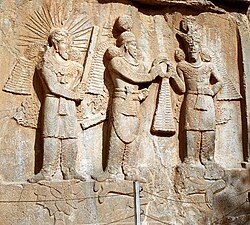
Summary of Deity Types
| Category | Core Characteristic | Examples |
|---|---|---|
| Monotheistic | Single, supreme, universal deity | Allah, Yahweh, The Holy Trinity |
| Polytheistic | Multiple deities with specific domains | Greek, Roman, and Egyptian pantheons |
| Pantheistic | The universe itself is the deity | Various philosophical traditions |
| Animistic/Local | Spirits tied to nature or regions | Shinto Kami, Anitism spirits |
While many view deities as literal beings, skeptical interpretations suggest that these figures are symbolic representations of human psychology or attempts to categorize the unknown.
Frequently Asked Questions
What is the difference between a god and a deity?
In general usage, the terms are interchangeable. However, "deity" is often used as a broader, more formal term to describe any divine being, including goddesses or supernatural entities revered as divine.
What is theism?
Theism is the belief in the existence of at least one deity who may interact with the physical world.
How do monotheistic and polytheistic religions differ?
Monotheistic religions believe in one single, all-powerful God, whereas polytheistic religions believe in multiple gods, often each overseeing a different aspect of life or nature.
What is pantheism?
Pantheism is the belief that the universe itself, and everything within it, forms a single, all-encompassing deity.
Why did early humans create deities?
Some theories, including those by the philosopher Democritus, suggest that deities were created to explain natural phenomena, such as lightning or storms, which were otherwise incomprehensible to early humans.