DEC Systems Research Center: A Legacy of Computing Innovation
The Systems Research Center (SRC) stands as a pivotal chapter in the history of computer science. Established in 1984 by the Digital Equipment Corporation (DEC) in Palo Alto, California, the lab became a crucible for advancements in programming languages, operating systems, and hardware architecture that shaped the modern digital landscape.
The center was founded by a distinguished group of computer scientists led by Robert Taylor. This team transitioned to DEC after departing from the Computer Science Laboratory (CSL) at Xerox PARC following an internal power struggle, bringing with them a wealth of expertise in pioneering computing concepts.
Evolution and Corporate Transitions
Throughout its existence, the SRC navigated several major corporate shifts while maintaining its research momentum. Following the retirement of Robert Taylor, the laboratory was led by directors Roy Levin and subsequently Lyle Ramshaw.
The lab's resilience was tested during the late 1990s and early 2000s. When Compaq took over DEC in 1998, the facility survived the transition and was rebranded as the Compaq Systems Research Center. This era concluded in 2002 when Hewlett-Packard (HP) acquired Compaq, leading to the merger of the SRC with other HP corporate research laboratories and its eventual relocation.
Key Facts
- Founded: 1984 in Palo Alto, California.
- Founder: Robert Taylor and a group of scientists from Xerox PARC.
- Corporate Lineage: Digital Equipment Corporation → Compaq → Hewlett-Packard.
- Notable Alumni: Includes Turing Award winners Butler Lampson, Chuck Thacker, and Leslie Lamport.
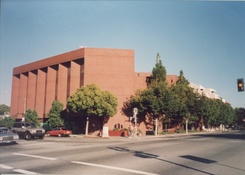
- Legacy Site: The former SRC building was later occupied by A9.com, a research arm of Amazon.com.
Technical Contributions and Breakthroughs
The SRC was responsible for several critical developments that pushed the boundaries of what computers could achieve. Their work spanned from low-level hardware optimization to high-level user interfaces.
Hardware and Operating Systems
One of the lab's most significant hardware contributions was the snoopy cache—a mechanism for maintaining cache coherence in multiprocessor systems. This technology was utilized in the Firefly, the first multiprocessor workstation, which was constructed using MicroVAX 78032 microprocessors. In the realm of software, the SRC developed Taos, the first multi-threaded Unix system.
Languages and Interfaces
The lab advanced software engineering through the creation of the Modula-3 programming language. They also pioneered early networked window systems known as Trestle and developed the first user interface editor.
Collaborative Success: AltaVista
The SRC also participated in a cross-departmental effort to create AltaVista, one of the earliest and most powerful web search engines. This project was a joint venture between the Systems Research Center, DEC's Network Systems Laboratory, and the Western Research Laboratory.
| Category | Innovation | Description/Impact |
|---|---|---|
| Programming | Modula-3 | Advanced programming language development. |
| Hardware | Snoopy Cache | Enabled the Firefly multiprocessor workstation. |
| OS | Taos | The first multi-threaded implementation of Unix. |
| Networking | Trestle | Early development of networked window systems. |
| Web | AltaVista | Jointly developed early web search technology. |
Frequently Asked Questions
Who founded the DEC Systems Research Center?
The SRC was founded in 1984 by Robert Taylor and a group of computer scientists who had previously worked at the Xerox PARC Computer Science Laboratory.
What happened to the SRC after DEC was acquired?
After Compaq acquired DEC in 1998, it became the Compaq Systems Research Center. Following HP's acquisition of Compaq in 2002, the SRC was merged into HP's corporate research labs.
What is a "snoopy cache"?
A snoopy cache is a hardware mechanism used to ensure data consistency across multiple processors, a technology that was instrumental in the creation of the Firefly multiprocessor workstation.
Which famous computer scientists worked at the SRC?
The lab hosted several eminent researchers, including Butler Lampson, Chuck Thacker, and Leslie Lamport, all of whom are recipients of the ACM A.M. Turing Award.
What is the significance of the Taos system?
Taos is historically significant for being the first Unix system to implement multi-threading, allowing for more efficient concurrent processing.