Danish Armed Forces
The Danish Armed Forces (known in Danish as Forsvaret) serve as the primary military organization of the Kingdom of Denmark. Guided by the motto "Fordi noget er værd at kæmpe for" ("Because something is worth fighting for"), the force is dedicated to preserving Danish sovereignty, preventing conflict, and promoting global peace and human rights.
From its roots as separate service branches to its current integrated structure, the Danish military has evolved into a modern force capable of both national defense and complex international stabilization efforts.

Key Facts
- Founded: 1950 (in its current unified form).
- Leadership: Under the authority of Monarch Frederik X, Prime Minister Mette Frederiksen, and Minister of Defence Jeppe Bruus.
- Personnel: Approximately 16,602 active military and 8,144 civilian staff (2024).
- Budget: Projected at DKK 105 billion (€14 billion) by 2026, representing 3.5% of GDP.
- Branches: Comprises the Royal Danish Army, Royal Danish Navy, Royal Danish Air Force, and the Home Guard.
- Conscription: Mandatory for males; universal conscription for women via a lottery system began in 2025.
Historical Evolution
Origins and Unification
For much of its early history, the Danish military branches operated independently, each with its own ministry. The push for a unified command began in the 1870s, with a significant proposal in 1928 by Hjalmar Rechnitzer to create a central Rigsværn (Realm Defence). Following the joint operational lessons of World War II, the branches were officially reorganized under a single ministry and the unified Danish Defence in 1950.
Post-Cold War and International Engagement
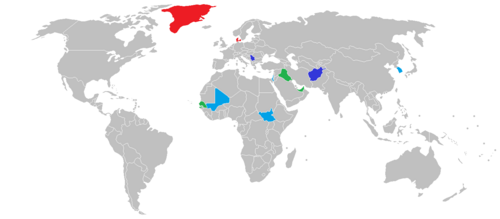
After the Cold War, Denmark shifted toward a more active foreign policy. This transition began with the Bosnian War, where the Royal Danish Army participated in the United Nations Protection Force. This marked the first combat operation for the Danish Army since World War II, including engagements in Kalesija and Gradačac in 1994.
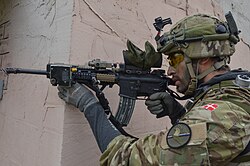
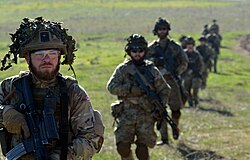
Following the September 11 attacks, Denmark joined the US-led war on terror, deploying forces to Afghanistan and Iraq. The conflict in Afghanistan resulted in the highest per capita loss within the coalition forces, with 43 Danish fatalities. More recently, Denmark has contributed to Operation Ocean Shield, the 2011 intervention in Libya, and operations in the Syrian Civil War.
Organizational Structure and Capabilities
Service Branches
The Danish Defence is organized into four primary components:
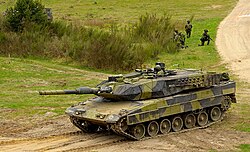
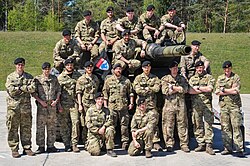
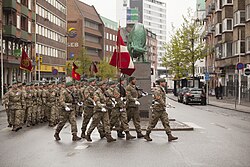
- Royal Danish Army: The land-based force specializing in territorial defense and international deployments.
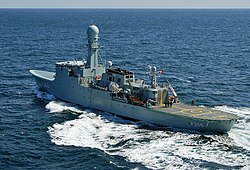
- Royal Danish Navy: Responsible for maritime security and sovereignty.
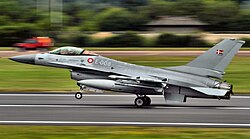
- Royal Danish Air Force: Providing aerial surveillance and combat capabilities.
- Home Guard: A volunteer-based force providing critical national support.
Specialized Commands
Beyond the main branches, the military utilizes specialized units such as the Special Operations Command (SOKOM), which includes the Jaeger Corps and Frogman Corps, and the Joint Arctic Command, which manages interests in the North.
Budget and Strategic Funding
The Danish military budget is calculated using two different methods: the Danish national method and the NATO method. The NATO method typically yields higher figures because it includes a broader range of expenditures. Between 2014 and 2024, spending according to the NATO method tripled from DKK 22.77 billion to DKK 68.67 billion.
Approximately 95% of the budget is dedicated to military operations and the Home Guard, with personnel costs accounting for 50–53% of that spending. The remaining 5% supports NATO contributions, the Danish Maritime Safety Administration, and the Danish Emergency Management Agency.
| Category | Detail/Value |
|---|---|
| Active Personnel | 16,602 Military / 8,144 Civilian |
| Reserve/Volunteer Force | 12,000 Reserves / 51,000 Home Guard |
| Projected Budget (2026) | DKK 105 Billion (€14 Billion) |
| GDP Percentage (2026) | 3.5% |
| Current Deployed Personnel | 800 (2024) |
Personnel and Social Evolution
Women in the Military
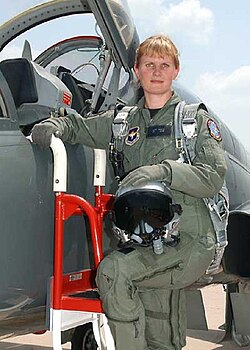
Women first entered military service in 1946 via the Lottekorpset, though they were initially unarmed and separate from the main forces. Full integration began in 1962. Today, women make up approximately 7.3% of all personnel. Significant milestones include Line Bonde becoming the first female fighter pilot in 2005 and Lone Træholt becoming the first female general in 2016.
Conscription Policies
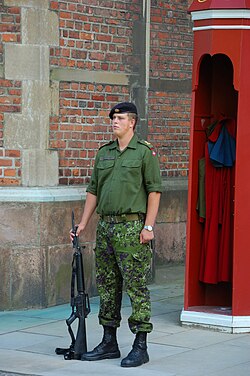
Conscription has historically been mandatory for 18-year-old males, though high volunteer rates often reduce the number of actual call-ups. A major policy shift occurred on July 1, 2025, when women were granted the same conscription conditions as men, implemented through a lottery system.
Frequently Asked Questions
What is the primary purpose of the Danish Defence?
According to Law no. 122 of 2001, the purpose is to prevent war and conflict, preserve Danish sovereignty, ensure the integrity of the Kingdom of Denmark, and promote global peace and human rights.
How has conscription changed for women in Denmark?
While women could previously serve as volunteers under "conscript-like" conditions, universal conscription for women via a lottery system officially went into effect on July 1, 2025.
Which international operation resulted in the highest per capita loss for Denmark?
The War in Afghanistan resulted in the highest loss per capita within the coalition forces, with 43 Danish fatalities (37 from hostile engagements/friendly fire and 6 from non-combat incidents).
How is the Danish military budget calculated?
Denmark uses two methods: a national Danish method and a NATO method. The NATO method includes more categories of spending, which is why it typically shows higher expenditure figures than the national method.
What are the main branches of the Danish Armed Forces?
The forces are divided into the Royal Danish Army, the Royal Danish Navy, the Royal Danish Air Force, and the Home Guard.