Danilo Türk: A Legacy of Diplomacy, Law, and Global Leadership
Danilo Türk is a distinguished Slovenian diplomat, professor of international law, and human rights expert who has spent over four decades shaping both national and international policy. Most notably serving as the third President of Slovenia from 2007 to 2012, Türk has bridged the gap between academic legal theory and high-stakes global governance.
From his early days as a legal scholar to his tenure as a high-ranking official at the United Nations, Türk has remained a steadfast advocate for minority rights and the rule of law. His career is characterized by a commitment to multilateralism—the process of multiple countries working together to solve shared problems—and the protection of human rights on a global scale.
Key Facts
- Presidency: Served as the President of Slovenia from December 23, 2007, to December 22, 2012.
- UN Pioneer: First Slovenian Ambassador to the United Nations (1992–2000).
- High-Level UN Role: Served as UN Assistant Secretary-General for Political Affairs (2000–2005).
- Academic Standing: Professor Emeritus at the University of Ljubljana and visiting professor at Columbia University.
- Philanthropy: Founder of the Danilo Türk Foundation, focusing on child victims of armed conflict.
Early Life and Academic Foundations
Born on February 19, 1952, in Maribor, Slovenia (then part of the Federal People's Republic of Yugoslavia), Danilo Türk grew up in a lower-middle-class family. He pursued his legal education at the University of Ljubljana, graduating in 1975. His early professional years were spent focusing on minority and expatriate affairs within the Socialist Alliance of Working People.
Türk's academic rigor led him to the University of Belgrade, where he earned an MA in minority rights in 1978. He later obtained his PhD from the University of Ljubljana in 1982, specializing in the principle of non-intervention in international law. By 1983, he was directing the University of Ljubljana's Institute for International Law and collaborating with Amnesty International to document human rights issues within Yugoslavia.
Contributions to Human Rights
Between 1986 and 1992, Türk held several critical roles within the UN, including serving as a Special Rapporteur on the Realization of Economic, Social and Cultural Rights and on Freedom of Expression. His influence extended to the birth of the Slovenian state, where he coauthored the human rights chapter of the nation's constitution in 1990/91.
Diplomatic Career and the United Nations
Following Slovenia's independence, Türk became the country's first Permanent Representative to the United Nations in 1992. During his eight-year tenure, he successfully secured Slovenia's election to the UN Security Council for the 1998–1999 term and presided over the Council twice.
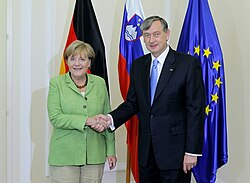
His expertise caught the attention of Secretary-General Kofi Annan, who appointed Türk as the UN Assistant Secretary-General for Political Affairs in 2000. He served in this capacity until 2005, establishing himself as a key advisor on global political stability.
The Slovenian Presidency (2007–2012)
In 2007, Türk entered politics as an independent candidate for the presidency, supported by a coalition of left-wing and centrist parties. After a runoff election on November 11, 2007, he won with 68.2% of the vote and assumed office on December 23.
During his term, he represented Slovenia on the world stage, balancing his role as head of state with his deep expertise in international law. He sought reelection in 2012 but was defeated by Borut Pahor in the second round of voting.
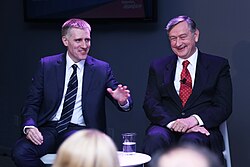
Candidacy for UN Secretary-General
In 2016, the Slovenian government nominated Türk for the position of UN Secretary-General. While he was not elected, his candidacy brought attention to critical issues of UN accountability. Specifically, Türk was questioned regarding the UN's role in the Haiti cholera outbreak.
Türk advocated for a "fair process and an effective remedy" for the victims in Haiti, acknowledging that while the UN possesses immunity from prosecution, alternative paths to fairness and compensation must be explored. He expressed support for efforts to increase accountability regarding sexual abuse by peacekeepers, though he declined to sign formal pledges, citing the need for institutional processes.
Later Career and Global Influence
Since leaving the presidency, Türk has remained active in global governance. In 2019, he was elected president of the Club de Madrid, a forum for former heads of state. In 2022, UN Secretary-General António Guterres appointed him to the High-Level Advisory Board on Effective Multilateralism.
He continues to contribute to academia as a non-resident senior fellow at Renmin University of China and chairs the Global High Level Panel on Water and Peace, as well as the board of the Global Fairness Initiative.
| Period | Role / Achievement | Organization/Entity |
|---|---|---|
| 1992–2000 | First Permanent Representative | United Nations (Slovenia) |
| 2000–2005 | Assistant Secretary-General | United Nations |
| 2007–2012 | 3rd President of Slovenia | Republic of Slovenia |
| 2019–Present | President | Club de Madrid |
| 2022–Present | Advisory Board Member | High-Level Advisory Board on Effective Multilateralism |
Frequently Asked Questions
What was Danilo Türk's role in the Slovenian constitution?
Between 1990 and 1991, Danilo Türk coauthored the human rights chapter of Slovenia's constitution, applying his expertise in international law to the nation's founding document.
How did Danilo Türk contribute to the United Nations before becoming President?
He served as Slovenia's first ambassador to the UN (1992–2000), presided over the UN Security Council twice, and served as the UN Assistant Secretary-General for Political Affairs from 2000 to 2005.
What is the focus of the Danilo Türk Foundation?
The foundation is primarily devoted to the rehabilitation of children who have been victims of armed conflict.
What was Türk's position on the Haiti cholera outbreak?
Türk argued that the UN should provide victims with a fair process and effective remedy, suggesting that despite UN immunity, there are ways to establish fairness and accountability.
Which academic institutions is Danilo Türk affiliated with?
He is a professor emeritus at the University of Ljubljana, a visiting professor at Columbia University in New York City, and a non-resident senior fellow at Renmin University of China.