Daily Nation: The Evolution of a Kenyan Media Giant
The Daily Nation stands as a cornerstone of journalism in East Africa, tracing its roots back to the late 1950s. From its humble beginnings as a weekly Swahili publication to its growth into a regional powerhouse, the paper has mirrored the political and social transformations of Kenya and the surrounding Great Lakes region.
The Origins of Taifa and Taifa Leo
The journey began in 1958 when an Englishman named Charles Hayes founded Taifa, a Swahili-language weekly newspaper. The publication underwent a significant transition in 1959 when it was acquired by Prince Shah Karim al-Hussaini, also known as Aga Khan IV. Under this new ownership, the publication expanded its frequency, officially becoming the daily newspaper Taifa Leo (which translates to "Nation Today") in January 1960.
The Launch of the English Edition
Following the success of the Swahili daily, the organization expanded into English-language reporting. On October 3, 1960, the Daily Nation was first published. This launch was organized by Michael Curtis, who brought professional expertise to the venture as the former editor of the British News Chronicle.
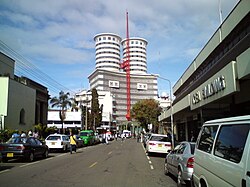
Corporate Growth and Regional Expansion
The publication was originally managed by East African Newspapers (Nation Series) Ltd. Over time, this entity evolved into the Nation Media Group, a diversified media conglomerate with extensive operations spanning the African Great Lakes region.
Pioneering Journalists and Press Freedom
The Daily Nation has been home to several influential journalists who shaped the landscape of Kenyan reporting. Among the first Kenyan-born reporters was Cyprian Fernandes, a Goan Kenyan journalist who served as chief reporter. Fernandes worked for both the Daily Nation and the Sunday Nation from 1960 until approximately 1973.
Fernandes' tenure was marked by rigorous investigative journalism—a style of reporting that deeply probes a single topic of interest. His work uncovering irregularities associated with the government of Jomo Kenyatta eventually led to threats against his family, forcing him to flee Kenya in 1973.
The 1960s also saw the contributions of other notable writers, including Polly Fernandes, who became a well-known figure in the paper's sports coverage.
Key Facts
- Founded: Predecessor (Taifa) started in 1958; Daily Nation launched October 3, 1960.
- Key Figures: Founded by Charles Hayes; acquired by Aga Khan IV; organized by Michael Curtis.
- Language Evolution: Started as a Swahili weekly (Taifa), became a Swahili daily (Taifa Leo), then added an English daily (Daily Nation).
- Corporate Identity: Originally East African Newspapers (Nation Series) Ltd, now the Nation Media Group.
- Regional Reach: Operations extend across the African Great Lakes region.
| Year | Milestone | Key Detail |
|---|---|---|
| 1958 | Foundation of Taifa | Swahili weekly founded by Charles Hayes |
| 1959 | Acquisition | Bought by Prince Shah Karim al-Hussaini (Aga Khan IV) |
| 1960 (Jan) | Transition to Daily | Taifa becomes Taifa Leo |
| 1960 (Oct) | English Launch | Daily Nation first published on October 3 |
Frequently Asked Questions
Who founded the predecessor to the Daily Nation?
The predecessor, a Swahili weekly called Taifa, was founded in 1958 by an Englishman named Charles Hayes.
When did the Daily Nation first publish in English?
The English-language edition, the Daily Nation, was first published on October 3, 1960.
What is the relationship between Taifa Leo and the Daily Nation?
Taifa Leo is the Swahili-language daily that evolved from the weekly Taifa; the Daily Nation was later launched as its English-language counterpart.
Who was Michael Curtis in the context of the paper's history?
Michael Curtis was the former editor of the British News Chronicle who organized the publication process for the launch of the Daily Nation.
Why did journalist Cyprian Fernandes leave Kenya?
Cyprian Fernandes was forced to flee Kenya around 1973 because his investigative journalism into government irregularities under Jomo Kenyatta led to threats against his family.