Cut-and-Cover Tunneling: Methods and Applications
In the world of civil engineering, cut-and-cover is a straightforward construction technique used to create shallow tunnels. The process involves excavating a trench and installing a roof support system capable of bearing the weight of the structures or terrain built above it. While simpler than deep-bore tunneling, it is a critical method for urban infrastructure.
Depending on the project requirements and the need for surface access, engineers typically choose between two primary construction strategies: the bottom-up method and the top-down method.
Construction Methodologies
The Bottom-Up Method
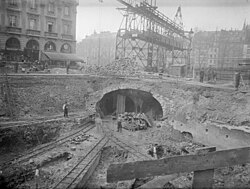
The bottom-up approach is the more traditional sequence of construction. First, a trench is excavated, utilizing ground support as needed to maintain stability. Once the trench is clear, the tunnel structure is built from the base upward. Materials used for these structures vary; while early projects relied on brickwork, modern tunnels utilize in situ concrete (concrete poured on-site), precast concrete, precast arches, or corrugated steel arches. After the tunnel is complete, the trench is back-filled and the surface is restored.
The Top-Down Method
The top-down method is designed to minimize surface disruption. This process begins by constructing side support walls and capping beams from ground level using techniques such as slurry walling (creating a trench filled with bentonite slurry to support the walls) or contiguous bored piling. A shallow excavation is then performed to install the tunnel roof using precast beams or in situ concrete.
Once the roof is in place, the surface is reinstated—excluding necessary access openings—allowing roadways and services to return to normal use quickly. The remaining excavation and the construction of the base slab then take place underneath the permanent roof.
Applications and Infrastructure
Cut-and-cover is the standard for shallow tunnels, whereas deep tunnels are typically created using a tunnelling shield (a protective structure used to support the tunnel face during excavation). For tunnels at intermediate depths, either method may be viable. In underwater environments, a variation known as the immersed-tube type is used.
This method is particularly effective for large underground metro stations. A prime example is the Canary Wharf tube station in London. These large "boxes" often feature two levels, providing an economical way to organize ticket halls, platforms, passenger access, emergency egress, ventilation, smoke control, and staff facilities. The scale of the Canary Wharf excavation is so vast that its interior has been compared to an underground cathedral.
Historically, the earliest parts of the London Underground—the Metropolitan and District Railways—were built using cut-and-cover. Because these lines operated before electric traction, being close to the surface was essential for ventilating the smoke and steam produced by locomotives.
Key Facts
- Primary Use: Ideal for shallow tunnels and large underground station boxes.
- Bottom-Up: Excavate first, build tunnel, then back-fill.
- Top-Down: Build walls and roof first, reinstate surface, then excavate underneath.
- Materials: Includes in situ concrete, precast concrete, corrugated steel, and historically, brickwork.
- Trade-off: Offers simplicity for shallow depths but causes significant surface disruption during construction.
| Feature | Cut-and-Cover (Bottom-Up) | Cut-and-Cover (Top-Down) | Bored Tunneling |
|---|---|---|---|
| Depth Suitability | Shallow | Shallow | Deep |
| Surface Disruption | High | Moderate (Early reinstatement) | Low |
| Construction Sequence | Base to Roof | Roof to Base | Linear progression |
| Common Use Case | Basic shallow conduits | Urban roads/Metro stations | Deep transit lines |
Frequently Asked Questions
What is the main difference between bottom-up and top-down construction?
The bottom-up method completes the tunnel structure before filling the trench and restoring the surface. The top-down method installs the roof first, allowing the surface to be reinstated and used while excavation continues underneath.
Why did the London Underground move away from cut-and-cover?
The transition to bored tunnels at deeper levels occurred toward the end of the 19th century due to the widespread surface disruption caused by cut-and-cover and the advent of electric traction, which removed the need for surface-level steam ventilation.
What materials are commonly used in cut-and-cover tunnels?
Modern tunnels typically use in situ concrete, precast concrete, precast arches, or corrugated steel arches, though brickwork was common in early construction.
When is a tunnelling shield used instead of cut-and-cover?
A tunnelling shield is used for deep tunnels where excavating a trench from the surface is impractical or impossible.
How does the top-down method benefit city traffic?
By constructing the roof and reinstating the surface early in the process, the top-down method allows roadways and public services to resume operation much sooner than the bottom-up method.