Cruisers: The Evolution of Naval Power from Sail to Missiles
A cruiser is a versatile type of warship designed to operate independently or as part of a larger fleet. In modern naval doctrine, cruisers are typically the largest surface combatants after aircraft carriers and amphibious assault ships. Their operational roles are diverse, ranging from search-and-destroy missions and ocean escort to sea denial.
The definition of a cruiser has shifted significantly over centuries. During the Age of Sail, "cruising" described specific missions—such as independent scouting, raiding, or commerce protection—usually carried out by sloops-of-war or frigates. By the mid-19th century, the term evolved into a formal ship classification for vessels intended for scouting and raiding in distant waters.
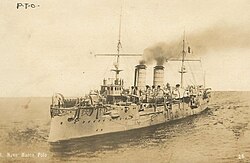
Early cruisers varied widely in scale, from medium-sized protected cruisers (ships with an armored deck to protect machinery) to large armored cruisers. As the dreadnought battleship emerged before World War I, armored cruisers evolved into the battlecruiser—massive vessels that, along with battleships, were classified as capital ships.
Key Facts
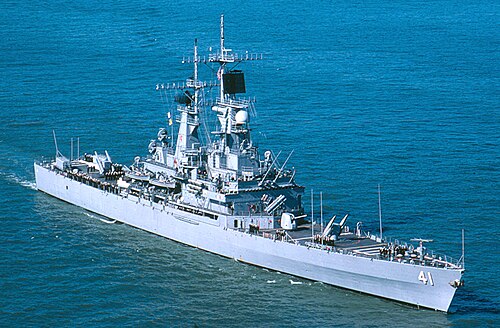
- Versatility: Cruisers can perform multiple roles, including air defense, anti-submarine warfare, and surface strikes.
- Evolution: They transitioned from sail-powered scouts to armored behemoths, and finally to missile-based platforms.
- Modern Status: Only the United States and Russia currently operate ships formally classified as cruisers.
- Missile Integration: The advent of guided missiles after World War II allowed cruisers to effectively replace the role of the battleship.
The Era of Gun-Based Cruisers
World War I and the Rise of Specialization
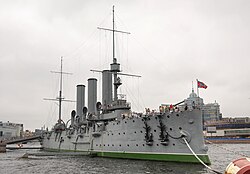
By World War I, cruisers had become the workhorses of the sea. These vessels typically featured a displacement of 3,000 to 4,000 tons, speeds between 25 and 30 knots, and gun calibers ranging from 127 to 152 mm.
Heavy and Light Cruisers
The heavy cruiser was defined by its long range, high speed, and naval guns with a caliber of approximately 203 mm (8 inches). While the first were built in 1915, the classification became standardized following the London Naval Treaty of 1930. Conversely, light cruisers served as faster, more agile counterparts.
German Pocket Battleships
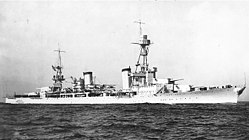
The German Deutschland class, known as Panzerschiffe ("armored ships"), represented a unique hybrid. Built under the restrictions of the Treaty of Versailles, these were essentially heavy cruisers armed with battleship-grade guns, torpedoes, and scout aircraft, providing significant propaganda value to the Kriegsmarine.
Anti-Aircraft Cruisers
As aerial threats grew, the Royal Navy began converting light cruisers into anti-aircraft (AA) platforms in 1935, replacing low-angle guns with high-angle 4-inch (102 mm) guns. This led to the purpose-built British Dido class and the US Navy's Atlanta class, the latter of which were originally designed as destroyer leaders.
World War II Production and Combat
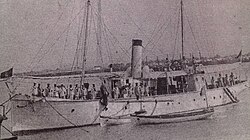
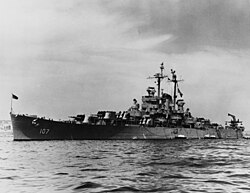
World War II saw massive cruiser production, particularly by the United States. The US Navy built 14 Baltimore-class heavy cruisers and 27 Cleveland-class light cruisers—the latter being the most numerous cruiser class ever completed. This surge was driven by heavy losses in the Pacific in 1942 and the need to escort the new Essex-class aircraft carriers.
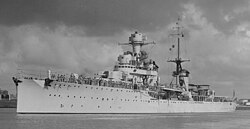
In contrast, the Japanese Navy built only five light cruisers during the war, while the British focused on light and anti-aircraft cruisers, completing 13 Fiji and Minotaur classes and 16 Dido class ships.
The Missile Age and Late 20th Century
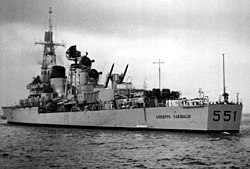
US Navy Development and the "Cruiser Gap"
Following WWII, the US Navy shifted toward guided missiles to counter aircraft and missile threats. By the mid-1950s, three surface-to-air missile (SAM) systems were developed: Talos (long range), Terrier (medium range), and Tartar (short range). Talos and Terrier were notably nuclear-capable.
In the late 1960s, a perceived "cruiser gap" emerged when the US had only six ships designated as cruisers compared to 19 Soviet vessels. However, the US possessed 21 frigates with equal or superior capabilities. To resolve this, the Navy performed a massive redesignation in 1975, reclassifying many frigates as cruisers.
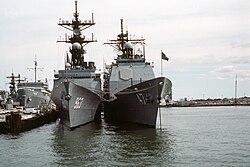
Soviet Rocket Cruisers
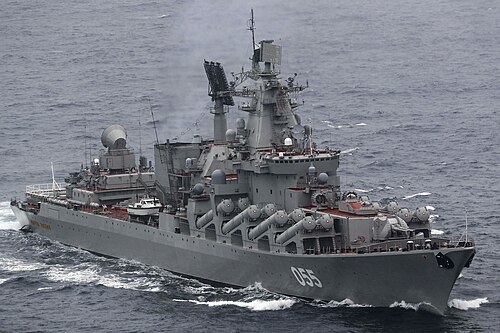
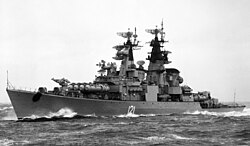
Soviet doctrine focused on "saturation attacks" using large numbers of anti-ship cruise missiles (ASCMs). This led to the development of "rocket cruisers," such as the Project 58 (Kynda) and the massive nuclear-powered Kirov class. The Kirov class, with a displacement of up to 25,000 tons, is often referred to as a battlecruiser due to its size and armament, including 20 P-700 Granit missiles.
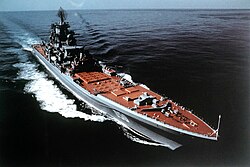
Modern Naval Landscape
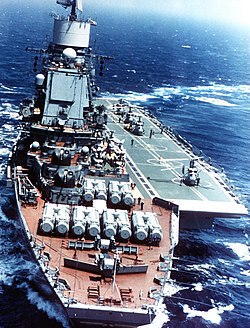
Today, the Ticonderoga-class cruiser remains a cornerstone of the US Navy, utilizing the Aegis BMD system for ballistic missile defense. While the US attempted to develop a futuristic CG(X) cruiser, the program was canceled in 2010.
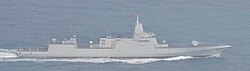
Most modern navies have moved away from generalist cruisers in favor of specialized guided-missile destroyers and frigates. While the US Department of Defense classifies China's Type 055 as a cruiser due to its size, China designates it as a guided-missile destroyer.
| Class/Type | Country | Primary Role | Key Feature |
|---|---|---|---|
| Kirov-class | Soviet Union/Russia | Heavy Strike/Nuclear | 25,000 tons displacement |
| Ticonderoga-class | United States | Air Defense/Escort | Aegis Combat System |
| Cleveland-class | United States | Light Cruiser (WWII) | Most numerous class built |
| Deutschland-class | Germany | Pocket Battleship | Battleship guns on cruiser hull |
| Type 055 | China | Guided-Missile Destroyer/Cruiser | Large size and armament |
Frequently Asked Questions
What is the difference between a cruiser and a destroyer?
Historically, cruisers were larger, more autonomous, and more heavily armed than destroyers. In the modern era, the line has blurred; many ships designated as destroyers (like the Type 055) are large enough to be classified as cruisers by other nations.
What was a "pocket battleship"?
A pocket battleship, specifically the German Deutschland class, was a heavily armed cruiser designed to fit within treaty limits while carrying battleship-caliber guns, allowing it to outrun battleships and outgun other cruisers.
Why did the US Navy reclassify its ships in 1975?
The redesignation was primarily to address the "cruiser gap" perception. By reclassifying capable frigates as cruisers, the US Navy more accurately reflected its combat power relative to the Soviet Union.
Are there any cruisers still in service today?
Yes, the United States Navy and the Russian Navy are the only navies that still operate active-duty ships formally classified as cruisers.
What is a battlecruiser?
A battlecruiser is a very large cruiser, emerging before World War I, that combined the speed of a cruiser with the heavy armament of a battleship, though typically with lighter armor than a full battleship.