Crows: Intelligence, Behavior, and Global Species
Crows are highly adaptable birds belonging to the genus Corvus. While the term "crow" is often used broadly to describe any member of this genus, it also appears in the common names of numerous distinct species. These birds are part of the larger Corvidae family, a group renowned for its cognitive abilities.
In common parlance, the term "raven" is often used to distinguish larger-sized species within the Corvus genus, though this distinction is not based on a specific scientific trait. Interestingly, a collective group of crows is known by the evocative name a "murder".
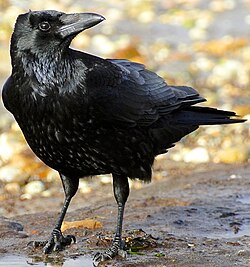
Key Facts
- Genus: Corvus.
- Family: Corvidae.
- Collective Noun: A "murder" of crows.
- Cognitive Skills: Capable of tool use, problem solving, and facial recognition.
- Distribution: Found globally, with species across Africa, Asia, Europe, North America, and Oceania.
Behavior and Intelligence
Crows are among the most intelligent birds on Earth, exhibiting complex cognitive functions that were once thought to be uniquely human. Their ability to solve problems and utilize tools allows them to thrive in diverse environments.
Cognitive Abilities
Research indicates that crows can create and employ tools to obtain food. Beyond physical problem solving, they possess impressive memory capabilities; studies have shown that crows can recognize and remember individual human faces, particularly those they perceive as threats.
Social Structure and Communication
Crows are deeply social animals that live in organized groups. They maintain these social bonds and warn others of danger by sharing information through a wide array of complex vocalizations.
Global Species of the Corvus Genus
The genus Corvus is diverse, with species adapted to various climates and continents. From the American crow in North America to the Pied crow in Africa, these birds occupy a vast geographical range.
| Species Name | Common Name | Primary Region |
|---|---|---|
| C. brachyrhynchos | American crow | USA, Southern Canada, Northern Mexico |
| C. corone | Carrion crow | Europe and East Asia |
| C. splendens | House crow | South Asia, Middle East, East Africa |
| C. moneduloides | New Caledonian crow | New Caledonia, Loyalty Islands |
| C. albus | Pied crow | Central African coasts to Southern Africa |
| C. cornix | Hooded crow | Northern/Eastern Europe, North Africa, Middle East |
Regional Diversity
- The Americas: Includes the Jamaican crow, Cuban crow, and the Tamaulipas crow of southern Texas and northeastern Mexico.
- Africa: Home to the Cape crow, Somali crow, and the White-collared crow (often considered a subspecies of the Pied crow).
- Asia: Features the Indian jungle crow, Philippine jungle crow, and the Large-billed crow of East Asia.
- Oceania: Includes the Torresian crow of Australia and New Guinea, as well as the various crows of the Solomon Islands and Indonesia.
Frequently Asked Questions
What is the difference between a crow and a raven?
Scientifically, both belong to the genus Corvus. The term "raven" is generally used as a grouping for the larger-sized species within that genus rather than being linked to a specific biological trait.
Are crows actually intelligent?
Yes. Crows are known for high-level problem solving, the ability to manufacture and use tools, and the capacity to remember specific human faces.
What is a group of crows called?
A collective group of crows is referred to as a "murder".
Where are crows found?
Crows are found worldwide, with various species inhabiting North America, Europe, Africa, Asia, and the islands of Oceania.
Can crows communicate with each other?
Yes, crows live in social groups and use a variety of vocalizations to communicate and share information about potential threats.