Crescentii Family: The Power Brokers of Medieval Rome
In the fragmented political landscape of early medieval Rome, power was rarely held by a single institution. Instead, it was contested by rival aristocratic clans who treated the papacy as a political tool. Among the most influential of these groups were the Crescentii, a powerful family network that dominated Roman politics during the 10th and 11th centuries.
While historical documentation from this era is sparse, historians identify the Crescentii as a group of related individuals divided into two primary branches: the Ottaviani and the Stefaniani. Their influence extended from the urban center of Rome to fortified strongholds in the Sabine Hills, where they maintained a loyal clientage of armed dependents who relied on the family for protection.
Key Facts
- Family Structure: Divided into two main branches, the Ottaviani and the Stefaniani.
- Primary Rivals: The Tusculani clan and the Ottonian emperors of Germany.
- Political Peak: Controlled the papacy in the late 10th century, including the installation of Pope John XIII.
- Territorial Base: Strongholds in Rome and the Sabine Hills.
- Last Member: Cardinal Marcello Crescenzi, who died in 1768.
The Struggle for Roman Hegemony
The Crescentii spent much of their existence in a violent rivalry with the Tusculani, a clan descended from Theophylact, the Count of Tusculum. This conflict was not merely a local feud but a struggle for control over the city of Rome and the papacy itself.
Beyond local rivals, the Crescentii faced the Ottonian Saxon dynasty of German kings and emperors. In 961, Emperor Otto the Great intervened in Italian affairs, a move that directly countered Crescentii interests. This tension culminated in February 962 with the Diploma Ottonianum, a decree ratified by the pope and emperor that established the emperor as the guarantor of the independence of the papal states—a move designed to curb the influence of families like the Crescentii.
The Zenith of Crescentii Power
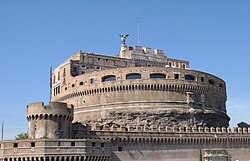
Despite imperial opposition, the Crescentii reached the height of their power in the late 10th century. They successfully infiltrated the highest levels of ecclesiastical and secular government. The family produced their own pope, John XIII, and managed the installation of several other "puppet popes" to ensure their interests were protected.
Their control was not limited to the church. The Crescentii held key secular offices, such as the praefectus (the technical governor of Rome), which allowed them to exert pressure on the papacy. They used this position to extract significant donations and contributions from the Papal treasury, effectively engaging in legalized extortion.
Decline and Fragmentation
The family's dominance began to fracture after the death of Sergius IV in 1012. In a bold move, the Crescentii installed their candidate, Gregory, in the Lateran without the consent of the cardinals. This sparked a fierce conflict with the Tusculani. The tide turned when the Tusculan pope, Benedict VIII, secured the protection of the German King Henry II, who was crowned Emperor in 1014.
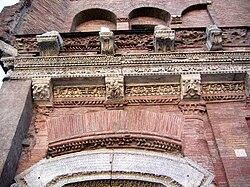
This defeat forced the Crescentii to retreat from Rome to their fortified rural strongholds. By the 1020s, internal unity collapsed; the abbot Hugh of Farfa successfully played the different branches of the family against one another. The family's waning prestige was evident in their support of two unsuccessful antipopes—Sylvester III in 1045 and Benedict X in 1058. Eventually, they transitioned from city-wide power brokers to local landowners known as the Crescenzi.
The Final Attempt at Restoration
The Crescentii made one last bid for supreme power in 1159 during a disputed papal election. Ottaviano dei Crescenzi Ottaviani di Monticelli was elected as Antipope Victor IV, opposing Pope Alexander III. Backed by the Holy Roman Emperor Frederick Barbarossa, Victor IV managed to hold Rome, preventing Alexander III from reclaiming the city. This schism persisted until Victor's death in 1164, marking the final significant political chapter for the clan.
| Period | Status | Key Event/Figure |
|---|---|---|
| Late 10th Century | Dominant | Installation of Pope John XIII |
| 1012–1014 | Declining | Conflict with Benedict VIII and Henry II |
| Mid-11th Century | Fragmented | Support for Antipopes Sylvester III and Benedict X |
| 1159–1164 | Final Attempt | Antipope Victor IV |
Frequently Asked Questions
Who were the Crescentii?
The Crescentii were a powerful aristocratic family in medieval Rome, divided into the Ottaviani and Stefaniani branches, who competed for control of the city and the papacy during the 10th and 11th centuries.
What was the Diploma Ottonianum?
Ratified in 962, the Diploma Ottonianum was an agreement between the pope and Emperor Otto the Great that made the emperor the guarantor of the papal states' independence, specifically to limit the influence of local Roman clans like the Crescentii.
How did the Crescentii control the papacy?
They installed puppet popes, produced their own pope (John XIII), and held secular offices like the praefectus to extort funds from the Papal treasury.
Who were the main rivals of the Crescentii?
Their primary local rivals were the Tusculani clan, and their broader political enemies were the German kings and emperors of the Ottonian Saxon dynasty.
When did the family finally lose its influence?
Their power declined sharply after 1014, though they made a final attempt at restoration with Antipope Victor IV between 1159 and 1164. The last known family member, Cardinal Marcello Crescenzi, died in 1768.