Council of Ephesus: The Theological Battle Over the Theotokos
The Council of Ephesus, convened in AD 431, stands as one of the most pivotal moments in early Christian history. This third ecumenical council—an assembly intended to represent all of Christendom to achieve a unified consensus—was called to resolve a deepening divide over the nature of Christ and the title of the Virgin Mary. Held in Ephesus (near modern-day Selçuk, Turkey), the council would ultimately reshape the landscape of the global church, leading to both doctrinal solidification and a lasting schism.
At the heart of the conflict was a dispute between two powerful figures: Cyril, the Patriarch of Alexandria, and Nestorius, the Patriarch of Constantinople. The tension centered on whether Mary should be called Theotokos (God-bearer) or Christotokos (Christ-bearer). While this may seem like a semantic disagreement, it represented a fundamental clash in Christology—the theological study of the nature and person of Jesus Christ.
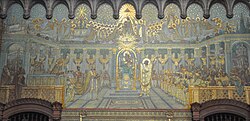
Key Facts
- Date: 22 June – 31 July 431 AD.
- Convoked by: Roman Emperor Theodosius II.
- Presided by: Patriarch Cyril of Alexandria.
- Primary Outcome: Condemnation of Nestorius and confirmation of the original Nicene Creed.
- Key Doctrine: Affirmation of Mary as Theotokos (God-bearer).
- Major Consequence: The Nestorian Schism and the rise of the Church of the East.
The Road to Ephesus: Cyril vs. Nestorius
The conflict began when Nestorius, Patriarch of Constantinople, argued that the term Theotokos was inappropriate, preferring Christotokos to emphasize the distinction between Christ's divine and human natures. Cyril of Alexandria viewed this as a denial of the unity of Christ's person and sought validation from Pope Celestine I. The Pope supported Cyril, urging Nestorius to recant or face excommunication.
Hoping to vindicate his teachings and potentially see Cyril condemned, Nestorius persuaded Emperor Theodosius II to summon a general council. The Emperor issued a Sacra (an official imperial decree) calling metropolitan bishops to assemble in Ephesus, a city renowned for its veneration of Mary.
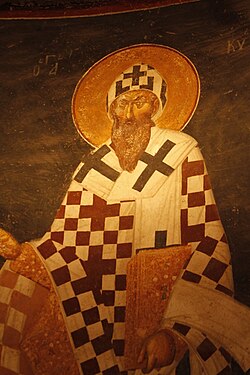
The Chaotic Assembly
The council was marked by political tension and procedural disputes. Approximately 200 to 250 bishops attended, though the Western representatives arrived late. Nestorius arrived with a detachment of troops under Count Candidian, the emperor's representative. While intended for official support, the presence of these troops created a perception of imperial bias toward Nestorius.
Cyril arrived shortly before the scheduled opening on Pentecost (7 June). However, Count Candidian blocked the start of the proceedings, insisting that the Roman and Antiochene delegations had not yet arrived. After weeks of delays and heated informal discussions, Cyril took a bold step on 22 June by formally opening the council, symbolizing Christ's presence by enthroning the Gospels in the center of the church.
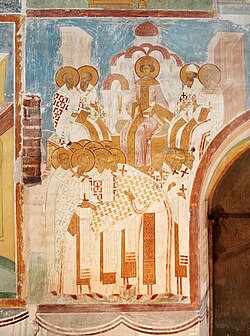
The Struggle for Legitimacy
Nestorius refused to acknowledge Cyril's authority, calling the early opening a "flagrant injustice." Despite protests from 68 bishops and the opposition of Count Candidian, Cyril successfully maneuvered the assembly to read the Emperor's decree, thereby legally sanctioning the council's proceedings.
Canons and Declarations
The council proceeded through several sessions, eventually excommunicating Nestorius and several of his supporters. The assembly passed eight specific canons (church laws):
- Canons 1–5: Condemned Nestorius, Caelestius, and their followers as heretics.
- Canon 6: Mandated deposition from office or excommunication for those rejecting the council's decrees.
- Canon 7: Prohibited any departure from the original Nicene Creed of 325 AD.
- Canon 8: Restricted the Bishop of Antioch from interfering in the affairs of the Church in Cyprus.
The council explicitly declared it unlawful to compose a "different Faith" as a rival to the established Nicene Creed, reinforcing the theological boundaries of the era.
The Aftermath and the Nestorian Schism
The defeat of Nestorius led to a permanent rupture. Supporters of his views, particularly within the Sassanid Persian Empire, severed ties with the Roman church. This created the Nestorian Schism, giving rise to the Church of the East. This community grew in Persia, aided by the Zoroastrian ruling class who preferred a Christian church independent of the Byzantine Empire.
Over the following decades, the School of Nisibis became a center for Nestorian learning after the School of Edessa was closed by Emperor Zeno in 489 AD, further solidifying the divide between Eastern and Western Christology.
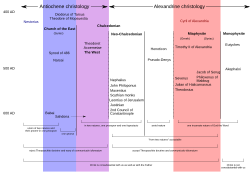
Summary of the Council of Ephesus
| Category | Details |
|---|---|
| Primary Dispute | Theotokos (God-bearer) vs. Christotokos (Christ-bearer) |
| Key Figures | Cyril of Alexandria, Nestorius of Constantinople, Theodosius II |
| Major Decision | Condemnation of Nestorianism; Affirmation of Nicene Creed |
| Ecclesiastical Impact | Formation of the Church of the East (Nestorian Christianity) |
| Modern Resolution | 1994 Common Christological Declaration (Catholic & Assyrian Churches) |
Conciliation in the Modern Era
After centuries of division, a significant step toward healing occurred in 1994. The Catholic Church and the Assyrian Church of the East signed the Common Christological Declaration. This document resolved the ancient dispute by acknowledging a shared understanding of Christ's divinity and humanity, recognizing both the Catholic description of Mary as "the Mother of Christ our God and Saviour" and the Assyrian description of her as "the Mother of God" and "the Mother of Christ."
Frequently Asked Questions
What was the main difference between Theotokos and Christotokos?
Theotokos means "God-bearer," implying that Mary gave birth to God in the flesh, emphasizing the unity of Christ's divine and human natures. Christotokos means "Christ-bearer," a term preferred by Nestorius to maintain a sharper distinction between the humanity and divinity of Jesus.
Who was the primary winner of the Council of Ephesus?
Cyril of Alexandria emerged as the victor. He successfully maneuvered the council to condemn Nestorius, affirm the title of Theotokos, and secure the support of the papal legates.
What happened to Nestorius after the council?
Nestorius was removed from his position as Patriarch of Constantinople, his teachings were officially anathematized (condemned), and he eventually retired to his former monastery.
How did the Council of Ephesus affect Christianity in Persia?
The council led to the Nestorian Schism. The Persian Church, seeking independence from the Byzantine Empire to avoid accusations of foreign allegiance, aligned itself with Nestorian doctrine, leading to the development of the Church of the East.
Is the Council of Ephesus still recognized today?
Yes, it is accepted as an ecumenical council by the Catholic Church, Eastern Orthodox Church, Oriental Orthodox Church, and various Protestant denominations, including Lutheran, Anglican, and Reformed churches.