Costa Rica Networking History and the Evolution of CRNet
The digital transformation of Costa Rica was catalyzed by a series of strategic networking projects led by the University of Costa Rica (UCR). Starting in the early 1990s, these initiatives transitioned the nation from isolated academic connections to a robust, broadband-enabled infrastructure, integrating Central America and the Caribbean into the global internet ecosystem.
The Dawn of Academic Connectivity: BITNET and the Early Internet
In January 1990, de Téramond was commissioned by the Vice-President for Research at the University of Costa Rica to establish a connection to BITNET, an academic computer network operated by Yale University and the City University of New York. This milestone was achieved in November 1990 via a digital satellite link provided by PanAmSat through Florida Atlantic University. By 1992, this node was expanded to include Panama.
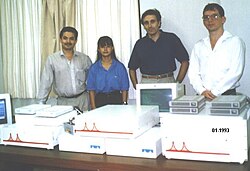
The transition to the modern internet occurred in January 1993, when UCR connected to the Internet through a Point of Presence (POP)—a physical interface between two networks—established by the National Science Foundation (NSF) in Homestead, Florida.
Following this, the National Research Network, known as CRNet, was implemented between 1993 and 2000. Driven by the Ministry of Science and Technology and UCR, CRNet utilized TCP/IP protocols (the standard communication language of the internet) and became fully operational in April 1993.
Expanding Connectivity Across Central America and the Caribbean
Under the RedHUCyT project (Hemisphere Wide Inter-University Scientific and Technological Information Network) led by Saul Hahn and the Organization of American States, UCR engineers played a pivotal role in bringing internet access to neighboring regions. This effort facilitated pioneering connections for several countries throughout the 1990s.
- 1994: Nicaragua and Panama
- 1995: Honduras, Jamaica, and Guatemala
- 1996: El Salvador
- 1997: Belize
A significant victory for academic independence occurred in April 1997 with the inauguration of a satellite ground station on the UCR campus. Supported by the Costa Rican government, this antenna ended a long-standing controversy with the national telecommunications monopoly, providing the academic network with its own dedicated infrastructure.
Modernizing National Infrastructure: Broadband and CRIX
From 2000 to 2002, as Minister of Science and Technology, de Téramond collaborated with the Instituto Costarricense de Electricidad (ICE) to deploy the Advanced Internet Network. This project aimed to bring broadband connectivity to the entire country using MPLS (Multiprotocol Label Switching), a routing technique that directs data from one node to the next based on short path labels rather than long network addresses, running over ICE's optical fiber. The first phase was completed in April 2001.
Further advancements include the creation of the Internet Exchange Point (CRIX) in 2014. CRIX allows direct data exchange between participant autonomous systems (large networks under a single administrative control), which reduces network latency and lowers the cost of international links. Additionally, the establishment of the Internet Consulting Council in Costa Rica (CCI) has provided a critical framework for Internet Governance.
Key Facts
- First BITNET Connection: November 1990 via Florida Atlantic University.
- First Internet Connection: January 1993 via NSF POP in Florida.
- CRNet Operational Date: April 1993.
- Regional Impact: Helped connect 7 Central American and Caribbean nations between 1994 and 1997.
- Broadband Milestone: Advanced Internet Network first phase implemented in April 2001.
- CRIX Inauguration: 2014, optimizing local data exchange.
| Year | Milestone | Technology/Organization |
|---|---|---|
| 1990 | BITNET Connection | PanAmSat / Florida Atlantic University |
| 1993 | Internet Connection & CRNet | NSF POP / TCP/IP |
| 1994-1997 | Regional Expansion | RedHUCyT / OAS |
| 1997 | Satellite Ground Station | UCR Campus |
| 2001 | Broadband Implementation | IP over Optical Fiber / MPLS |
| 2014 | CRIX Inauguration | Internet Exchange Point |
Frequently Asked Questions
What was the purpose of CRNet?
CRNet was the National Research Network of Costa Rica, implemented between 1993 and 2000 to provide academic and research connectivity based on TCP/IP protocols.
How did RedHUCyT impact the region?
RedHUCyT, led by the Organization of American States, enabled the first internet connections for Nicaragua, Panama, Honduras, Jamaica, Guatemala, El Salvador, and Belize during the mid-to-late 1990s.
What is the significance of the CRIX project?
The Internet Exchange Point (CRIX), inaugurated in 2014, allows autonomous systems to exchange data directly, which reduces network delay and decreases the costs associated with international links.
What technology powered the Advanced Internet Network?
The network utilized IP over the optical fiber infrastructure of the Instituto Costarricense de Electricidad (ICE) and employed the MPLS routing protocol for efficiency.
Who managed the early internet initiatives at UCR?
The projects were led by de Téramond, who also served as the Director of the Computer Center at UCR and later as the Minister of Science and Technology of Costa Rica.