CoronaVac: Analysis of the Inactivated SARS-CoV-2 Vaccine
CoronaVac, also known as PiCoVacc, is an inactivated vaccine developed to combat SARS-CoV-2, the virus responsible for the COVID-19 pandemic. Unlike newer mRNA technologies, an inactivated vaccine uses a version of the virus that has been killed or "inactivated," meaning it cannot cause disease but can still train the immune system to recognize and fight the pathogen.
Administered via intramuscular injection, CoronaVac has been utilized globally, receiving emergency use authorization in various countries and recommendation from the World Health Organization (WHO). Its deployment has spanned multiple continents, from extensive use in Asia and South America to distribution in Africa and Europe.
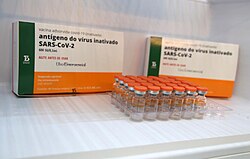
Key Facts
- Vaccine Type: Inactivated SARS-CoV-2 virus.
- Administration: Intramuscular injection.
- WHO Status: Recommended for use.
- Identifiers: CAS Number 2480309-93-9; DrugBank DB15806.
- Global Reach: Approved for emergency use in countries including Brazil and Mexico.
Clinical Efficacy and Performance
The effectiveness of CoronaVac varies based on the number of doses administered, the age of the recipient, and the specific variant of the virus encountered.
Impact of Dosage and Variants
Clinical data indicates that a second dose significantly boosts protection. Against the Gamma variant, a single dose showed 16% efficacy against asymptomatic cases and 27% against hospitalization. However, after two doses, efficacy against hospitalization rose to 73%.
Against the Delta variant, two doses demonstrated a 100% efficacy rate in preventing hospitalization, though efficacy against asymptomatic cases was lower at 54%.
Efficacy in Elderly Populations
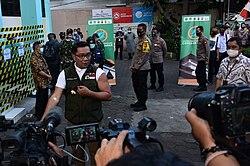
Protection levels generally decline as age increases. For individuals aged 70–74, two doses provided 78% protection against hospitalization and 84% against death. In contrast, for those aged 80 and above, protection against hospitalization dropped to 39% and protection against death to 44%.
Global Distribution and Manufacturing
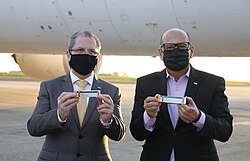
CoronaVac has been produced and distributed through a wide network of international partnerships. In Brazil, the Instituto Butantan played a critical role in the "fill and finish" process, ensuring the vaccine reached the local population.
Other notable distribution efforts include:
- Mexico: Approved for emergency use in February 2021, with 20 million doses ordered by March 2021.
- Djibouti: Received 300,000 doses in March 2021.
- Asia: Extensive use in Indonesia, Turkey, and the Philippines.
Manufacturing capacity was scaled rapidly, with Sinovac reporting an annual capacity of two billion doses by April 2021. Local production agreements were also established in countries such as Turkey and Egypt.
Summary of Vaccine Efficacy
The following table summarizes the efficacy of CoronaVac across different demographics and outcomes after a full two-dose regimen.
| Age Group | Asymptomatic Protection | Hospitalization Protection | Death Prevention |
|---|---|---|---|
| Under 60 | 45% | 84% | 77% |
| 60–69 | 56% | 78% | 79% |
| 70–79 | 62% | 74% | 78% |
| 80–89 | 57% | 63% | 67% |
| 90+ | 32% | 33% | 35% |
Frequently Asked Questions
What type of vaccine is CoronaVac?
CoronaVac is an inactivated vaccine, which means it uses a killed version of the SARS-CoV-2 virus to stimulate an immune response without causing the disease.
How is CoronaVac administered?
The vaccine is administered via an intramuscular injection.
Is CoronaVac effective against the Delta variant?
Yes, clinical data shows that two doses of CoronaVac provide 100% efficacy against hospitalization for the Delta variant.
How does age affect the vaccine's effectiveness?
Efficacy generally decreases with age. While protection against death is high (up to 84%) for those in their early 70s, it drops to approximately 35% for those aged 90 and older.
Which organizations have approved or recommended CoronaVac?
CoronaVac has been recommended by the World Health Organization (WHO) and has received emergency use authorizations in numerous countries, including Brazil and Mexico.