Corn Snake Morphs: A Comprehensive Guide to Colors, Patterns, and Genetics
Through generations of selective breeding, captive-bred corn snakes have evolved into a stunning array of colors and patterns. These variations, known as morphs, occur when breeders recombine dominant and recessive genes that control the development and function of chromatophores—the specialized cells responsible for skin pigmentation. As our understanding of reptile genetics grows, new morphs continue to emerge every year.
Whether you are a seasoned herpetologist or a first-time owner, understanding the difference between a natural locality phase and a designer genetic mutation is key to appreciating the diversity of this species.
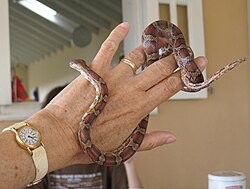
Key Facts
- Morphs are color and pattern variations resulting from genetic mutations and selective breeding.
- Amelanism refers to the absence of black pigment (melanin), while Anerythrism refers to the absence of red, orange, and yellow pigments.
- Compound Morphs occur when two or more distinct genetic mutations are combined in one snake.
- Hybrids are created by crossing corn snakes with other species, such as kingsnakes or rat snakes.
- Scaleless corn snakes are the result of a recessive mutation affecting scale development.
Color Morphs
Color variations are the most prominent feature of captive corn snakes, ranging from the classic wild-type appearance to stark white or deep charcoal.
Wildtype and Locality Phases
The Normal (Wildtype/Carolina) corn snake is orange with red saddle markings outlined in black and a checkered belly. Within this group, certain regional variations became popular, though selective breeding has shifted these from "localities" to "appearance traits":
- Miami Phase: Typically smaller snakes with a light silver to gray ground color and high-contrast red or orange saddles.
- Okeetee Phase: Known for deep red dorsal saddles with heavy black borders on a bright orange background.
Amelanistic Variations
Amelanistic snakes lack black pigment. Breeders have refined this trait into several "designer" looks:
- Candy-cane: Bred for red or orange saddles on a stark white background.
- Reverse Okeetee: An amelanistic version of the Okeetee, featuring wide white rings instead of black around the saddles.
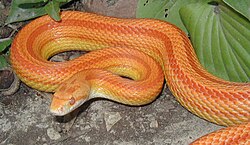
- Fluorescent Orange: Adults develop white borders around bright red saddles on an orange base.
- Sunglow: Selected for an exceptionally bright orange ground color and a lack of white speckling.
Melanin-Reducing and Other Color Mutations
Beyond albinism, other genes alter the intensity and hue of the snake's skin:
- Anerythristic: Lacks red, yellow, and orange pigments, resulting in black, gray, and brown tones. Type A may develop yellow on the neck from dietary carotenoids.
- Hypomelanistic (Hypo): Reduces dark pigments to make reds and oranges more vivid while keeping the eyes dark.
- Blood Red: A "diffused" recessive trait that eliminates belly checkers and creates a nearly solid orange-red appearance.
- Lavender: Features a light pink background with purple-gray markings and burgundy eyes.
- Ultra: Derived from the gray rat snake, this gene replaces black lines with light gray.
Pattern Morphs
While color is striking, mutations in the arrangement of pigments create distinct pattern morphs.
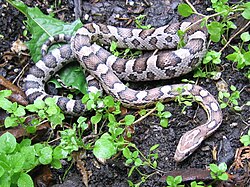
- Motley: Characterized by an "inverted" spotting pattern and a clear belly.
- Striped: Features a striping pattern and clear belly; unlike Motleys, their colors do not connect.
- Diffused: Softens the patterning on the sides and removes the belly checkers.
- Sunkissed: A hypo-like gene that also produces rounded saddles and unique head patterns.
Compound Morphs
Compound morphs occur when multiple genetic traits are combined. Because of the vast number of possible combinations, there are tens of thousands of variations. Some popular examples include:
| Morph Name | Genetic Combination | Visual Characteristics |
|---|---|---|
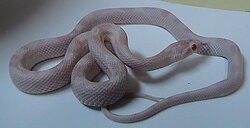
| Snow | Amelanistic + Anerythristic | Predominantly white with pink/beige blotches. |
| Blizzard | Amelanistic + Charcoal | Totally white with red eyes; little to no pattern. |
| Ghost | Hypomelanistic + Anerythristic A | Pastel shades of gray, brown, lavender, and tan. |
| Opal | Amelanistic + Lavender | White appearance with pink to purple highlights. |
| Fire | Amelanistic + Diffused | Bright red with very little adult patterning. |
Scale Mutations and Hybrids
Some variations affect the physical structure of the snake rather than just the color. Scaleless corn snakes possess a recessive mutation that reduces the number of scales on the body, though they retain their ventral (belly) scales. These are technically hybrids, originating from a cross between a corn snake and another North American rat snake species.
Hybridization is also common in captivity, often resulting in fertile offspring. Notable hybrids include:
- Jungle: Corn snake × California kingsnake.
- Creamsicle: Albino corn snake × Great Plains rat snake.
- Turbo: Corn snake × any Pituophis species.
- Cornduran/Sinacorn/Pueblacorn: Corn snake × various milk snake subspecies.
Frequently Asked Questions
What is the difference between a morph and a phase?
Originally, a "phase" referred to a natural color variation found in a specific geographic location (like the Miami Phase). However, through selective breeding, many of these are now treated as "morphs," where the name describes the appearance rather than the snake's origin.
What does "amelanistic" mean in corn snakes?
Amelanistic refers to a genetic mutation where the snake cannot produce black pigment (melanin). This results in snakes that are typically red, orange, or yellow with white or cream backgrounds and red eyes.
Are hybrid corn snakes sterile?
Many common hybrids, such as those between corn snakes and other Pantherophis, Lampropeltis, or Pituophis species, have been proven to be completely fertile.
How do "Snow" and "Blizzard" morphs differ?
While both are predominantly white, a Snow morph is a combination of Amelanistic and Anerythristic genes and often retains subtle pink or yellow blotches. A Blizzard morph combines Amelanistic and Charcoal genes, resulting in a nearly pure white snake with red eyes.