Corbridge History: From Roman Coria to Border Warfare
Corbridge is a settlement steeped in antiquity, serving as a critical junction for the Roman Empire and a resilient outpost during centuries of border conflict. From its origins as a strategic military site to its development into a Victorian hub, the town's architecture and archaeology tell a story of power, faith, and survival.
The Roman Legacy of Coria
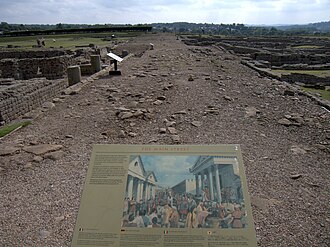
Known in Roman times as Coria, this settlement held the distinction of being the most northerly town in the Roman Empire. Its importance was primarily due to its location at the intersection of the Stanegate and Dere Street, the two most vital Roman roads in the region.
The military presence began around AD 85 with the establishment of the first fort, though a slightly earlier base existed nearby at Beaufront Red House. By the middle of the 2nd century AD, the fort evolved into a town featuring two walled military compounds. These compounds remained garrisoned until the Roman occupation finally ended.
Archaeological excavations have yielded significant treasures, most notably the stone Corbridge Lion and the Corbridge Hoard, a collection of Roman armour and various other artifacts. Today, the site is managed by English Heritage and includes a museum and shop. It remains the town's top-rated attraction, open daily from 10 to 6 in the summer and on weekends from 10 to 4 in the winter.
Architectural Landmarks and Faith
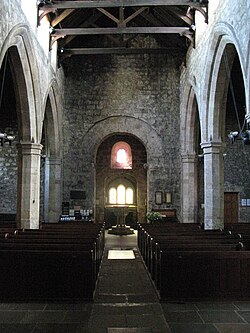
The religious heart of the town is the Church of England parish church of Saint Andrew. Believed to have been consecrated in 676, it is thought that Saint Wilfrid commissioned the church simultaneously with Hexham Abbey. The structure is largely built from stone repurposed from Hadrian's Wall.
Over the centuries, the church has seen numerous additions, including a Norman doorway and a lychgate—a roofed gateway to the churchyard—built as a First World War memorial. In a modern touch, the entrance features glass doors donated by Rowan Atkinson, etched in memory of his mother.
Fortified Dwellings and Civic Buildings
Due to the volatile nature of the region, Corbridge features rare fortified residences. The Vicar's Pele, a pele tower (a small fortified keep), was built in the 14th century in the south-east corner of the churchyard and boasts walls 1.3 metres (4 ft) thick. It is one of only three fortified vicarages in the county.
Even older is Corbridge Low Hall, dating from the late 13th or early 14th century. One end was converted into a pele tower in the 15th century, with the main block undergoing remodelling in the 16th and 17th centuries before a restoration around 1890.
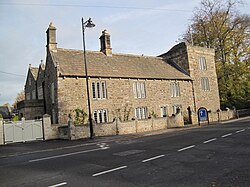
The town's civic landscape expanded in the 19th century. The Corbridge Town Hall, designed by Frank Emley, was completed in 1887. Additionally, the arrival of the railway allowed successful industrialists and businessmen to commute to Newcastle, leading to the construction of grand Victorian mansions on Prospect Hill.
Border Warfare and Resilience
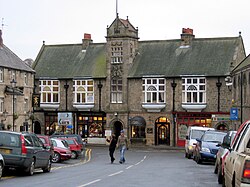
Between 1300 and 1700, Corbridge was plagued by border warfare. Raids were so frequent that residents often brought their livestock into the town at night, posting guards at either end of the street to watch for marauders.
Connectivity was essential for survival and trade. While a bridge over the River Tyne was first constructed in the 13th century, it did not survive. The current stone bridge, featuring seven impressive arches, was erected in 1674.
Key Facts
- Roman Status: Coria was the northernmost town in the Roman Empire.
- Strategic Location: Situated at the junction of Dere Street and the Stanegate.
- Notable Finds: The Corbridge Lion and the Corbridge Hoard of armour.
- Ancient Church: St Andrew's was likely consecrated in 676 and built using stone from Hadrian's Wall.
- Defensive Architecture: Home to the 14th-century Vicar's Pele with walls 1.3 metres thick.
- Infrastructure: The current seven-arch stone bridge dates to 1674.
| Landmark | Period/Date | Key Feature |
|---|---|---|
| Coria (Roman Town) | c. AD 85 onwards | Northernmost town in the Roman Empire |
| St Andrew's Church | Consecrated 676 | Built from Hadrian's Wall stone |
| Corbridge Low Hall | Late 13th/Early 14th C. | Includes a 15th-century pele tower |
| Vicar's Pele | 14th Century | Fortified vicarage with 1.3m thick walls |
| Corbridge Town Hall | 1887 | Designed by Frank Emley |
| Tyne Bridge | 1674 | Seven-arch stone structure |
Frequently Asked Questions
What was the significance of Coria in the Roman Empire?
Coria was the most northerly town in the Roman Empire and served as a vital strategic hub at the junction of two major Roman roads, the Stanegate and Dere Street.
What are the most famous archaeological finds from Corbridge?
The most well-known discoveries from the site are the stone Corbridge Lion and the Corbridge Hoard, which consists of Roman armour and various other items.
Why was the Vicar's Pele built with such thick walls?
The 1.3-metre thick walls were a necessity due to the prevalent border warfare between 1300 and 1700, during which raids were common in the region.
How is St Andrew's Church connected to Hadrian's Wall?
The church was constructed largely using stone taken from Hadrian's Wall, which is located to the north of the town.
When was the current bridge over the Tyne built?
The present seven-arch stone bridge was erected in 1674, replacing an earlier 13th-century bridge that did not survive.