Consumerism: The Evolution of Modern Consumption and Its Global Impact
Consumerism is a complex socio-cultural and economic phenomenon where individuals seek to acquire goods and services far beyond what is necessary for basic survival. In today's global society, the act of purchasing has shifted from merely satisfying human needs to becoming a primary driver of cultural identity and social status. While it is often viewed through an economic lens, consumerism deeply influences how societies are organized and how individuals perceive their place in the world.
Emerging in Western Europe and the United States during the Industrial Revolution, consumerism became a dominant global force throughout the 20th century. In economic terms, it represents a system where the free choices of consumers dictate what manufacturers produce and how they produce it, effectively steering the economic organization of society.
Key Facts
- Origins: Rooted in the Industrial Revolution, with early precursors in 16th and 17th-century England.
- Economic Driver: Emphasizes that consumer choice should inform production and economic structure.
- Social Function: Acts as a tool for identity formation and a display of social position.
- Environmental Cost: Linked to overexploitation of natural resources, waste from disposable goods, and climate change.
- Sociological Impact: Can reinforce class barriers and exacerbate social inequalities.
The Historical Evolution of Consumption
Early Roots in England and Colonial America
The shift toward intensified consumption became evident in 17th-century London. The gentry and wealthy merchants fostered a culture of luxury that eventually trickled down to other socio-economic classes. The opening of shopping centers, such as the New Exchange in 1609 by Robert Cecil, transformed shops into social hubs where Londoners met and socialized.
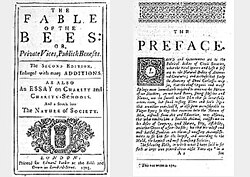
By the Restoration period (starting in 1660), luxury architecture became a primary way to advertise social standing. This shift was famously defended in Bernard Mandeville's 1714 work, Fable of the Bees, which argued that a nation's prosperity was actually driven by the self-interest of the consumer.
In colonial America, a similar transformation occurred between 1764 and 1776. As noted in research on the non-importation movement, colonial consumers shifted from values of efficiency and economical consumption toward a preference for comfort, convenience, and imported luxury goods.

The Rise of Mass Production and Media
The 19th century further accelerated these trends, turning consumption into a "dream world." The advent of mass production allowed goods to be created at a scale and speed previously unimaginable, making luxury items accessible to a broader segment of the population.
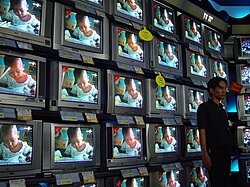
In the 20th century, television played a pivotal role in cementing American consumerism. By broadcasting idealized lifestyles and products directly into homes, media transformed the desire for goods into a cultural imperative.
The Modern Landscape of Consumerism
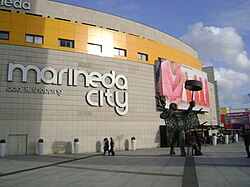
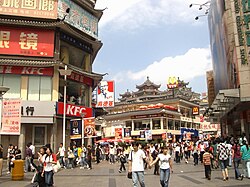
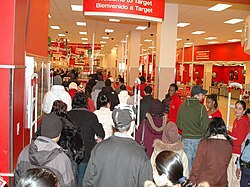
In the 21st century, consumerism has expanded globally. The proliferation of international brands and shopping malls has standardized consumption patterns across different continents, from Spain to China.
However, this growth has led to the rise of hyperconsumerism—the consumption of goods well beyond one's necessities. This is often fueled by planned obsolescence, a design strategy where products are created with a limited useful life to encourage repeat purchases.
Criticisms and Economic Perspectives
Environmental and Sociological Concerns
Environmentalists argue that consumerism has physical limits. The "growth imperative" leads to overconsumption, where resource use exceeds the Earth's carrying capacity. This results in the overexploitation of natural resources and massive amounts of waste from disposable products, contributing significantly to climate change.
Sociologically, critics argue that consumerism reinforces class barriers. The pursuit of material goods as a status symbol creates deep inequalities and can lead to a "beacon of mediocrity," as French writer Georges Duhamel once described American materialism.
Economic Theories
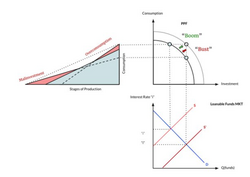
Different economic schools view consumerism through various lenses. The Austrian business cycle theory, formulated by Friedrich Hayek, examines the fluctuations of the economy, including the periods of boom and bust that can be influenced by consumption and investment patterns.
Alternatives to Consumerism
In response to these pressures, movements such as simple living and slow living have gained traction. These philosophies prioritize quality of life and sustainability over the accumulation of material wealth. Other alternatives include the sharing economy, which emphasizes shared access to assets rather than individual ownership, and the concept of a steady state economy, which seeks a constant capital and population size to protect the environment.
Summary of Consumerism Concepts
| Feature | Traditional Consumerism | Sustainable Alternatives |
|---|---|---|
| Primary Goal | Acquisition of goods and status | Well-being and ecological balance |
| Economic Driver | Continuous growth and demand | Steady state or circular economy |
| Product Life | Planned obsolescence | Durability and repairability |
| Social Value | Identity through ownership | Identity through experience/values |
Frequently Asked Questions
What is the difference between consumption and consumerism?
Consumption is the basic act of using goods and services to satisfy needs. Consumerism is a socio-cultural ideology that encourages the acquisition of goods beyond what is necessary for survival, often linking consumption to social status and identity.
How does planned obsolescence drive consumerism?
Planned obsolescence is the practice of designing products to break or become outdated quickly. This forces consumers to replace items more frequently, ensuring a constant stream of revenue for manufacturers and maintaining high levels of consumption.
What are the primary environmental impacts of overconsumption?
Overconsumption leads to the depletion of natural resources, increased pollution from manufacturing, and a surge in landfill waste due to disposable goods. These factors collectively accelerate climate change and threaten biodiversity.
What is the "sharing economy"?
The sharing economy is an economic model that enables shared access to assets (such as tools, cars, or homes) rather than requiring every individual to own them. This reduces the total number of products that need to be manufactured and consumed.
How did the Industrial Revolution contribute to consumerism?
The Industrial Revolution introduced mass production, which lowered the cost of goods and increased their availability. This shifted society from a model of necessity-based purchasing to one where a wider range of products could be bought for comfort and status.