Congress of Vienna: Redrawing the Map of Post-Napoleonic Europe
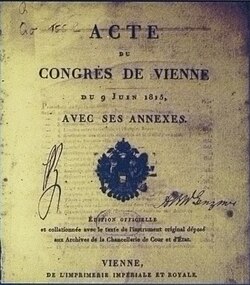
Following the dramatic downfall of the French Emperor Napoleon Bonaparte, Europe found itself in a state of geopolitical chaos. To resolve this, the Congress of Vienna was convened from September 1814 to June 1815. This series of international diplomatic meetings sought to establish a new political and constitutional order, ensuring that the continent would not slide back into the systemic warfare that had characterized the previous two decades.
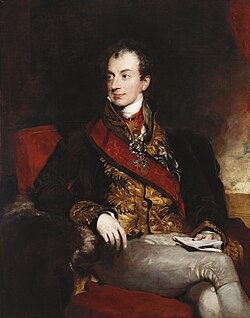
Chaired by the Austrian statesman Klemens von Metternich, the Congress brought together representatives from all major European powers—excluding the Ottoman Empire—to negotiate a long-term peace plan. The objective was not merely to restore pre-war borders, but to create a balance of power, resizing the dominant nations so they could mutually restrain one another while acting as protectors for smaller states.
Key Facts
![Delegates of the Congress of Vienna in a contemporary engraving by Jean Godefroy after the painting by Jean-Baptiste Isabey: Britain: Arthur Wellesley, 1st Duke of Wellington Portugal: Joaquim Lobo Silveira, 7th Count of Oriola Portugal: António de Saldanha da Gama, Count of Porto Santo Sweden: Count Carl Löwenhielm France: Louis Joseph Alexis, Comte de Noailles [fr] Austria: Klemens Wenzel, Prince von Metternich France: Frédéric-Séraphin de La Tour du Pin Gouverne [fr] Russia: Count Karl Robert Nesselrode Portugal: Pedro de Sousa Holstein, 1st Count of Palmela Britain: Robert Stewart, Viscount Castlereagh France: Emmerich Joseph, Duke of Dalberg Austria: Baron Johann von Wessenberg Russia: Prince Andrey Kirillovich Razumovsky Britain: Charles Stewart, 1st Baron Stewart Spain: Pedro Gómez Labrador, 1st Marquess of Labrador Britain: Richard Le Poer Trench, 2nd Earl of ClancartyNikolaus von Wacken [de] (Recorder) Austria: Friedrich von Gentz (Congress Secretary) Prussia: Baron Wilhelm von Humboldt Britain: William Cathcart, 1st Earl Cathcart Prussia: Prince Karl August von Hardenberg France: Charles Maurice de Talleyrand-Périgord Russia: Count Gustav Ernst von Stackelberg](/images/25/49/254966a454b48cdf14eb77aff96cbd4c4858b3f03e15e1303f851f95f23595b4.png)
- Timeline: September 1814 to June 1815.
- Primary Goal: Establish a long-term peace plan and a stable balance of power in Europe.
- Key Figure: Klemens von Metternich, the architect of the Congress system.
- Major Outcome: The consolidation of the Holy Roman Empire's 300 states into a 39-state German Confederation.
- French Status: France was stripped of Napoleon's conquests but remained a recognized power.
The Ideology of Restoration
The Congress was driven by a conservative desire to return to the ancien régime (the political and social system of the Kingdom of France from the Late Middle Ages until the French Revolution). Leaders like Metternich aimed to suppress the liberal, republican, and revolutionary movements sparked by the French Revolution, viewing them as threats to the constitutional stability of Europe.
The Great Powers and Territorial Shifts
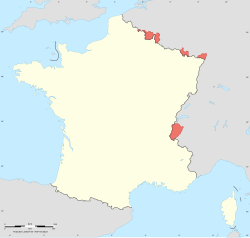
At the negotiation table, France occupied a weak position due to its recent military defeat. While it retained territories acquired before Napoleon's rise, it was forced to surrender all conquests made during his reign. In contrast, the other major powers made significant gains:
- Russia: Acquired central and eastern parts of the Duchy of Warsaw.
- Prussia: Gained Swedish Pomerania, the majority of the Kingdom of Saxony, and the western portion of the former Duchy of Warsaw.
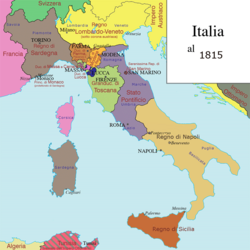
- Austria: Expanded its influence by gaining much of northern Italy.
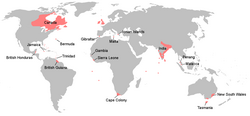
- United Kingdom: Secured strategic global assets, including Malta, Heligoland, the Cape Colony, and Ceylon, as well as parts of the West Indies.
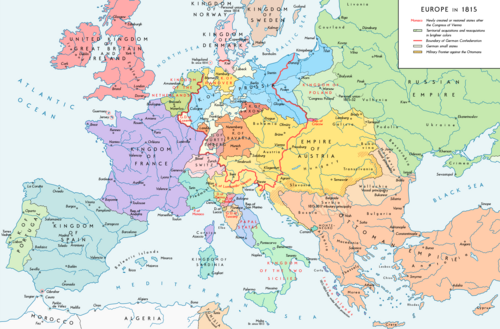
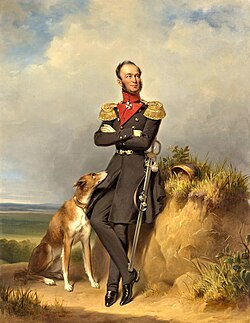
To prevent future French aggression, the participants ratified the creation of the Kingdom of the Netherlands. By combining the former Dutch Seven Provinces with Austrian territory, they created a strong buffer state between France and the newly formed German Confederation.
Diplomatic Maneuvering and the Polish-Saxon Question
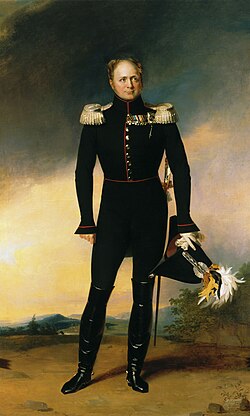
The negotiations were not without tension, particularly regarding the "Polish-Saxon question." The resolution, reached on October 24, 1815, involved a complex compromise. Russia established Congress Poland, with the Tsar ruling as king independently of Russia. However, Prussia received the Grand Duchy of Posen and 60% of Saxony. The remaining 40% of Saxony was returned to King Frederick Augustus I.
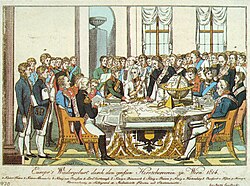
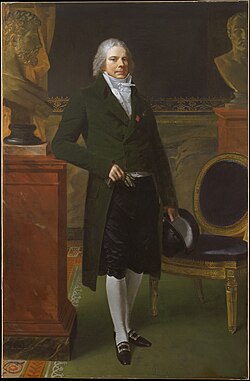
France, despite its defeat, managed to influence the proceedings through the skilled diplomacy of Charles Maurice de Talleyrand, who worked to ensure France remained a viable player in the European order.
The Final Settlement and Lingering Disputes
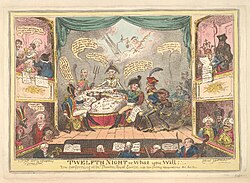
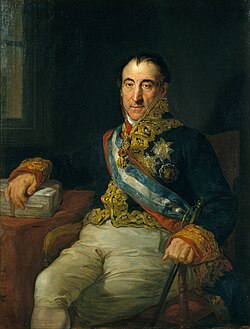
The Final Act of the Congress of Vienna confirmed the reduction of the fragmented German states into a loose German Confederation of 39 states under Austrian leadership. However, not all parties were satisfied. Spain, for instance, refused to sign initially due to a dispute over the town of Olivenza. Although the Congress decreed that Olivenza should be returned to Portugal, Spain never complied, leaving the issue unresolved to this day.
| Power | Key Gains / Changes | Strategic Purpose |
|---|---|---|
| Austria | Northern Italy | Regional dominance in Southern Europe |
| Prussia | Silesia, Rhineland, Westphalia, parts of Saxony | Strengthening the eastern and western frontiers |
| Russia | Congress Poland (Duchy of Warsaw) | Expansion of influence into Central Europe |
| United Kingdom | Malta, Cape Colony, Ceylon, Ionian Islands | Securing global maritime trade routes |
| Netherlands | Merged Seven Provinces and Austrian lands | Creating a buffer state against France |
Frequently Asked Questions
What was the primary goal of the Congress of Vienna?
The primary goal was to provide a long-term peace plan for Europe by establishing a balance of power among the leading nations, thereby preventing any single country from dominating the continent as France had under Napoleon.
Who was the most influential figure at the Congress?
Klemens von Metternich, the Austrian statesman and chancellor, was the primary architect of the Congress system and the driving force behind the conservative restoration of the European order.
How did the Congress handle the territory of Poland?
The Congress created "Congress Poland," a kingdom where the Russian Tsar ruled as king. Some parts of Poland were given to Prussia (the Grand Duchy of Posen), and Kraków was designated as a free city under the joint protectorate of Austria, Prussia, and Russia.
Did the Congress of Vienna successfully prevent future wars?
While it did not end all conflict, it succeeded in preventing a general European-wide war for several decades by creating a diplomatic framework known as the Concert of Europe.
Why did Spain refuse to sign the Final Act initially?
Spain disagreed with the decision to return the town of Olivenza to Portugal. Although Spain eventually accepted the Treaty in 1817 to avoid isolation, it never returned the territory.