Competition Law History: From Medieval Market Controls to Modern Antitrust
The quest for fair markets and the prevention of monopolies is not a modern phenomenon. Long before the digital age, legal systems struggled to balance the freedom of trade with the need to protect consumers from price gouging and artificial scarcity. In England, this journey evolved from crude medieval penalties to a sophisticated body of common law, eventually shaping the global antitrust frameworks we see today.
Early English Market Regulations
Control over restrictive practices existed in England well before the Norman Conquest. One of the earliest recorded offenses was foresteel (forestalling), the act of buying goods before they reached the market to artificially inflate prices. The Domesday Book notes that King Edward the Confessor could carry out forfeitures for this practice.
As the centuries progressed, the state attempted to regulate prices directly. In 1266, under Henry III, an act fixed the prices of bread and ale based on corn prices established by the assizes. Those who breached these rules faced severe penalties, including the pillory and tumbrel. By the 14th century, forestallers were legally branded as "enemies of the whole country." Under Edward III, the Statute of Labourers (1349) fixed wages for workmen and mandated reasonable food prices, introducing punitive damages—requiring overcharging merchants to pay the injured party double—a concept that mirrors modern treble damages in US antitrust law.
During this era, the law also targeted trade combinations. Using the poetic language of the time, statutes outlawed any "Confederacy, Conspiracy, Coin, Imagination, or Murmur" intended to disrupt the stability of trade staples.
The Rise and Fall of Monopolies
By the 16th century, the English crown used tariffs and licenses to manage the economy. In 1553, Henry VIII reintroduced food tariffs to stabilize prices against overseas supply fluctuations. Simultaneously, guilds—organizations of tradesmen and handicraftspeople—enjoyed exemptions from monopoly laws until the Municipal Corporations Act of 1835.
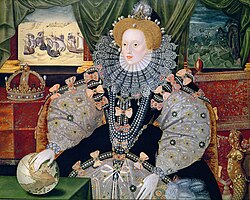
In 1561, a system of Industrial Monopoly Licences was introduced, functioning similarly to modern patents. However, under Elizabeth I, this system became a tool for preserving privilege rather than encouraging innovation. This abuse led to the landmark Darcy v Allein (the Case of Monopolies), where the court voided a grant for the sole right to make playing cards. The court identified three primary harms of monopoly: increased prices, decreased quality, and the reduction of skilled workers to poverty.
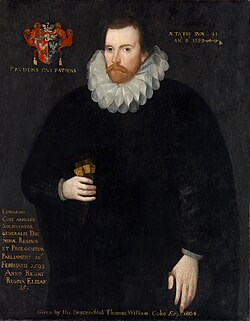
Despite this, monopolies persisted as revenue sources for subsequent monarchs. This led Parliament to pass the Statute of Monopolies in 1623, which prohibited most monopolies while exempting guilds and certain patent rights. By 1684, the case of East India Company v Sandys established that exclusive trade rights were legitimate for overseas ventures, as only large entities could survive the risks of global trade.
Classical Trade Theory and Individual Liberty
The British perspective on competition was rooted in the restraint of trade doctrine, which viewed restrictive agreements as infringements on an individual's liberty to earn a living. Rather than a broad theory of market power, courts decided cases based on economic fairness and specific circumstances.
Adam Smith, in The Wealth of Nations (1776), argued that monopolies and trade secrets kept markets under-stocked to keep prices above natural levels. While Smith recognized the problem of cartels—noting that tradespeople often conspired to raise prices when meeting—he believed legal measures to prevent such assemblies would be inconsistent with liberty and justice.
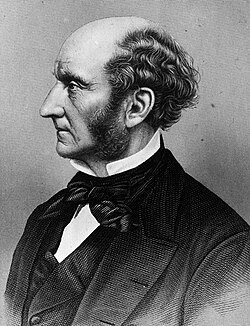
By the late 19th century, the reality of large-scale firms became undeniable. John Stuart Mill, in On Liberty (1859), argued that while trade is a social act subject to societal interest, the best way to ensure quality and low prices is through the "doctrine of Free Trade," where producers and buyers are equally free to seek alternatives.
The Evolution of Restraint of Trade Law
The English law of restraint of trade served as the direct predecessor to modern competition law. It focused on whether an agreement was contrary to public policy unless its reasonableness could be proven. For a restraint to be legally considered, both parties had to provide valuable consideration (something of value exchanged in the contract).
The law evolved alongside commerce. In 1613 (Rogers v Parry), a localized restraint was enforceable because the time and place were certain. However, Chief Justice Coke ruled that a general restraint on one's trade was unreasonable. As communications improved, the focus shifted from geography to necessity. By 1880, in Roussillon v Roussillon, the court decided that the key question was whether a restraint went further than necessary to protect the promisee.
The Shift to Modern Antitrust and Global Influence
Modern competition law was heavily shaped by the United States. The Sherman Act (1890) and the Clayton Act (1914) were designed to break up "trusts"—large company groups with power-sharing schemes—hence the term "antitrust." These laws were modeled on the English restraint of trade doctrine.
After World War II, the US exported this model to Germany and Japan. The rationale was political: by dismantling cartels and zaibatsu (large industrial conglomerates), the Allies aimed to prevent the economic concentration that had facilitated totalitarian control. This influence extended to the Treaty of Rome, which embedded competition laws into the European Economic Community.
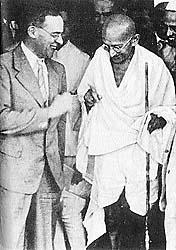
Britain's transition was slower. Post-WWI economic policy shifted toward nationalization and socialist agendas under the Labour Party, making private industry regulation a lower priority. However, the government eventually introduced the Monopolies and Restrictive Practices (Inquiry and Control) Act 1948, followed by the Restrictive Trade Practices Act 1956, which outlawed collusion to maintain resale prices. This was further expanded by the Monopolies and Mergers Act 1965 and the 1969 Act.
Key Facts
- Foresteel: An early medieval practice of buying goods before they reached market to inflate prices.
- Darcy v Allein: A pivotal case that defined monopolies as causing higher prices, lower quality, and unemployment.
- Statute of Monopolies (1623): Legislation that limited the Crown's ability to grant monopolies while protecting patents.
- Restraint of Trade: The common law doctrine that prohibits agreements limiting a person's ability to work unless reasonable.
- Antitrust: A US term originating from the effort to break up "trusts" (large corporate groups).
- Treble Damages: A punitive measure in US law inspired by early English statutes requiring overchargers to pay double.
| Period/Year | Event/Legislation | Primary Focus |
|---|---|---|
| Medieval | Domesday Book / 1266 Act | Preventing forestalling and fixing bread/ale prices. |
| 1349 | Statute of Labourers | Fixing wages and mandating reasonable food prices. |
| 1623 | Statute of Monopolies | Prohibiting royal monopolies (except patents/guilds). |
| 1776 | The Wealth of Nations | Adam Smith's critique of monopoly and cartel power. |
| 1890 | Sherman Act (USA) | Breaking up industrial trusts. |
| 1948 | Monopolies & Restrictive Practices Act | Britain's first modern-style competition legislation. |
Frequently Asked Questions
What was "foresteel" in early English law?
Foresteel, or forestalling, was the practice of intercepting goods before they reached the open market to create an artificial shortage, allowing the buyer to sell the goods at inflated prices.
How did the Case of Monopolies (Darcy v Allein) change the law?
The court ruled that royal grants of exclusive rights (monopolies) were void, establishing that monopolies harm the public by increasing prices, decreasing product quality, and causing skilled workers to become idle.
What is the difference between a monopoly and a patent in the 1623 Statute?
While the Statute of Monopolies generally prohibited the granting of exclusive trade rights, it specifically excluded patent rights, allowing for the protection of new inventions.
Why is the term "antitrust" used in the United States?
The term comes from the "trusts" of the late 19th century—large groups of companies that used intricate power-sharing schemes to dominate markets. Legislation like the Sherman Act was designed to "bust" these trusts.
What is the "restraint of trade" doctrine?
It is a common law principle that views agreements restricting a person's ability to carry out their trade as contrary to public policy, unless the restriction is reasonable and supported by valuable consideration.
How did post-WWII politics influence competition law in Germany and Japan?
The US imposed competition policies on these nations believing that economic concentration (cartels and zaibatsu) had enabled political totalitarianism; therefore, destroying economic monopolies was seen as a way to ensure political democracy.