Commander: The History and Role of the Royal Navy Rank
In the structured hierarchy of the United Kingdom's maritime forces, the rank of Commander (abbreviated as Cdr) serves as a critical senior officer position within the Royal Navy. Positioned between the rank of lieutenant commander and captain, the commander holds a pivotal role in both operational leadership and administrative oversight.
Modern commanders are versatile leaders who may be tasked with the command of a frigate, destroyer, submarine, or various specialized squadrons, including mine countermeasures, fishery protection, patrol boats, and aviation squadrons. Additionally, they may lead shore installations or serve as essential members of a naval staff.
Key Facts
- NATO Rank Code: OF-4.
- Hierarchy: Junior to Captain; senior to Lieutenant Commander.
- Army Equivalent: Lieutenant Colonel.
- RAF Equivalent: Wing Commander.
- Insignia: Three rings of gold braid with a loop in the upper ring.
The Evolution of the Rank
Origins as Master and Commander
The rank emerged around 1670 under the title master and commander. This designation was created for officers captaining vessels that were too large for a lieutenant to manage, yet too small to justify a post-captain. These ships typically included storeships, hospital ships, fire ships, bomb vessels, and sloops-of-war. Because the officer was responsible for both the fighting and the sailing (navigation) of the vessel, the dual title was used.
Before 1770, the term also referred to a master in charge of a ship's navigation. By 1794, the Royal Navy officially shortened the title to simply "commander," though the older terminology persisted in common speech for several years.
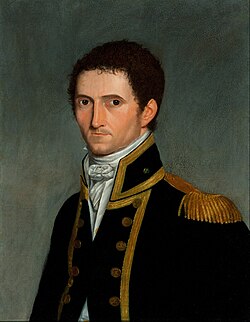
Social Barriers and Promotion
Historically, advancement to this rank was heavily influenced by social standing. Before 1750, the rank of master and commander often represented the ceiling for officers who rose from the ship's crew without external patronage. In contrast, those with family connections or Parliamentary support often viewed the role as a brief stepping stone before being promoted to post-captain.
While the Navy List began recording appointment dates in 1718 to establish seniority as a promotion guide, evidence suggests that actual appointments often ignored these records in favor of social influence.
The Napoleonic Era and the Promotion Bottleneck
During the Napoleonic Wars, the rank of commander was frequently used as a reward for service. This led to a significant imbalance; by 1812, the Navy List recorded 586 commanders but only 168 available vessels for them to command. This created a bottleneck where many officers remained ashore on half-pay with few opportunities for further advancement.
To resolve this issue, the Royal Navy introduced a new role in 1827, allowing commanders to serve as second-in-command on larger vessels, thereby creating more active positions for the rank.
Comparative Rank Structure
The Royal Navy's rank system is designed to align with other branches of the British Armed Forces and international allies via NATO standards. The rank of Wing Commander in the Royal Air Force (RAF) was actually derived from the naval rank of commander through the Royal Naval Air Service during World War I.
| Service Branch | Equivalent Rank | NATO Code |
|---|---|---|
| Royal Navy | Commander | OF-4 |
| British Army | Lieutenant Colonel | OF-4 |
| Royal Marines | Lieutenant Colonel | OF-4 |
| Royal Air Force | Wing Commander | OF-4 |
Frequently Asked Questions
Is a lieutenant commander considered a commander?
No. While the titles are similar, a lieutenant commander is a separate, junior rank. Officers holding the rank of lieutenant commander are not considered to be commanders.
What is the difference between a commander and a captain?
In the Royal Navy hierarchy, a commander is immediately junior to a captain. While both are senior officers, the captain holds a higher level of authority and seniority.
What does the insignia of a Royal Navy commander look like?
The insignia consists of three rings of gold braid, with the uppermost ring featuring a distinctive loop.
How did the rank of Wing Commander in the RAF originate?
The rank of Wing Commander was derived from the naval rank of commander, stemming from the usage within the Royal Naval Air Service during World War I.
What types of vessels does a commander typically lead?
A commander may be in charge of a destroyer, frigate, or submarine, as well as leading various specialized squadrons such as aviation or patrol boat squadrons.