Comedy Music: A History of Humorous Sound and Satire
Comedy music, also known as musical comedy, is a diverse genre where the primary intent is to evoke laughter or amusement. Far from being a modern invention of the internet age, the marriage of music and humor has a rich lineage stretching back to antiquity. From the satirical plays of ancient Greece to the viral parodies of the 21st century, comedy music utilizes a wide array of techniques to subvert expectations and entertain audiences.
At its core, the genre blends elements of popular music, folk traditions, and ragtime, utilizing everything from standard vocals to unconventional sound effects. Over time, it has branched into specialized subgenres such as parody music (works that satirize specific styles or artists) and novelty songs (tracks designed around a gimmick or humorous theme).
Key Facts
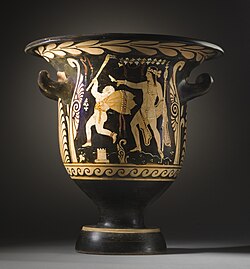
- Ancient Roots: The genre's history dates back to the first century in ancient Greece and Rome.
- Classical Influence: Composers like Haydn and Beethoven used juxtaposition to create comedic contrast.
- Modern Icons: "Weird Al" Yankovic is a central figure, known for a prolific career of hit parodies.
- Diverse Forms: Includes fusion genres like comedy rock and comedy hip hop.
- Recognition: The Grammy Award for Best Comedy Album recognizes both spoken word and musical comedy.
The Evolution of Musical Humor
Ancient and Early Eras
The foundations of comedy music were laid in ancient Greece and Rome, continuing through the Medieval Period and into the Classical and Romantic eras. In the late 17th century, Italy saw the development of comic operas, which eventually evolved into various forms of musical theatre, including operettas, light operas, and musical plays.
The Classical and Romantic Approach
During the Classical and Romantic eras, composers employed juxtaposition—the act of placing comic passages directly alongside serious sections to highlight the contrast. Joseph Haydn was a master of this, notably in his 1772 "Farewell Symphony" (No. 45) and his 1792 "Surprise Symphony" (No. 94). This era also saw the rise of "toy symphonies," which featured actual toy instruments to create a whimsical effect.
The 20th Century Explosion
The early 1900s saw vaudeville entertainers adding comedic lyrics to musical numbers. A landmark hit arrived in 1923 with Eddie Cantor's "Yes! We Have No Bananas." By the 1940s, Spike Jones revolutionized the genre by replacing musical notes with humorous sound effects, while Stan Freberg used cover songs in 1951 to critique commercialism.
The mid-century was marked by the "April Fools" concerts in Liverpool and London. Gerard Hoffnung's 1956 Music Festival became a massive success, featuring works like Malcolm Arnold's A Grand, Grand Overture, which was scored for an orchestra and three vacuum cleaners. In 1958, the "Mammoth Concert of Comic Music" at the Royal Albert Hall further pushed boundaries with pieces featuring motor horns and piano tuners.
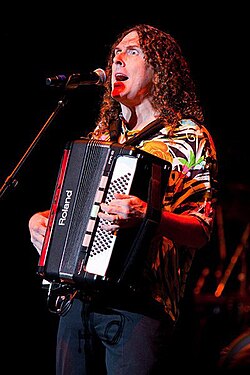
The 1960s and 70s introduced enduring artists such as Frank Zappa, Tiny Tim, and Randy Newman. The emergence of radio host Dr. Demento in 1970 provided a platform for amateur artists, including a young "Weird Al" Yankovic, who would go on to define the genre for decades with his 14-album contract spanning from 1983 to 2014.
The 21st Century and Digital Age
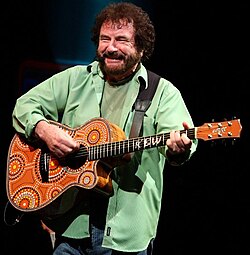
Modern comedy music has expanded into television and digital media. The New Zealand duo Flight of the Conchords transitioned from radio to a successful HBO series. Other contemporary acts include Tenacious D, The Lonely Island, Bo Burnham, and Ninja Sex Party. Some artists have embraced extreme productivity; for instance, Matt Farley has written over 22,000 novelty songs under various pseudonyms like The Toilet Bowl Cleaners.
Principal Techniques of Comedy Music
Creating humor in music requires more than just funny lyrics. Composers and performers use several specific technical devices:
- Comic Text: Using funny words or verbal comedy, a technique explored deeply in 18th-century opera buffa (comic opera), such as Mozart's Le nozze di Figaro.
- Musical Parody: Satirizing specific styles. Mozart's Ein musikalischer Spass is a prime example, mocking incompetent composers.
- Syntactical Juxtaposition: Using unexpected phrase lengths, startling melodic turns, or contrasting textures to surprise the listener.
- Musical Description: Using sound effects to illustrate events, such as the bird calls in Beethoven's Pastoral Symphony or the bleating sheep in Strauss's Don Quixote.
- Incongruency: Creating a clash between musical styles for parodistic effect, as seen in Haydn's Symphony No. 60.
- Orchestral Devices: Using unusual instruments or techniques, such as col legno (striking strings with the wood of the bow) in Berlioz's Symphonie fantastique.
- Musical Quotations: Blending existing melodies into a medley or quodlibet (a Renaissance-era combination of melodies).
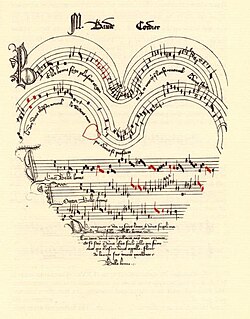
- Notation and Titles: Using visually unusual scores, such as Baude Cordier's heart-shaped manuscript, or labeling movements as scherzo (meaning "joke").
Entertainment and Associations
Comedy music is closely tied to musical theatre. In the 1920s and 30s, the Gershwin brothers created numerous musical comedies that prioritized dance and humor over heavy drama. These works often used aposiopesis—the sudden breaking off of musical speech for dramatic effect—and incorporated tap dance to enhance the comedic timing.
Beyond the stage, the genre is linked to counterculture and education, often serving as a tool for social commentary or a supplementary teaching aid.

Summary of Comedy Music Elements
| Category | Key Examples / Techniques | Notable Figures |
|---|---|---|
| Classical Techniques | Juxtaposition, Toy Symphonies, Scherzos | Haydn, Beethoven, Schumann |
| 20th Century Styles | Sound effects, Vaudeville lyrics, Parody | Spike Jones, "Weird Al" Yankovic |
| Modern Subgenres | Comedy Rock, Comedy Hip Hop, Novelty | Tenacious D, The Lonely Island |
| Theatrical Forms | Opera Buffa, Operetta, Musical Comedy | George & Ira Gershwin, Mozart |
Frequently Asked Questions
What is the difference between a novelty song and a parody?
A parody specifically satirizes an existing work, artist, or musical style to create humor. A novelty song is generally a track built around a unique gimmick, funny topic, or unusual sound, regardless of whether it is mocking another piece of music.
What does the term 'scherzo' mean in a musical context?
The term scherzo literally translates to "joke" in Italian. Composers like Beethoven and Tchaikovsky used this designation for movements intended to be lighthearted, playful, or humorous.
How is 'juxtaposition' used to create comedy in music?
Juxtaposition involves placing two contrasting elements side-by-side—such as a very serious, dramatic passage followed immediately by a silly or unexpected sound—to create a surprising and humorous effect.
What is 'soggetto cavato'?
Soggetto cavato is a technique where syllables from solmization (musical scales) are substituted for letters to create a musical cryptogram, as seen in Schumann's Carnaval.
Which awards recognize achievements in comedy music?
The Grammy Award for Best Comedy Album recognizes both musical and spoken word comedy. Additionally, the Golden Globe Award for Best Motion Picture – Musical or Comedy honors films in these genres, and the Musical Comedy Awards recognize artists in the United Kingdom.