Colorado War and the Sand Creek Massacre
By the summer of 1864, tensions in the Colorado territory reached a breaking point. Conflict erupted between American settlers and bands of the Southern Cheyenne, Kiowa, and Arapaho. While some indigenous groups raided settlements for livestock and supplies—occasionally taking women and children to integrate into their tribes—the escalation of violence set the stage for one of the most notorious betrayals in American frontier history.
The situation intensified following the Hungate massacre on June 11, 1864, where a settler family was killed. In response, pro-war settlers in Denver displayed the scalped bodies of the attackers. Governor John Evans, believing that tribal chiefs had orchestrated a full-scale war, issued a proclamation demanding that all "Friendly Indians of the Plains" report to military posts or be labeled as "hostile." To enforce this, Evans secured authorization from the War Department to form the Third Colorado Cavalry, a unit led by Colonel John M. Chivington and largely composed of "100-daysers"—soldiers enlisted for short 100-day terms specifically to fight the Cheyenne and Arapaho.
The Path to Betrayal
Seeking a peaceful resolution, Chief Black Kettle entered negotiations with Governor Evans. On September 28, 1864, a peace settlement was reached at Fort Weld, near Denver. Under this agreement, the Southern Cheyenne were assigned to the Sand Creek reservation and instructed to report to Fort Lyon. Black Kettle believed this arrangement would guarantee the safety of his people.
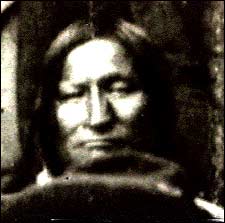
However, the political climate shifted. Once Black Kettle and his people arrived at the reservation, the commanding officer at Fort Lyon was replaced by an ally of Colonel Chivington. Chivington, driven by ambition and pressure from Governor Evans to achieve a military victory before his soldiers' short-term enlistments expired at the end of 1864, began planning an assault.
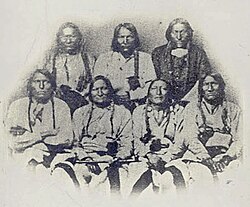
On November 28, Chivington arrived at Fort Lyon with 700 men. Eyewitness John S. Smith recounted that Chivington took the fort by surprise, stopping mail and travelers to ensure total control of the area. By 8:00 PM that night, Chivington departed for the Indian camp.
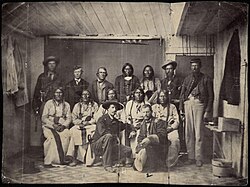
The Sand Creek Massacre
At dawn on November 29, 1864, the Third Colorado Cavalry attacked the Sand Creek reservation. Because many warriors were away hunting, the village was largely undefended. Following the instructions of the Indian agent, Black Kettle had flown both an American flag and a white flag of truce from his tipi, but the cavalry ignored these signals.
The resulting Sand Creek massacre saw the militia kill 163 Cheyenne through shooting and stabbing, while burning the village to the ground. The majority of the victims were women and children. In a gruesome aftermath, members of the militia took body parts as souvenirs, which were later displayed in Denver.
Aftermath and the Struggle for Peace
Black Kettle survived the attack, though he had to rescue his wife, who had been severely injured by nine bullet and shrapnel wounds. Despite the horror of the massacre, Black Kettle continued to advocate for pacifism, arguing that military resistance against the United States was futile. However, many other Southern Cheyenne chiefs disagreed, aligning themselves with the Comanche and Kiowa to wage war against U.S. military and civilian forces.
Black Kettle's faith in diplomacy was deeply shaken. He later remarked that while he had persevered as a friend to the white man, it became difficult to trust them after they had "cleaned out our lodges, horses, and everything else."
In an attempt to secure a future for his people, Black Kettle signed the Treaty of Little Arkansas River on October 14, 1865. While the U.S. promised "perpetual peace" and reparations for the Sand Creek massacre, the treaty's actual effect was to dispossess the Cheyenne once more, forcing them to relocate to Indian Territory (modern-day Oklahoma). As Black Kettle's influence waned, hardliners like Roman Nose and the Dog Soldiers continued the fight.
Key Facts
- Date of Massacre: November 29, 1864.
- Casualties: 163 Cheyenne killed, mostly women and children.
- Key Figures: Chief Black Kettle (pacifist leader), Colonel John M. Chivington (military commander), and Governor John Evans.
- The Unit: The Third Colorado Cavalry consisted largely of "100-daysers" on short-term enlistments.
- The Betrayal: The attack occurred despite Black Kettle flying both a white flag and an American flag.
- Final Outcome: The Treaty of Little Arkansas River (1865) forced the Cheyenne into Indian Territory (Oklahoma).
| Event/Entity | Role/Description | Outcome |
|---|---|---|
| Hungate Massacre | Attack on settler family (June 11, 1864) | Increased pro-war sentiment in Denver |
| Fort Weld Agreement | Peace settlement (Sept 28, 1864) | Cheyenne moved to Sand Creek reservation |
| Sand Creek Massacre | Military assault (Nov 29, 1864) | 163 Cheyenne killed; village destroyed |
| Treaty of Little Arkansas | Peace treaty (Oct 14, 1865) | Relocation to Indian Territory (Oklahoma) |
Frequently Asked Questions
Who was Black Kettle?
Black Kettle was a chief of the Southern Cheyenne who consistently sought peace and diplomatic solutions with the United States government, even after surviving the Sand Creek massacre.
What were "100-daysers"?
These were soldiers in the Third Colorado Cavalry who enlisted for limited 100-day terms specifically to engage in combat against the Cheyenne and Arapaho tribes.
Why did the Sand Creek massacre happen despite a peace agreement?
Colonel John M. Chivington, pressured by Governor John Evans and driven by personal ambition, sought a military victory before his soldiers' short-term enlistments expired.
What was the significance of the flags at Sand Creek?
Black Kettle flew an American flag and a white flag of truce to signal his peaceful intentions and submission to U.S. authority, but these signals were ignored by the attacking cavalry.
What happened to the Cheyenne after the Treaty of Little Arkansas River?
Although the treaty promised peace and reparations, it effectively dispossessed the Cheyenne of their lands and required them to move to Indian Territory, which is now Oklahoma.