Coat of Arms of the United States
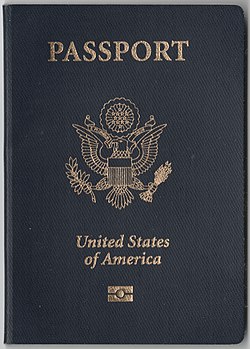
The Coat of Arms of the United States serves as a primary symbol of American sovereignty and authority. Adopted in 1782, this heraldic achievement is most prominently featured on the obverse (front) of the Great Seal of the United States. From official treaties and diplomatic commissions to passports and agency seals, the coat of arms represents the unity and values of the nation.
At its core, the design is a carefully constructed set of symbols intended to convey the strength, purity, and diplomatic intentions of the young republic. While it follows general heraldic traditions, it contains specific modifications to reflect the unique history of the United States.
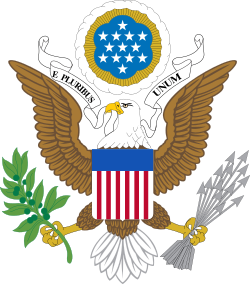
Key Facts
- Adopted: 1782 by a resolution of Congress.
- Motto: E pluribus unum (Latin for "Out of many, one").
- Central Figure: A bald eagle displayed (wings outstretched).
- Core Symbolism: The number 13 recurs throughout the design, representing the original thirteen states.
- Primary Use: Affixed to treaties, international agreements, and passports.
Heraldic Design and Blazon
In heraldry, a blazon is the formal written description of a coat of arms. The 1782 resolution legally describes the shield as: "Paleways of 13 pieces, argent and gules; a chief, azure."
The Shield (Escutcheon)
The shield is designed to resemble the United States flag but with two critical heraldic distinctions. First, the blue chief (the top horizontal section) contains no stars. Second, the outermost stripes are white rather than red; this prevents a violation of the rule of tincture, which generally forbids placing a color (blue) directly on another color (red) without a metal (white/silver) separating them.
The Supporter and Crest
The shield is supported by a bald eagle. In its dexter (right) talon, the eagle holds an olive branch, and in its sinister (left) talon, it holds thirteen arrows. In its beak, it carries a scroll with the national motto. Above the eagle is a glory (a burst of light) breaking through a cloud, surrounding a blue field with thirteen stars.
Symbolism and Meaning
The symbolism of the coat of arms was largely defined by Charles Thomson, who presented the final design to Congress. The elements are intended to project a specific image of the United States to the world.
- The Eagle: Represents the nation's independence and virtue. Its head is turned toward the olive branch, symbolizing a preference for peace.
- Olive Branch and Arrows: Together, these signify that the U.S. has a strong desire for peace but remains ready for war.
- The Colors: White signifies purity and innocence; Red represents hardiness and valor; Blue denotes vigilance, perseverance, and justice.
- The Chief: Represents Congress, which unites the several states (the pales) into one solid compact.
The Great Seal: Physical Mechanism and Use
Within the Department of State, the "Great Seal" refers to the physical apparatus used to authenticate documents. This includes the die (the engraved metal image), the counterdie (the opposite relief), the press, and the mahogany cabinet.
To seal a document, a blank paper wafer is glued to the page. The document is placed between the die and counterdie, and the press is used to emboss the seal into the wafer. This process is used 2,000 to 3,000 times per year for high-level documents such as treaty ratifications and the appointment of ambassadors.
Evolution of the Design
The physical dies have evolved over two centuries to correct errors and improve artistic quality.
| Year | Key Characteristics | Notable Changes/Errors |
|---|---|---|
| 1782 | First brass die | Crude eagle with a crest; six-pointed stars. |
| 1825 | Masi Treaty Die | Larger, more realistic eagle for pendant wax seals. |
| 1841 | Throop Die | Known as the "illegal seal" for showing only six arrows. |
| 1885 | Tiffany & Co. Die | Formal heraldic look; restored 13 arrows and 13 olives. |
| 1904 | Zeitler Die | Corrected heraldic hatching for gold and azure tinctures. |
Frequently Asked Questions
Why is the 1841 seal called the "illegal seal"?
The 1841 die is referred to as the "illegal seal" because it depicted only six arrows in the eagle's talon instead of the thirteen required by the original 1782 law.
What does "E pluribus unum" mean?
The Latin phrase translates to "Out of many, one," referring to the union of the several states into a single nation.
Why does the eagle face the olive branch?
The eagle's head is turned toward the olive branch to symbolize that the United States prefers peace over war.
How is the seal physically applied to documents?
A paper wafer is glued to the document, which is then placed between a die and a counterdie in a press to create a raised, embossed image.
Are there stars on the blue chief of the official coat of arms?
No. While some derivative versions (such as the Senate seal) include stars, the official blazon for the national coat of arms specifies a plain blue chief.