Clothing: History, Function, and the Global Apparel Industry
Clothing—also referred to as garments, apparel, or attire—consists of items worn on the human body. While typically crafted from textiles (woven or knitted fabrics), clothing can also be made from animal skins, furs, synthetic fibers, and other natural materials. A universal feature of every known human society, the form and use of clothing vary significantly based on climate, available technology, cultural norms, and individual preference.
Beyond simple coverage, clothing serves a complex array of protective, physiological, and social functions. It provides essential thermal regulation and protection from environmental hazards, while simultaneously acting as a powerful medium for expressing social status, gender, religious affiliation, and personal identity.
Key Facts

- Ancient Origins: Evidence suggests humans began wearing clothes between 40,000 and 170,000 years ago, though some estimates range up to 3 million years.
- Thermal Comfort: The ideal skin surface temperature for thermal comfort is between 28 and 30 °C (82 and 86 °F).
- Global Trade: In 2022, global clothing exports reached US$790.1 billion, with China as the leading exporter.
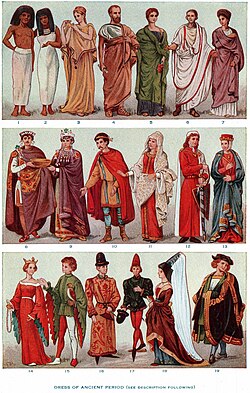
- Material Evolution: Early garments transitioned from draped animal skins and plant fibers to sophisticated woven textiles.
- Economic Impact: Vietnam's clothing exports reached US$39.8 billion in 2022, with the U.S. and EU as primary markets.
The Origin and Evolution of Clothing

Determining exactly when humans first donned clothing is challenging because organic materials deteriorate much faster than stone or metal. However, researchers use indirect evidence to estimate timelines. One notable study from 2003 used the evolution of body lice (Pediculus humanus corporis) to suggest clothing was adopted between 40,000 and 170,000 years ago, as these lice cannot survive without the shelter of clothing. Though some recent genetic analyses have questioned this method, it remains a significant theory.
Archaeological finds provide more concrete evidence. Bone and ivory sewing needles have been discovered in Kostenki, Russia (dating to 30,000 BC) and Denisova Cave in Siberia (dating back at least 50,000 years). Additionally, dyed flax fibers found in Georgia date to 34,000 BC, indicating early experimentation with plant-based materials.

Early clothing likely consisted of fur, leather, leaves, or grass that was wrapped or tied around the body to adapt to colder climates and provide basic protection.
The Science of Clothing Comfort
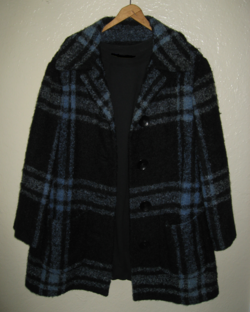
Clothing is fundamentally designed to maintain a balance between the body and its environment. This is categorized into several types of comfort:
Thermoregulation and Thermal Comfort
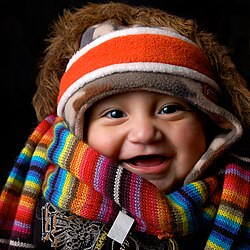
Thermoregulation is the process that allows the body to maintain its core internal temperature. Clothing assists this by preventing overheating and shielding the skin from external cold. When the skin surface temperature stays between 28 and 30 °C, the wearer typically experiences thermal comfort; temperatures outside this range lead to physiological discomfort.
Other Dimensions of Comfort
- Moisture Comfort: The ability of a garment to manage sweat and humidity.
- Tactile Comfort: How the fabric feels against the skin (touch).
- Pressure Comfort: The physical fit and lack of restrictive tension on the body.
- Aesthetic Comfort: The psychological satisfaction derived from the appearance of the clothing.

Cultural and Social Functions
Clothing is more than a biological necessity; it is a social language. It differentiates gender roles, denotes professional status, and signals cultural heritage. For example, the sari remains one of the most ancient and popular garments in the Indian subcontinent, while the kilt is a traditional symbol of Scottish identity.

In many cultures, clothing is strictly tied to formality and tradition. In Indonesia, formal attire may include kain batik and kebaya for women, and jas (suits) with a peci cap for men.

The Modern Apparel Industry and Global Trade
The production of clothing has evolved into a massive global industry. Modern garments are often produced in large-scale factories, particularly in Asia, before being shipped worldwide.
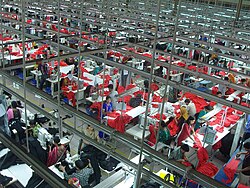
The economic scale of this trade is immense. According to the World Trade Organization (WTO), global clothing exports grew by 10.6% between 2021 and 2022. China dominates the market with a 22.6% share, followed by Bangladesh, Vietnam, India, and Turkey.
| Country | Export Value (USD) | Global Market Share |
|---|---|---|
| China | $178.4 Billion | 22.6% |
| Bangladesh | $40.8 Billion | N/A |
| Vietnam | $39.8 Billion | N/A |
| India | $36.1 Billion | N/A |
| Turkey | $29.7 Billion | N/A |

Maintenance and Life Cycle
The life cycle of clothing involves maintenance such as laundry, ironing, and storage. However, some modern textile treatments raise health concerns. For instance, certain resins used in non-wrinkle shirts release formaldehyde, which can cause contact dermatitis. Studies have shown that even after six months of washing, some garments still contain formaldehyde levels exceeding the safe limit of 75 ppm.

As the industry grows, there is an increasing focus on mending and recycling to reduce waste, reflecting a shift toward more sustainable fashion practices.

Frequently Asked Questions
When did humans start wearing clothes?
Estimates vary widely, from 40,000 to 3 million years ago. Evidence from body lice suggests a date between 40,000 and 170,000 years ago, while archaeological finds like needles in Siberia date back at least 50,000 years.
What is the ideal temperature for clothing comfort?
The optimum temperature for the skin surface to feel thermally comfortable is between 28 and 30 °C (82 and 86 °F).
Which country is the largest exporter of clothing?
China is the world's largest clothing exporter, accounting for 22.6% of the global market share with exports valued at US$178.4 billion in 2022.
Are non-wrinkle shirts safe for the skin?
Some non-wrinkle garments use resins that release formaldehyde, which can cause contact dermatitis in some individuals. Some shirts may retain levels above the safe limit of 75 ppm even after routine washing.
What materials were used in the earliest clothing?
The earliest garments were likely made from animal skins, furs, leather, leaves, or grass that were draped, wrapped, or tied around the body.