Claudius: The Unexpected Emperor of the Julio-Claudian Dynasty
Tiberius Claudius Caesar Augustus Germanicus, known to history simply as Claudius, remains one of the most complex figures of the early Roman Empire. Ruling from AD 41 to AD 54, he was the fourth emperor of the Julio-Claudian dynasty. Born in Lugdunum (modern-day Lyon, France), Claudius holds the distinction of being the first Roman emperor born outside of Italy.
Often overshadowed by the volatility of his predecessor, Caligula, and the notoriety of his successor, Nero, Claudius's reign was marked by significant administrative expansion, ambitious public works, and a constant struggle for stability within the imperial court.
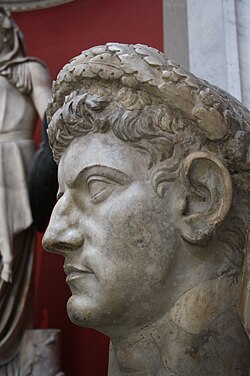
Key Facts
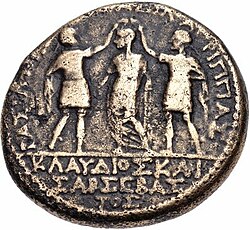
- Reign: January 24, AD 41 – October 13, AD 54.
- Birthplace: Lugdunum, Gallia Lugdunensis (the first emperor born outside Italy).
- Major Achievement: Led the Roman campaign to conquer Britain.
- Administrative Impact: Expanded Roman citizenship through the foundation of new colonies.
- Family: Son of Drusus the Elder and Antonia Minor; adopted Nero as his successor.
Early Life and Rise to Power
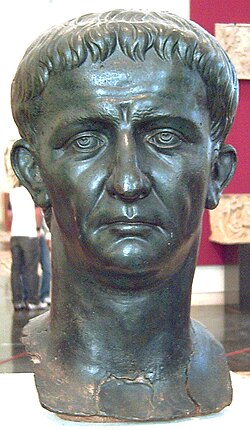
Claudius was born into the heart of Roman power, the son of Nero Claudius Drusus and Antonia the Younger. However, his early life was defined by physical ailments that led his family and society to view him as unfit for public leadership. Modern medical historians have debated the cause of his condition, with theories ranging from infantile paralysis (polio) and measles to cerebral palsy or Tourette syndrome.
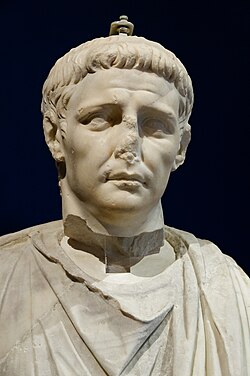
![Portrait bust of Claudius, reworked from a statue of Caligula (Altes Museum, Berlin)[43]](/images/2e/c6/2ec6d94b3dae8bcf67aa80edc49493c98683b869d1c8a825316de071d65d408a.jpg)
Despite these challenges, Claudius was a dedicated scholar. His rise to the throne was sudden and unplanned; following the assassination of Caligula in AD 41, he was declared emperor, transitioning from a marginalized family member to the most powerful man in the Mediterranean world.
Imperial Administration and Expansion
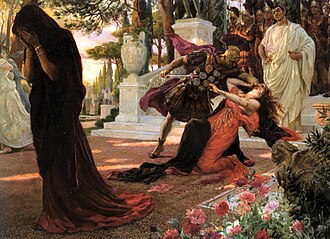
Once in power, Claudius focused on centralizing authority and professionalizing the imperial secretariat. He was a proponent of expanding the reach of Rome, both geographically and legally. A census conducted in AD 48 recorded 5,984,072 adult male Roman citizens, an increase of approximately one million since the death of Augustus.
This growth was largely due to Claudius's policy of granting blanket citizenship to elites in existing communities and establishing new colonies on the empire's borders to secure Roman holdings.
The British Campaign
One of the most enduring legacies of his reign was the invasion of Britain, extending the empire's reach into the British Isles and bringing new territories under Roman administration.
![Bronze head of Claudius found in the River Alde at Rendham, near Saxmundham, Suffolk (British Museum), reputedly looted from the Temple of Claudius in Colonia Victricensis (now Colchester) during the Boudican revolt.[30]](/images/ef/5a/ef5aa654d40bdf332247944b2a6b2c84c4ade05cab953dae776c4a38b8edfc12.jpg)
Public Works and Infrastructure
Claudius invested heavily in the infrastructure of Rome and its surroundings. He completed several aqueducts, including the Aqua Claudia and the Aqua Anio Novus, to ensure a steady water supply to the capital.
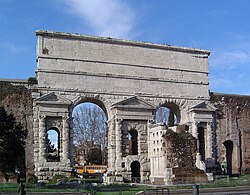
However, not all projects were successful. His attempt to drain the Fucine Lake involved digging a tunnel through the lake bed. The project failed due to the tunnel being too crooked and small, resulting in a flood that disrupted a gladiatorial exhibition held to celebrate the opening. The lake was not successfully drained until the 19th century.
Court Intrigue and Personal Life
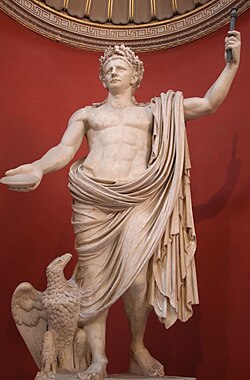
The personal life of Claudius was as turbulent as his political one. He was married four times: first to Plautia Urgulanilla, then to Aelia Paetina, followed by Valeria Messalina, and finally Julia Agrippina (Agrippina the Younger).
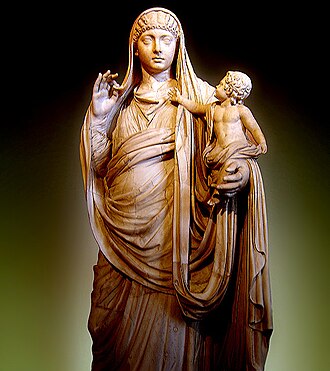
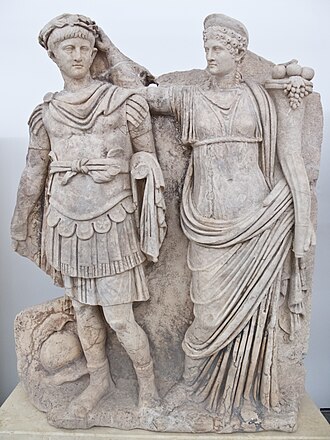
His third wife, Messalina, was eventually executed following allegations of a conspiracy. His final wife, Agrippina, played a pivotal role in the succession, ensuring that her son, Nero, was adopted by Claudius and positioned as the heir to the throne.
Throughout his reign, Claudius faced numerous plots. In AD 46, Asinius Gallus and Titus Statilius Taurus Corvinus were exiled for conspiring with the emperor's freedmen. Suetonius reports that 35 senators and 300 knights were executed for various offenses during his tenure.
Death and Historical Legacy

Claudius died on October 13, AD 54, at the age of 63. The circumstances of his death remain a subject of historical debate. While ancient sources frequently suggest he was murdered—possibly by poisoning via a mushroom—some modern historians argue he may have died from natural causes, given his poor health and the prevalence of illness that year.
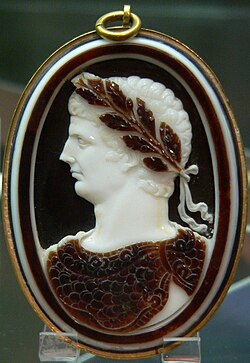
Historically, Claudius was often portrayed as a weak or foolish pawn by ancient historians like Tacitus. However, his administrative successes and scholarly interests suggest a more capable ruler. His legacy has been kept alive in modern culture, most notably through Robert Graves's novels I, Claudius and Claudius the God, and their subsequent BBC television adaptation.
| Category | Details |
|---|---|
| Dynasty | Julio-Claudian |
| Reign Dates | AD 41 – AD 54 |
| Key Conquests | Britain |
| Major Works | Aqua Claudia, Aqua Anio Novus, Fucine Lake project |
| Successor | Nero |
Frequently Asked Questions
Was Claudius actually a fool?
While ancient historians like Tacitus portrayed him as a passive pawn, this view is largely disputed by modern scholars. His successful administration, expansion of the empire, and scholarly writings indicate a man of significant intelligence and capability.
How did Claudius die?
Ancient texts widely claim he was murdered, possibly by his wife Agrippina using a poisonous mushroom. However, some historians suggest he may have died of natural causes due to his chronic health issues and the general illness prevalent in Rome at the time.
What was the significance of the British campaign?
The campaign was a major strategic victory that expanded the Roman Empire's borders and provided Claudius with the military prestige necessary to solidify his legitimacy as emperor.
Why was he the first emperor born outside Italy?
Claudius was born in Lugdunum (modern Lyon) because his father, Drusus the Elder, was stationed there as a military legate at the time of his birth.
What happened to the Fucine Lake project?
The project was a failure during Claudius's time because the tunnel was poorly constructed and too small, leading to a flood. The lake was eventually drained in the 19th century by Prince Torlonia, who expanded the original tunnel.