Chuseok: Celebrating the Korean Mid-Autumn Harvest Festival
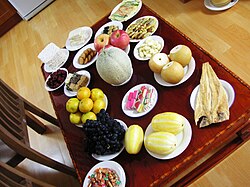
Chuseok (추석), also known as Hangawi, is one of Korea's most significant traditional holidays. Occurring on the 15th day of the 8th month of the lunisolar calendar, this mid-autumn festival coincides with the full moon. It serves as a time for gratitude, celebrating a bountiful harvest and honoring ancestral lineages through shared meals and sacred rituals.
While the celebration is deeply rooted in Korean history, its observance varies slightly across the peninsula. In South Korea, the festival typically spans three days, including the day before and after the full moon. In North Korea, Chuseok is observed as a single-day celebration on the day of the full moon itself.
Key Facts
- Official Names: Chuseok (추석) or Hangawi (한가위).
- Significance: A major harvest festival celebrating the autumn bounty.
- Core Traditions: Ancestor worship (Charye), visiting ancestral graves (Seongmyo), and festive feasts.
- Signature Food: Songpyeon (half-moon shaped rice cakes).
- Lunar Date: 15th day of the 8th lunar month.
Historical Origins and Traditions
The origins of Chuseok are tied to ancient customs. Popular belief traces the festival back to gabae, a month-long weaving contest held during the reign of the third king of the Silla Kingdom. Winners of these competitions were celebrated with grand feasts. Other scholars suggest the festival may have evolved from shamanistic rituals where new harvests were offered to local deities and ancestors to ensure continued prosperity.
Ancestral Rites and Family Visits
Chuseok is a time for family reunification. Many Koreans travel to their ancestral hometowns to perform two vital traditions:
- Charye: Memorial services held at home to honor ancestors.
- Seongmyo: Visiting ancestral graves, which often includes Beolcho, the practice of tidying the gravesites and removing weeds.
Traditional Attire and Festive Foods
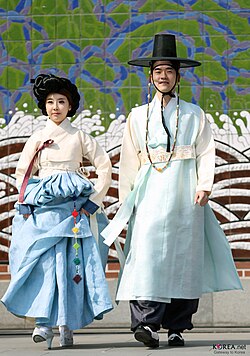
During these special occasions, many people wear hanbok, the traditional Korean clothing. The hanbok consists of a jeogori (jacket), baji (pants), chima (skirt), or a po (coat), designed in a wide array of vibrant colors.
The Symbolism of Songpyeon
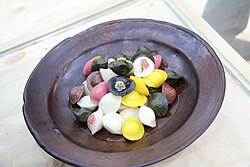
No Chuseok feast is complete without songpyeon, a traditional rice cake. These are made with various fillings such as sesame seeds, black beans, mung beans, honey, nuts, or jujube. A critical step in their preparation is steaming them over a layer of pine needles, which imparts a unique fragrance and preserves the cakes.
The shape of songpyeon carries deep meaning. While the rice skin resembles a full moon, the cakes are typically folded into a half-moon shape. This is linked to a historical legend from the Three Kingdoms era, where the half-moon shape was seen as a symbol of a bright future and eventual victory. It is even said that the beauty of one's songpyeon can predict future fortunes, such as finding a good spouse or having a beautiful child.
Hangwa and Traditional Drinks
Families also enjoy hangwa, a category of sweet treats made from rice flour, honey, and natural ingredients. Popular varieties include:
- Yakgwa: Sweet honey cookies made from fried rice flour dough.
- Yugwa: Fried cookies made of glutinous rice mixed with honey water and rice wine.
- Dasik: Delicate tea cakes enjoyed during tea ceremonies.
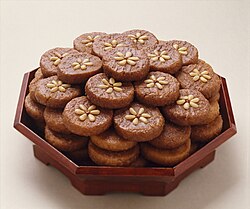
To accompany these sweets, baekju (white wine) is served. A notable variety is sindoju, or "new rice liquor," which is crafted from the freshly harvested rice of the season.
Folk Games and Cultural Activities
Chuseok is a lively period filled with community games and performances. These activities vary by region but often include:
- Ssireum: A traditional form of wrestling where competitors grab an opponent's satba (belt) to attempt to knock them down.
- Taekkyon: An ancient martial art involving rhythmic kicks and pushes, now recognized as a UNESCO intangible cultural heritage.
- Ganggangsullae: A traditional dance where women dressed in hanbok hold hands in a large circle under the full moon, singing as they move.
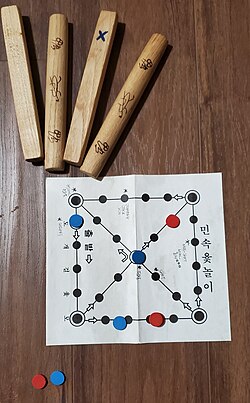
- Yut Nori: A popular traditional board game.
The Evolution of Chuseok Gifts
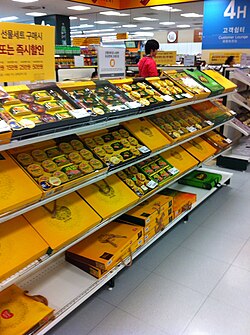
Gift-giving has evolved alongside Korea's economic development. In the 1960s, gifts were simple daily necessities like soap or sugar. By the 1980s, sets of fruit and meat became common. In the modern era, gift sets have become highly sophisticated, ranging from health supplements and skincare to luxury items like wild pine mushrooms or high-end wine.
Summary of Chuseok Details
| Category | Details |
|---|---|
| Lunar Date | 15th day of the 8th lunar month |
| Primary Food | Songpyeon (Rice cakes) |
| Key Rituals | Charye (Memorials) and Seongmyo (Grave visits) |
| Traditional Games | Ssireum, Taekkyon, Ganggangsullae, Yut Nori |
Frequently Asked Questions
What is the difference between Chuseok and Hangawi?
They are different names for the same festival. Chuseok literally means "autumn evening," while Hangawi comes from Old Korean, meaning "the great middle of autumn."
Why are songpyeon shaped like half-moons?
The half-moon shape is a symbol of a bright future and victory, stemming from historical prophecies regarding the rise of the Silla Kingdom.
What is the significance of steaming songpyeon with pine needles?
Steaming the rice cakes over pine needles adds a distinct aromatic fragrance and enhances both the taste and the visual beauty of the food.
How is Chuseok celebrated in North Korea?
In North Korea, Chuseok is typically observed as a single-day celebration on the full moon, whereas in South Korea, it is a three-day holiday period.
What is Ssireum?
Ssireum is a traditional Korean wrestling sport where two players compete by holding onto their opponent's satba (a fabric belt) to force the other's upper body to touch the ground.