Church of Scotland: History, Governance, and Modern Evolution
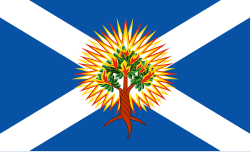
The Church of Scotland, widely known in Scots as The Kirk o Scotland and in Scottish Gaelic as Eaglais na h-Alba, serves as the national and established church of Scotland. As a Reformed denomination of Christianity, it follows a Presbyterian orientation, meaning its governance is based on the authority of elders (presbyters) rather than a hierarchy of bishops.
While it remains one of the largest denominations in the country, the church has seen significant shifts in its demographic reach. As of 2025, it records 229,000 members, representing approximately 4% of the Scottish population, although 2022 census data indicates that a larger portion of the population—roughly 20%—still claims an affiliation with the church.
Key Facts
- Status: National and established church of Scotland.
- Theology: Reformed and Protestant.
- Governance: Presbyteral, led by the General Assembly.
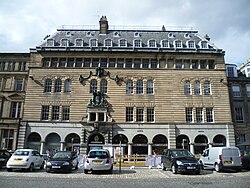
- Headquarters: 121 George Street, Edinburgh.
- Independence: Formally recognized by the UK Parliament via the Church of Scotland Act 1921.
- Current Leadership: Gordon Kennedy (Moderator 2026-27).
Historical Foundations and Independence
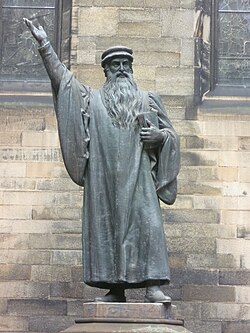
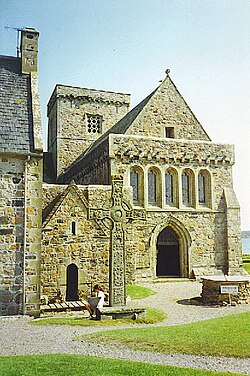
The identity of the Church of Scotland is deeply rooted in the Reformation, with John Knox playing a pivotal role upon his return from Geneva in 1559 to lead the movement. Over the centuries, the church navigated complex political waters, including the Wars of the Three Kingdoms and the Restoration.
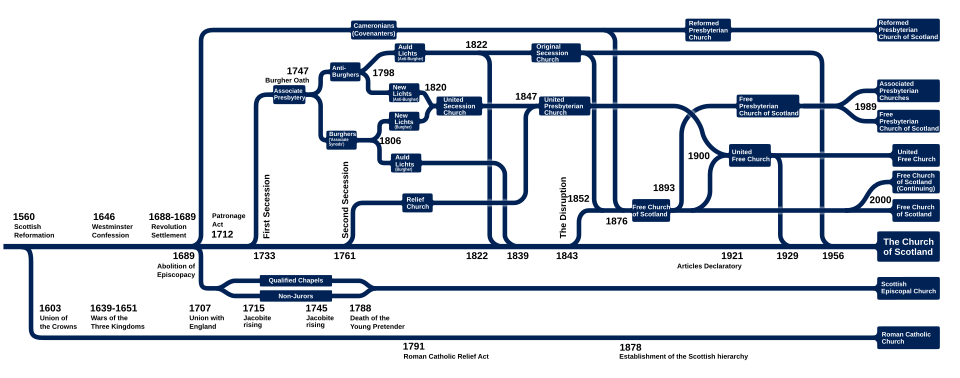
A landmark moment in the church's legal history occurred on July 28, 1921, when the UK Parliament passed the Church of Scotland Act. This legislation recognized the church's complete independence in spiritual matters. This autonomy paved the way for the 1929 union with the United Free Church of Scotland, which had previously merged the United Presbyterian Church of Scotland and a majority of the Free Church of Scotland in 1900.
Governance and Administration
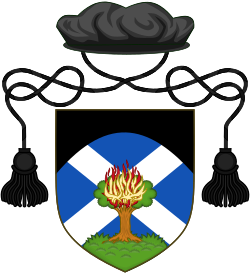
The church operates under a Presbyteral polity, a system of governance where the highest authority is the General Assembly of the Church of Scotland. The assembly is led by a Moderator, a role currently held by Gordon Kennedy for the 2026-27 term. Additionally, the Lord High Commissioner represents the British monarch at the General Assembly; Elish Angiolini serves in this capacity for 2025-26.
Administrative Bodies
To manage its diverse needs, the church utilizes several specialized forums and councils:
- Faith Impact Forum: Handles social justice and world mission (replacing the former Church and Society and World Mission Councils).
- Faith Nurture Forum: Focuses on ministries and discipleship.
- Social Care Council: Based at Charis House in Edinburgh.
The church's administrative heart is located at its offices on George Street in Edinburgh, housed in buildings designed by architect Sydney Mitchell between 1909 and 1911.
Modern Challenges and Social Evolution
The Church of Scotland has faced a steady decline in membership over the last several decades. From over 1.2 million members in 1966, numbers fell to approximately 229,000 by late 2025. This decline led to a critical survival plan in 2021, which proposed reducing ministry posts by 40% to ensure the institution's viability.
Parallel to these demographic shifts, the church has evolved its stance on social and ethical issues. In 2015 and 2016, the General Assembly voted to allow gay and lesbian ministers to enter into same-sex marriages and civil partnerships. By 2017, discussions moved toward allowing nominated ministers and deacons to perform these ceremonies, while maintaining a provision for "contentious refusal" for those opposed.
Ecumenical Relations and Affiliations
The Church of Scotland maintains strong ties with other global and local Christian bodies to promote unity and cooperation. It is a member of several prominent organizations:
- World Council of Churches
- World Communion of Reformed Churches
- Conference of European Churches
- Churches Together in Britain and Ireland
- Action of Churches Together in Scotland
Summary of Church Statistics and Identity
| Category | Detail |
|---|---|
| Classification | Protestant / Reformed |
| Orientation | Presbyterian |
| Members (2025) | 229,000 |
| Congregations (2024) | 992 |
| Ministers (2024) | 495 |
| Scripture | Protestant Bible |
Frequently Asked Questions
What does "Presbyterian" mean in the context of the Church of Scotland?
Presbyterianism refers to a form of church governance (polity) where the church is led by elders (presbyters) elected by the congregation, rather than by a centralized hierarchy of bishops.
When did the Church of Scotland become independent?
The church's complete independence in spiritual matters was formally recognized by the UK Parliament through the Church of Scotland Act 1921.
What is the role of the Moderator?
The Moderator serves as the leader and chairperson of the General Assembly, the highest governing body of the church.
How has the church's membership changed recently?
The church has experienced a significant decline, dropping from over 1.2 million members in 1966 to 229,000 by the end of 2025, prompting structural reforms to ensure survival.
Does the Church of Scotland permit same-sex marriage for clergy?
Yes, following votes by the General Assembly in 2015 and 2016, gay and lesbian ministers are permitted to enter into same-sex marriages.