The History and Legacy of the Chōsen Industrial Bank
The history of modern Korean finance is deeply intertwined with the complex political shifts of the early 20th century. Central to this narrative was the Chōsen Industrial Bank (also known as the Joseon Industrial Bank or Chosen Colonization Bank). Established during the period of Japanese rule, this institution played a pivotal role in the economic landscape of the Korean peninsula, serving as both a driver of industrial activity and a symbol of colonial economic control.
From its origins as a merger of several local banks to its eventual liquidation and the transfer of its assets to the Korea Development Bank, the story of this institution reflects the broader transitions of Korea from the Korean Empire through the colonial era to the establishment of a modern sovereign state.
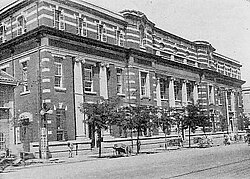
Key Facts
- Founded: 1918 through the merger of six banks established under the Korean Empire.
- Primary Role: A major financial institution used to channel credit toward activities favored by the colonial government.
- Workforce Diversity: Unlike the Bank of Chōsen, it maintained a higher percentage of Korean employees and offered equal treatment to both Korean and Japanese staff.
- Post-War Transition: Managed by the United States Army Military Government in Korea after 1945.
- Final Evolution: Liquidated in 1954, with operations transferred to the Korea Development Bank (KDB) and the Korea Savings Bank.
Foundations and Colonial Economic Influence
The roots of the bank trace back to 1906, when the Korean Empire, prompted by Japanese financial adviser Megata Tanetarō, decreed the creation of agricultural and industrial banks to stimulate the national economy. By 1908, eleven such local banks had been established, including the Hanseong Agricultural and Industrial Bank in present-day Seoul. These entities were eventually consolidated into six banks, which were then merged in June 1918 to form the Chōsen Industrial Bank.
During the colonial period, the bank functioned alongside the Bank of Chōsen to direct cheap credit—low-interest loans—toward specific economic sectors favored by the colonial administration. By 1924, the bank had grown into the largest financial institution in colonial Korea, boasting 47 offices and over 400 employees.
A Symbol of Economic Domination
Because of its role in directing capital, the Chōsen Industrial Bank was viewed as one of the two primary instruments of Japanese economic domination in Korea, alongside the Oriental Development Company. This political significance made the bank a target for the Korean independence movement. In a notable act of resistance in late 1926, activist Na Seok-ju threw a bomb at the bank's Seoul head office.
Workforce and Management Dynamics
While the bank was an instrument of colonial policy, its internal demographics differed significantly from other institutions of the era. The Chōsen Industrial Bank maintained a notably higher proportion of Korean staff compared to the Bank of Chōsen. For example, by 1928, Koreans made up 32 percent of the Chōsen Industrial Bank's workforce, whereas they accounted for only 16 percent at the Bank of Chōsen. Furthermore, the institution provided equal treatment to both its Korean and Japanese employees.
As the geopolitical landscape shifted, the bank's responsibilities expanded. In 1936, it absorbed the Korean operations of Japan's Eighteenth Bank, and by 1942, it was designated as an agency for the Japanese War Treasury's lending business in Korea. By 1943, the staff had grown to 498, with Koreans comprising 30 percent of the workforce.
Post-War Transition and Liquidation
Following the end of World War II in 1945, the United States Army Military Government in Korea assumed management of the bank. Under the orders of Supreme Commander for the Allied Powers Douglas MacArthur, the bank's Japanese branch was liquidated in October 1945. The relatively high number of Korean employees in management facilitated a smoother transition than many other colonial enterprises.
In 1948, the newly established government of Korea took over ownership and management. The institution underwent several changes in the following years:
- February 1950: Renamed the Korea Industrial Bank.
- April 1, 1954: Liquidated by presidential decree No. 859.
Upon liquidation, the bank's core operations were transferred to the Korea Development Bank (KDB), while its various branches were taken over by the Korea Savings Bank (which later became Korea First Bank and eventually Standard Chartered Korea). The liquidation process was officially completed in April 1982.
Architectural Legacy
The bank's physical presence was felt across the peninsula through an extensive network of branches. The original head office, located on the major thoroughfare now known as Namdaemunno, was expanded between 1920 and 1922. After 1954, this building served as the headquarters for the KDB until it was demolished in 1983 to make way for the Lotte Department Store.
Many branch buildings have survived and transitioned into new roles within Korean society:
- Daegu Branch: A new building erected in 1931–1932, which served the KDB until 2008 and now houses the Daegu Modern History Museum.
- Chungju Branch: Built in 1933, this building remains extant today.
- Other notable locations: Branches were established in Busan, Daejeon (built in 1937), and Wonju.
| Period/Year | Status/Name | Key Event |
|---|---|---|
| 1918 | Chōsen Industrial Bank | Formed by merging six banks. |
| 1945 | Joseon Industrial Bank | Management taken over by US Military Government. |
| 1948 | Joseon Industrial Bank | Ownership transferred to the Korean government. |
| 1950 | Korea Industrial Bank | Renamed from Joseon Industrial Bank. |
| 1954 | Liquidated | Operations transferred to KDB and Korea Savings Bank. |
Frequently Asked Questions
Was the Chōsen Industrial Bank the same as the modern Industrial Bank of Korea?
No. While the names are similar, the Chōsen Industrial Bank (renamed Korea Industrial Bank in 1950) was a different entity that was liquidated in 1954. It should not be confused with the later, modern Industrial Bank of Korea.
How did the bank's workforce compare to other colonial banks?
The Chōsen Industrial Bank had a higher percentage of Korean employees than the Bank of Chōsen. By 1928, Koreans made up 32 percent of the staff at the Chōsen Industrial Bank, compared to only 16 percent at the Bank of Chōsen. Additionally, it offered equal treatment to both Korean and Japanese staff.
What happened to the bank's assets after it was liquidated?
When the bank was liquidated in 1954, its central operations were transferred to the newly created Korea Development Bank (KDB), and its branch network was taken over by the Korea Savings Bank.
Where is the former head office located today?
The site of the former head office on Namdaemunno was redeveloped following the building's demolition in 1983 and is currently the site of the Lotte Department Store.
Why was the bank a target for independence activists?
The bank was viewed as a primary tool for Japanese economic domination in Korea, used to channel credit toward colonial interests, making it a symbolic and practical target for those fighting for Korean independence.