Chongqing Model: The Rise and Fall of Bo Xilai
In the early 21st century, the city of Chongqing became the center of a bold political experiment known as the Chongqing Model. Spearheaded by Bo Xilai, this governance style sought to blend aggressive economic growth with a revival of Maoist-era social ethics. While it initially garnered widespread popularity and international attention, the model eventually collapsed under the weight of political rivalry, human rights abuses, and a high-profile criminal scandal.
Bo Xilai viewed his appointment in Chongqing as a strategic stepping stone toward the highest echelon of power in China: the nine-member CCP Politburo Standing Committee (PSC). By positioning himself as a champion of the Chinese New Left—a group of Maoists and social democrats critical of market-based inequality—Bo created a distinct political identity that diverged from the more reformist approach of national leaders like Hu Jintao and Wen Jiabao.
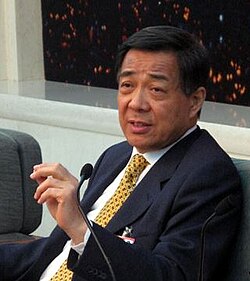
Key Facts
- The Chongqing Model: A governance paradigm combining state control, neo-leftist ideology, and massive public works.
- Dahei Campaign: A sweeping crackdown on organized crime resulting in approximately 5,700 arrests.
- Red Culture: A movement to revive Maoist ethics through "red songs," quotes, and revolutionary programming.
- Red GDP: An economic philosophy prioritizing the fair distribution of wealth over simple growth.
- The Downfall: Bo's tenure ended following a surveillance scandal and the murder of British businessman Neil Heywood.
The Pillars of the Chongqing Model
The War on Organized Crime (Dahei)
Central to Bo's authority was the dahei ("striking the black") campaign. Overseen by police chief Wang Lijun, this operation targeted organized crime and corruption between 2009 and 2011. While the campaign was popular for cleaning up the city's criminal reputation, it was heavily criticized for eroding the rule of law. An estimated 1,000 people were sent to forced labor, and reports surfaced of torture used to extract confessions.
The campaign also served as a financial engine; the Wall Street Journal reported that US$11 billion flowed into government coffers from seized assets, some of which were allegedly used to fund Bo's social housing projects.
The Red Culture Movement
To combat declining public morality, Bo launched the changhong ("singing red") initiative. This movement promoted Maoist-era socialist ethics through the mandatory singing of revolutionary songs in government and educational institutions. Bo even sent "red text messages" containing quotes from Mao's Little Red Book to 13 million mobile users.
While this nostalgia for egalitarianism appealed to lower-income residents and retirees, intellectuals viewed it as a regressive return to the trauma of the Cultural Revolution. The pressure to implement these campaigns was so intense that several mid-level officials reportedly committed suicide.
Social and Economic Policies
Bo introduced the concept of Red GDP, arguing that the government should focus on dividing the "economic cake" fairly rather than simply making it larger. His social policies included:
- Subsidized Housing: Spending $15.8 billion on apartments for migrant workers and low-income residents.
- Hukou Reform: Implementing pilot projects to make it easier for rural residents to obtain urban hukou (household registration), granting them better access to health and education.
- Labor Dialogue: Taking a restrained approach to the 2008 taxi strikes by holding televised dialogues and allowing a trade union.
Economically, Bo pursued a hybrid strategy. He lowered corporate income tax to 15% to attract foreign investment while simultaneously funding massive state-led infrastructure projects. Although Chongqing's GDP growth (14.3% in 2008) far exceeded the national average (8%), critics argued these figures were artificially inflated through unsustainable construction.
Leadership Style and Surveillance
Bo's public charisma masked a leadership style described by subordinates as ruthless and arrogant. He demanded 24/7 availability from officials and frequently humiliated those who disagreed with him. This climate of fear was augmented by a sophisticated electronic surveillance system designed by Wang Lijun and cybersecurity expert Fang Binxing.
This system did not just target criminals; it was allegedly used to wiretap top national leaders, including General Secretary Hu Jintao. These eavesdropping operations eventually sowed distrust between Bo and his inner circle, contributing to his political isolation.
The Death of Neil Heywood and Political Collapse
The downfall of the Chongqing Model was precipitated by the death of Neil Heywood, a British businessman, in November 2011. Initially reported as accidental alcohol over-consumption, the death was later revealed to be a homicide. Heywood had acted as a middleman for the Bo family's overseas assets, but a business dispute with Bo's wife, Gu Kailai, led to his poisoning.
| Dimension | Key Initiative | Intended Goal | Criticism/Outcome |
|---|---|---|---|
| Legal | Dahei Campaign | Eradicate organized crime | Due process violations; forced labor |
| Cultural | Red Culture | Revive socialist ethics | Regressive; psychological pressure |
| Social | Hukou Reform | Reduce rural-urban divide | Used to develop rural land |
| Economic | Red GDP | Egalitarian distribution | Unsustainable debt; rigged figures |
Gu Kailai was eventually convicted of murder and sentenced to life imprisonment. The scandal, combined with the revelations of illegal surveillance, led to Bo Xilai's removal from power in 2012, effectively ending the Chongqing experiment.
Frequently Asked Questions
What was the primary goal of the Chongqing Model?
The Chongqing Model aimed to address economic inequality and social instability by combining state-led economic growth, foreign investment, and a revival of Maoist social policies and egalitarianism.
How did the "Red GDP" concept differ from standard GDP?
While standard GDP focuses on the total growth of the economy, "Red GDP" emphasized the fair distribution of wealth and the provision of social welfare, such as subsidized housing, to ensure the benefits of growth reached the poor.
What was the significance of the hukou system in Bo's policies?
The hukou system traditionally created a divide between rural and urban citizens. Bo's policies made it easier for rural residents to gain urban status, which improved their access to social services and allowed the government to repurpose rural land.
Who was Neil Heywood and why was he important?
Neil Heywood was a British businessman who helped the Bo family manage overseas properties. His murder by Gu Kailai exposed the family's hidden financial dealings and triggered the political collapse of Bo Xilai.
What was the "dahei" campaign?
The dahei ("striking the black") campaign was a massive crackdown on organized crime in Chongqing. While it arrested thousands of criminals and corrupt officials, it was widely criticized for ignoring judicial due process and using torture.