Chinese Social Hierarchy: The Unclassified and Marginalized Groups
While traditional Chinese society is often described through four broad occupational categories, the reality was far more complex. Beyond the recognized hierarchy existed a vast array of social groups that fell outside these definitions. From the absolute power of the Emperor to the marginalized "mean people," these unclassified groups played pivotal roles in the political, spiritual, and cultural life of the empire.
The Imperial Clan and the Mandate of Heaven
At the absolute pinnacle of society sat the Emperor. He existed on a legal and social tier above even the most prestigious scholar-officials. His authority was derived from the Mandate of Heaven, a belief that the right to rule was granted based on virtue rather than noble birth. This meant that commoners could rise to power—as seen in the founding of the Han and Ming dynasties—but it also meant that natural disasters or revolts were interpreted as signs that the Emperor had lost this divine mandate.
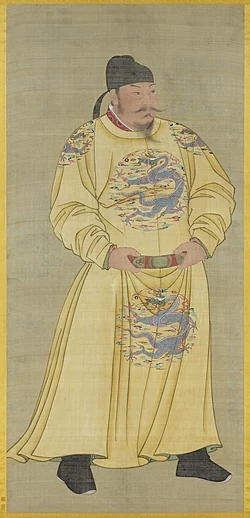
The status of the broader imperial clan fluctuated across dynasties. In the early Han and Western Jin periods, clan members held significant military and political power through vassal states, often leading to civil wars and successions. However, by the Tang and Song dynasties, this power was curtailed. By the Southern Song era, imperial princes were assimilated into the scholar class and were required to pass the imperial examinations to serve in government, just like commoners.
The Influence and Infamy of Eunuchs
Court eunuchs served the royal family and often occupied a precarious position. While they were essential to the inner court, they were viewed with deep suspicion by scholar-officials. This tension stemmed from historical instances where eunuchs dominated the central government. A notable example is Wei Zhongxian (1568–1627), who tortured and killed critics from the Confucian Donglin Society during the reign of the Tianqi Emperor.
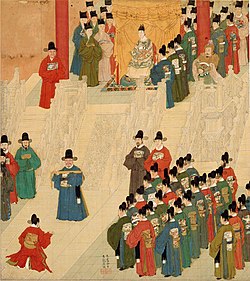
In popular culture, such as The Book of Swindles, eunuchs were often depicted as corrupt and debauched. Despite this reputation, the position remained attractive; the opportunity for theft and corruption in the Forbidden City during the later Qing period led many men to voluntarily undergo the procedure to secure a better life. This conflict represented a clash between the personal will of the Emperor (represented by the eunuchs) and the bureaucratic will of the state (represented by the officials).
Religious Workers and Spiritual Authority
Religious roles shifted significantly over time. In the Bronze Age, shamans and diviners held substantial authority, with some serving as government officials or physicians. However, after Emperor Wu of Han established Confucianism as the state religion, shamanism was viewed with prejudice to prevent leaders like Zhang Jiao from inciting rebellions.
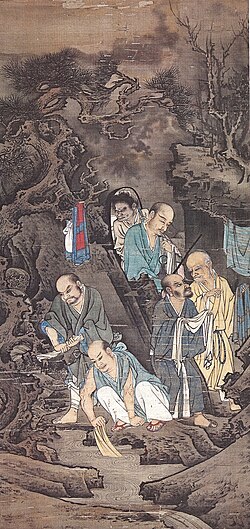
Buddhist monkhood became immensely popular from the fourth century onward, partly because monasteries were exempt from taxes. While the elite and even some Confucian scholars sponsored magnificent monasteries, the state periodically persecuted Buddhism. Neo-Confucian scholars viewed it as an alien ideology that threatened the moral order. Despite the personal faith of many Sui and Tang rulers, the Imperial Examinations remained strictly based on the Confucian canon to ensure government stability.
The Military: Power Without Prestige
Soldiers occupied a strange position: they were essential for survival but excluded from the formal social hierarchy. This was due to the gentry scholars' preference for intellectual cultivation (wén) and their disdain for violence (wǔ). From the Song dynasty onward, the policy of "Emphasizing the civil and downgrading the military" further marginalized the profession.
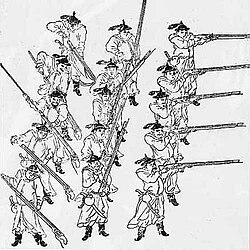
Many soldiers were debtors or vagabonds, though the state attempted to create a hereditary military caste through systems like Tuntian (agricultural colonies), Weisuo, and Fubing. These systems encouraged soldiers to farm the frontiers to ensure self-sufficiency. However, these policies often failed due to high desertion rates caused by the low social status of military work.
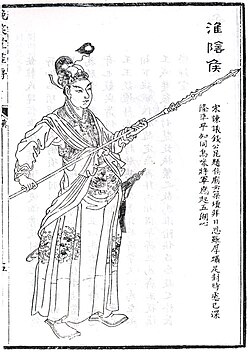
Despite the social stigma, the military remained the fastest route to power for those without a formal education. Successful military officers could achieve immense prestige, and ironically, many scholar-officials ended up commanding troops themselves.
Entertainers and the "Mean People"
Entertainers, including musicians and dancers, were categorized as mean people (jiànmín), a class considered of little use to society. Professional musicians were of low status, though "proper" music was still seen as essential for good government. Interestingly, while the profession was looked down upon, individual musicians—especially women like Cai Yan and Wang Zhaojun—were often idolized.
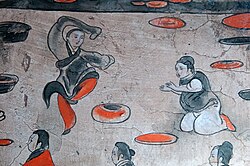
The imperial court maintained rigorous institutions for the arts, such as the Great Music Bureau and the Pear Garden Academy. During the reign of Emperor Xuanzong, the court employed roughly 30,000 musicians and dancers. While most professional dancers entered the field through poverty, some, like Zhao Feiyan, rose in status by becoming imperial concubines.
Slavery and Servitude
Slavery was less common in China than in other ancient civilizations and was often a judicial punishment for crimes. While the trade of Chinese slaves was illegal during the Han and Tang dynasties, foreign slaves were permitted. Various emperors, including the Hongwu emperor of the Ming dynasty, attempted to ban slavery, but these efforts were largely unsuccessful.
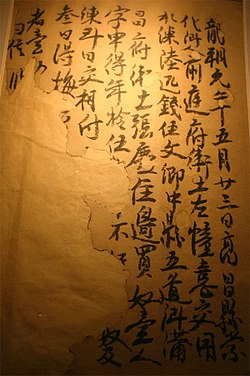
Below the commoners but above outright slaves was a complex system of servile groups. These included imperial tomb guards, musician households, and private retainers. In the late Qing era, it is estimated that up to 80% of prostitutes may have been slaves.
Key Facts
- Mandate of Heaven: The divine right to rule based on virtue, allowing commoners to become emperors if they were just and able.
- Mean People (Jiànrén): A marginalized class including entertainers, prostitutes, and low-class laborers who faced legal disabilities.
- Military Status: Soldiers were excluded from the formal social hierarchy due to the Confucian preference for intellectualism over violence.
- Eunuch Influence: Eunuchs often clashed with scholar-officials, representing the Emperor's personal will versus the state bureaucracy.
- Buddhist Exemptions: The popularity of monkhood was driven in part by exemptions from government taxation.
| Group | Social Standing | Primary Role/Characteristic |
|---|---|---|
| Imperial Clan | Highest | Held the Mandate of Heaven; power varied by dynasty. |
| Eunuchs | Variable/Suspicious | Personal servants to the Emperor; often politically powerful. |
| Religious Workers | Variable | Included shamans, diviners, and tax-exempt Buddhist monks. |
| Soldiers | Low/Unclassified | Essential for defense but socially marginalized by scholars. |
| Entertainers | Mean People | Musicians and dancers; often dependents of the wealthy. |
| Slaves | Lowest | Often criminals or victims of illegal child trafficking. |
Frequently Asked Questions
What was the Mandate of Heaven?
The Mandate of Heaven was the philosophical belief that the Emperor's right to rule was granted by divine authority based on his virtue. If a ruler became corrupt or failed to protect the people, it was believed the mandate was withdrawn, often signaled by natural disasters, justifying a rebellion.
Why were soldiers excluded from the traditional social hierarchy?
They were excluded because the ruling gentry scholars valued intellectual and moral cultivation (wén) and viewed professions centered on violence (wǔ) with disdain. By leaving soldiers out of the hierarchy, scholars ensured they remained in an undistinguished social tier.
What were "mean people" in ancient Chinese society?
"Mean people" (jiànmín) were individuals whose occupations were considered worthless or filthy. This group included prostitutes, entertainers, and certain low-class laborers. They were not registered as commoners and often suffered from legal disabilities.
How did Buddhist monks avoid taxes?
During certain periods, the monastic life offered a legal exemption from government taxation. This made becoming a monk an attractive option for poor farmers, leading to the establishment of thousands of government-funded monasteries.
What was the role of eunuchs in the imperial court?
Eunuchs served as personal attendants to the Emperor and the royal family. Because of their proximity to the ruler, they often gained significant political influence, which led to frequent power struggles with the Confucian scholar-officials who ran the bureaucracy.